


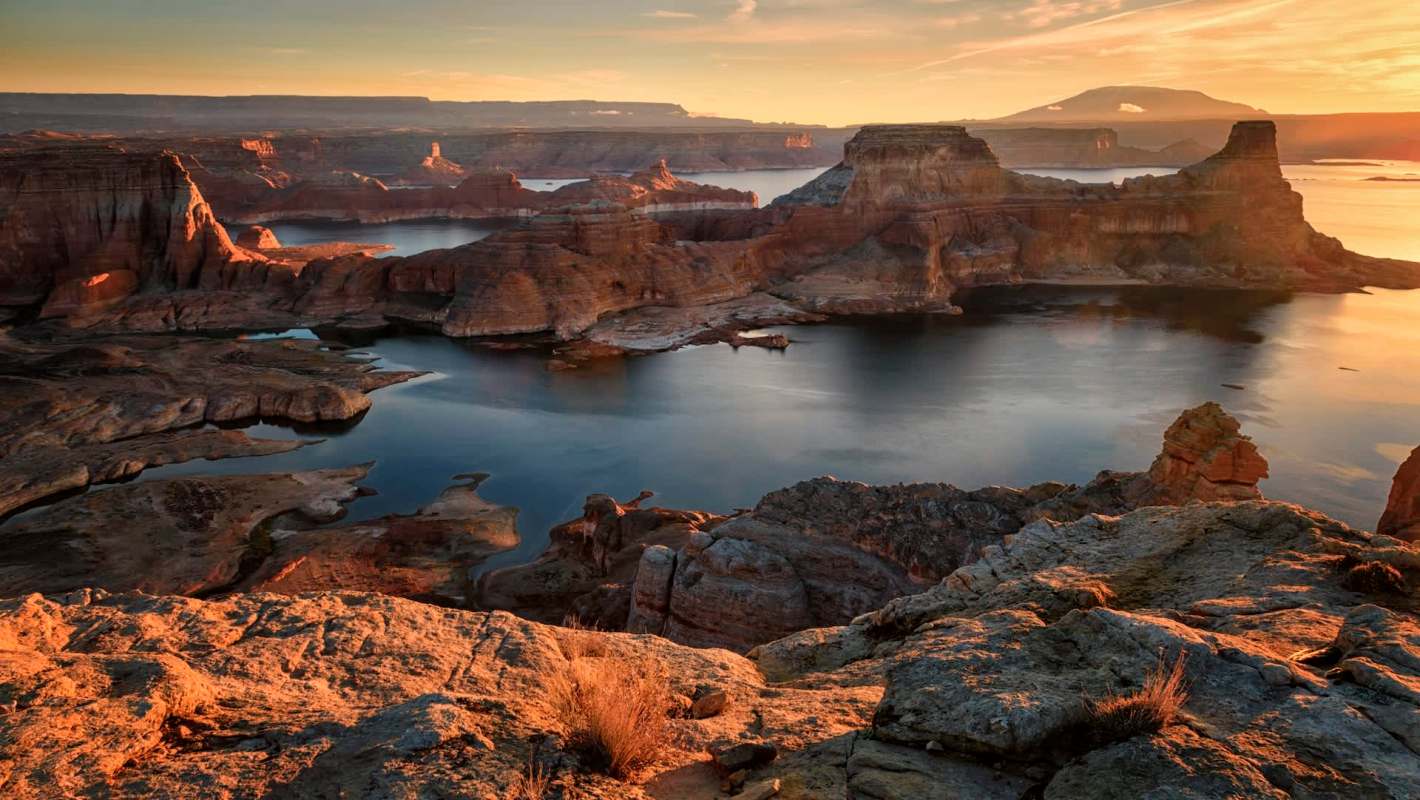
Lake Powell's ongoing water crisis is causing a messy interstate fight over one of the few reservoirs with healthy water levels.
What's happening?
Wyoming Public Radio reported on the stalemate pitting Wyoming and its fellow upper Colorado River Basin states versus the lower basin states in releasing water from Flaming Gorge Reservoir.
As The Salt Lake Tribune noted, that reservoir is at 64% capacity, which stands out as one of the better levels in the drought-laden area.
To power the Glen Canyon Dam and keep electricity bills in the lower part of the region low, Lake Powell desperately needs water. While Flaming Gorge has played the role of savior in the past, there is concern that states are going to the well too often.
"Flaming Gorge is a finite resource," said Amy Haas, director of the Colorado River Authority of Utah, per the Tribune. "You may get two or three or four major releases out of Flaming Gorge before you've brought that reservoir down to the mud."
For that reason, Wyoming and the upper-basin states are trying to have some say in how much of their valuable water is diverted away.
Why is the stalemate over Flaming Gorge important?
The battle between the states on how to proceed with Flaming Gorge and Lake Powell reveals the increasing challenge of combating persistent drought.
Utah's record winter heat is bringing the issue to the fore. Absent an agreement to bring in more water, Lake Powell could fall to dangerously low levels. Residents who rely on the dam's power could face skyrocketing utility bills in the summer.
As The Water Desk's Luke Runyon explained to Wyoming Public Radio, the state is concerned that the amount of water being taken out of Flaming Gorge could have profound impacts.
It could hurt local agriculture, commerce, and recreational activities in the water itself. The overall battle shows how interconnected water is in the Colorado River Basin and how one area's drought creates a region-wide dilemma.
TCD Picks » Quince Spotlight
💡These best-sellers from Quince deliver affordable, sustainable luxury for all




|
Which of these savings plans for rooftop solar panels would be most appealing for you?
Click your choice to see results and earn rewards to spend on home upgrades. |
 Save $1,000 this year 💸
 What's being done about the stalemate over Flaming Gorge?
Ultimately, the sides will need to come together if they hope to power the dam and keep Lake Powell from suffering long-lasting damage. The federal government has tried to intervene, but its solutions weren't met receptively by the states, as KUNC reported.
With the states missing deadlines and squabbling among themselves, the outlook is bleak. Jack Schmidt, director of the Center for Colorado River Studies at Utah State University, did offer a bit of hope.
"The only silver lining is that crises often force real innovation, and maybe that's the only outcome that we get out of this," he told the Tribune.

Get TCD's free newsletters for easy tips to save more, waste less, and make smarter choices — and earn up to $5,000 toward clean upgrades in TCD's exclusive Rewards Club.
Cool Picks






