


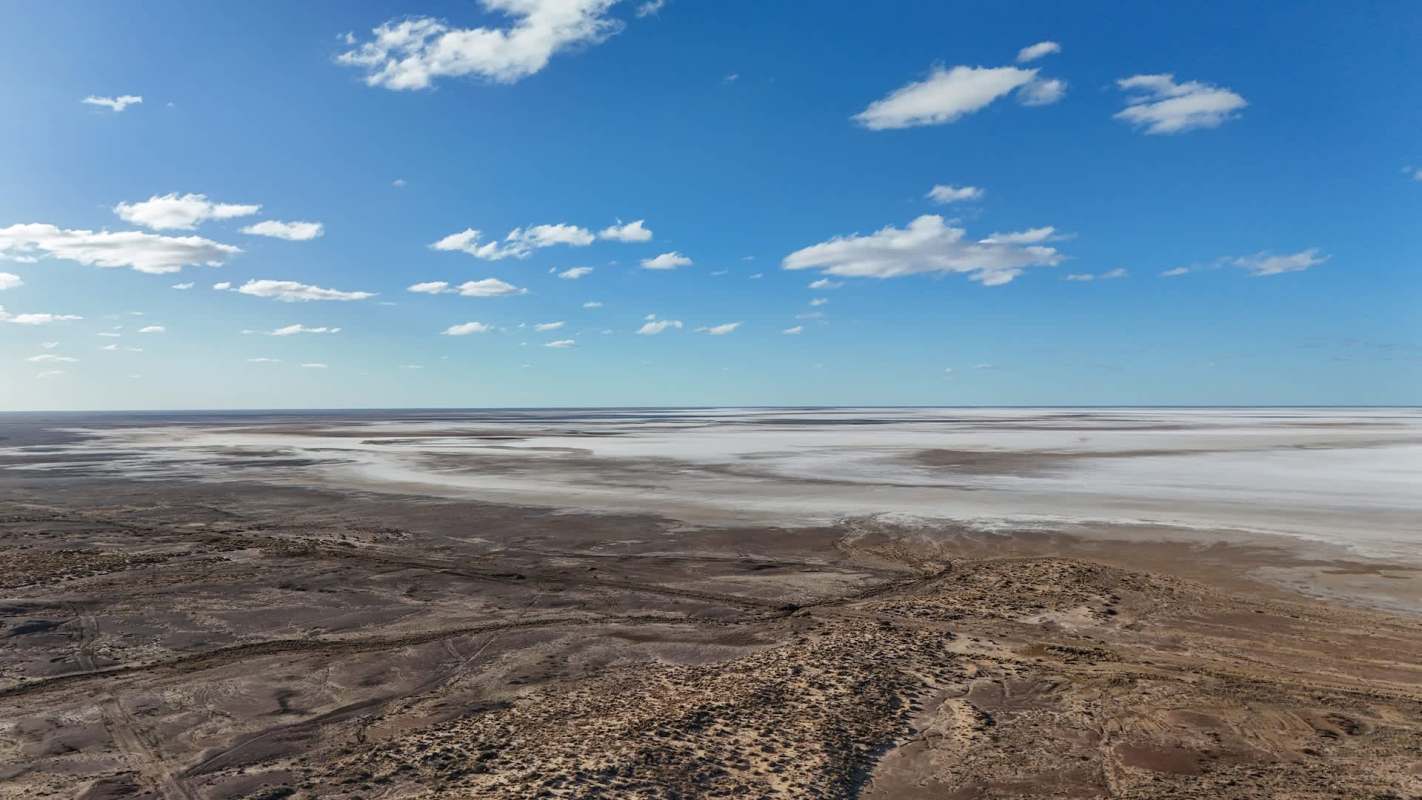
After years of abnormally arid conditions, the Kati Thanda-Lake Eyre Basin could soon reach full capacity for just the fourth time in 160 years, according to the Australian Broadcasting Corporation.
Lake Eyre, located in the notoriously dry region of southern Australia, brings hope as inland creeks and rivers slowly fill the basin.
A NASA satellite captured a time-lapse video of the lake seemingly coming to life between Jan. 18 and Feb. 24 this year.
Kati Thanda Lake Eyre 2026By late January 2026 Kati Thanda–Lake Eyre was almost dry under relentless 50 degree desert heat and harsh summer conditions. Local thunderstorms across South Australia have rewritten the story. Belt Bay now stands at 1.3m, up from 0.3m, Lake Eyre South sits at an impressive 1.2m, and Madigan Gulf at 0.6m. The lake is awakening once again. Timelapse courtesy of Zoom Earth Pro. Aerial footage courtesy ARID AIR chief Pilot Phil van Wegen.
Posted by SE Qld Weather Photography -Chris McFerran on Saturday 14 February 2026
Geoff Penton, Desert Channels Queensland operations manager, emphasized the importance of flooding rains as the source of the lake's revival. It can take weeks for the water to reach the lake as it moves slowly across floodplains and through river systems over 600 miles long.
Flooding events of extraordinary scale, however, can significantly raise the Kati Thanda-Lake Eyre water level.
"What you'll see is a reasonable flood event, probably two years out of 10, and then a minor flood for another couple of years out of 10," Penton told ABC.
"And then Lake Eyre might fill up from a big one every 15 to 20 years."
Long-time residents in the area are hopeful that lake levels will continue to rise and even reach capacity as the season reflects conditions similar to the record-breaking lake depth achieved over 50 years prior.
Residents who witnessed the historic lake season have even deemed current conditions "equal" to those of the past.
"I think 98% [of water] in a normal year comes out of Queensland, Northern Territory, and this year … I would say about 50% of it has come locally," a local tourism operator observed.
|
Which of these savings plans for rooftop solar panels would be most appealing for you?
Click your choice to see results and earn rewards to spend on home upgrades. |
 Save $1,000 this year 💸
 Flooding rains are critical for lake environments, as native plant species rely on floodwaters for their deep roots. Native animals like birds and fish also rely on floods for boosted food production and safe habitats conducive to breeding.
TCD Picks » Quince Spotlight
💡These best-sellers from Quince deliver affordable, sustainable luxury for all




While floods are important for these fragile ecosystems, they can also be a source of devastation for communities around the world.
With global temperatures rising, extreme weather events are becoming more intense. Heavy rains can easily lead to flooding, especially in regions unequipped with adequate infrastructure to withstand extreme weather.
The economic damage from flooding alone can devastate communities for years and even decades.
As Penton aptly put it, "It really is a two-edged sword, all this rain."

Get TCD's free newsletters for easy tips to save more, waste less, and make smarter choices — and earn up to $5,000 toward clean upgrades in TCD's exclusive Rewards Club.
Cool Picks




