


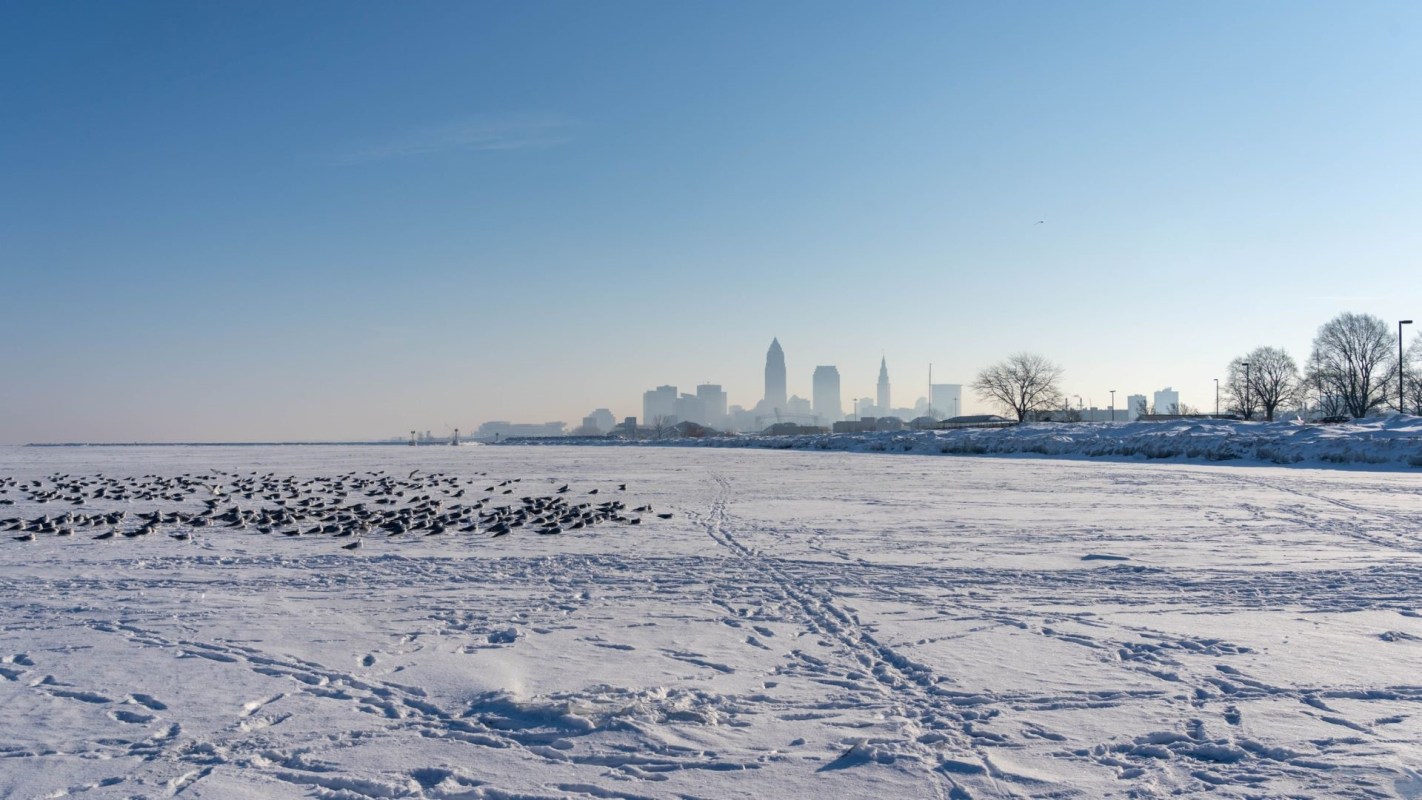
For the first time in more than two decades, Lake Erie is nearly completely frozen. As a result, surrounding communities could see a number of impactful side effects.
What's happening?
As reported by Spectrum News 1, 95% of Lake Erie was ice-covered in early February. Although the lake is certainly no stranger to ice, it has been over 20 years since it was completely frozen over.
Due to the region experiencing a stretch of mild winters in recent years, the feat has become increasingly rare for the iconic lake.
According to Mike McKay, researcher at the Great Lakes Institute for Environmental Research, University of Windsor, experts are actually more surprised by how quickly the freeze has happened.
"It catches people off guard," McKay told Spectrum News 1.
The researcher noted that just 1% of the lake was frozen on Jan. 14. In less than a month, more than 90% of Lake Erie has seen a rapid freeze.
"It's not surprising to see the high ice cover we have in Lake Erie, it's just that we've been having more frequent less ice years in the lake," added McKay.
Why is the freezing of Lake Erie important?
With a maximum depth of just 210 feet, Lake Erie is the shallowest of all of the Great Lakes, trailing Lake Superior by more than 1,000 feet. The shallow depth allows for the water temperature in Lake Erie to drop faster than any of the other lakes, opening the door for a full freeze.
The amount of ice that forms on Lake Erie can have a major impact on the region's ecosystem throughout the entire year. When the lake undergoes a major freeze, the ice can act as a natural defense against potential shoreline erosion and even protect vulnerable marine habitats.
On the flip side, complete ice coverage can cause a severe disruption in shipping routes across Lake Erie. This can lead to more reliance on ice-breaking ships to free up routes. This can cause delays in shipping operations and a cascade of logistical issues for regional companies.
TCD Picks » Upway Spotlight
💡Upway makes it easy to find discounts of up to 60% on premium e-bike brands





|
What's the most you'd pay per month to put solar panels on your roof if there was no down payment?
Click your choice to see results and speak your mind. |
 $200 or more 💰
 A frozen Lake Erie can also essentially turn off the lake effect snow machine for snow belt locations. As a region that can typically see localized snowfall amounts well over 100 inches a year, lake effect snow contributes a significant amount of that accumulation. Without the heavy snow, water resources for inland communities may be impacted with a higher risk of drought conditions.
"Lake-effect snow is so localized, we're not going to get that. Instead we're going to rely on the regular storm systems that track west to east across the country to bring us snow," said Spectrum News 1 chief meteorologist Chris Gilson.
What's being done about the research around Lake Erie?
With greater ice coverage on Lake Erie, McKay explained that his research team will also need to rely on ice-breaking ships, including vessels operated by the U.S. Coast Guard. To continue research of Lake Erie fisheries and their relationship with ice coverage, researchers require access to the chilly waters.
McKay does hope to raise awareness on the importance of lake research, especially during the variable winter seasons.
"We're seeing momentum in terms of interest in the winter on the Great Lakes," said McKay. "We know a lot about what goes on from May until October in the Great Lakes. We don't know a whole lot about what goes on in the winter."

Get TCD's free newsletters for easy tips to save more, waste less, and make smarter choices — and earn up to $5,000 toward clean upgrades in TCD's exclusive Rewards Club.
Cool Picks






