


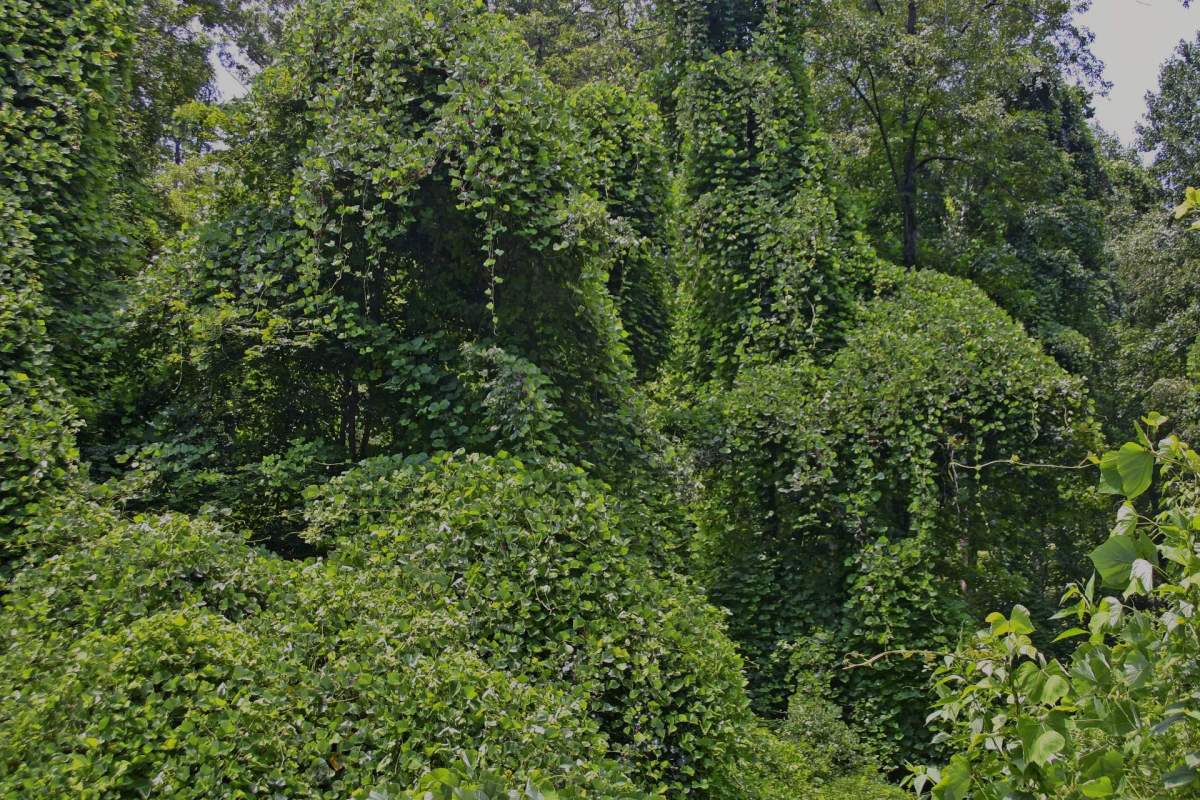
Misguided efforts to revitalize agricultural land in the United States' South have created a monster vine that's destroying ecosystems.
What's happening?
According to Inside Climate News, North Carolina is fighting against the fast-growing, highly flammable kudzu vine. This invasive vine is rampant in Norman Wilder Forest in Tryon, North Carolina, and volunteers must use heavy-duty gloves, chainsaws, and a pickaxe-like mattock to remove it.
The kudzu vine was an ornamental porch plant for decades and seemed harmless. However, when the soil was subjected to monoculture farming — the practice of growing only one crop species for years — southern agriculture suffered. The soil lost all its nutrients.
As a solution, the U.S. government began paying farmers to plant kudzu vines, believing it to be a "miracle vine" that could enrich the soil with nitrogen and make it farmable again. Sadly, this was a mistake, and almost 100 years later, the land continues to pay the price.
Why is the kudzu vine dangerous?
Like most invasive species, the kudzu vine grows at a staggering rate.
"Invasive plants have a few characteristics that native ones don't," explained David Coyle, associate professor of forest health and invasive species at Clemson University, per ICN. "One is a super-high growth rate and a super-high reproductive rate. Every time one of those section junctions hits the ground, it just starts roots."
TCD Picks » Quince Spotlight
💡These best-sellers from Quince deliver affordable, sustainable luxury for all




Its speedy spreading makes it hard for native species to establish themselves. The kudzu vine hoards space and vital resources, outcompeting natural plants and disrupting the ecosystem's balance. This has a domino effect, as the collapse of one species often leads to the collapse or overgrowth of another.
Healthy ecosystems are essential for a reliable food supply and a healthy planet. Protecting native species also protects people.
Furthermore, kudzu vines are prone to catching fire. In March 2025, a spark from a fallen power line sparked a 600-acre forest fire, according to The Atlanta Journal-Constitution via ICN.
What's being done about the kudzu vine?
Getting rid of an invasive species is challenging, but volunteers working with Conserving Carolina, aka Kudzu Warriors, have been tackling the vine in Tryon. However, this problem can't be solved overnight.
|
Which of these savings plans for rooftop solar panels would be most appealing for you?
Click your choice to see results and earn rewards to spend on home upgrades. |
 Save $1,000 this year 💸
 "We're never going to be rid of kudzu on a regional scale," Coyle explained to ICN. "You've got to pick your battles. It's a multi-year commitment. You kill that top layer of kudzu, there's a seed bank under there that's going to grow up again the next year. It just takes a commitment, and it's hard."
The Kudzu Warriors are making a difference. And other removal efforts, such as unleashing a herd of goats to graze on the vines, are helping too. But it'll take ample effort and time to remove kudzu completely.

Get TCD's free newsletters for easy tips to save more, waste less, and make smarter choices — and earn up to $5,000 toward clean upgrades in TCD's exclusive Rewards Club.







