


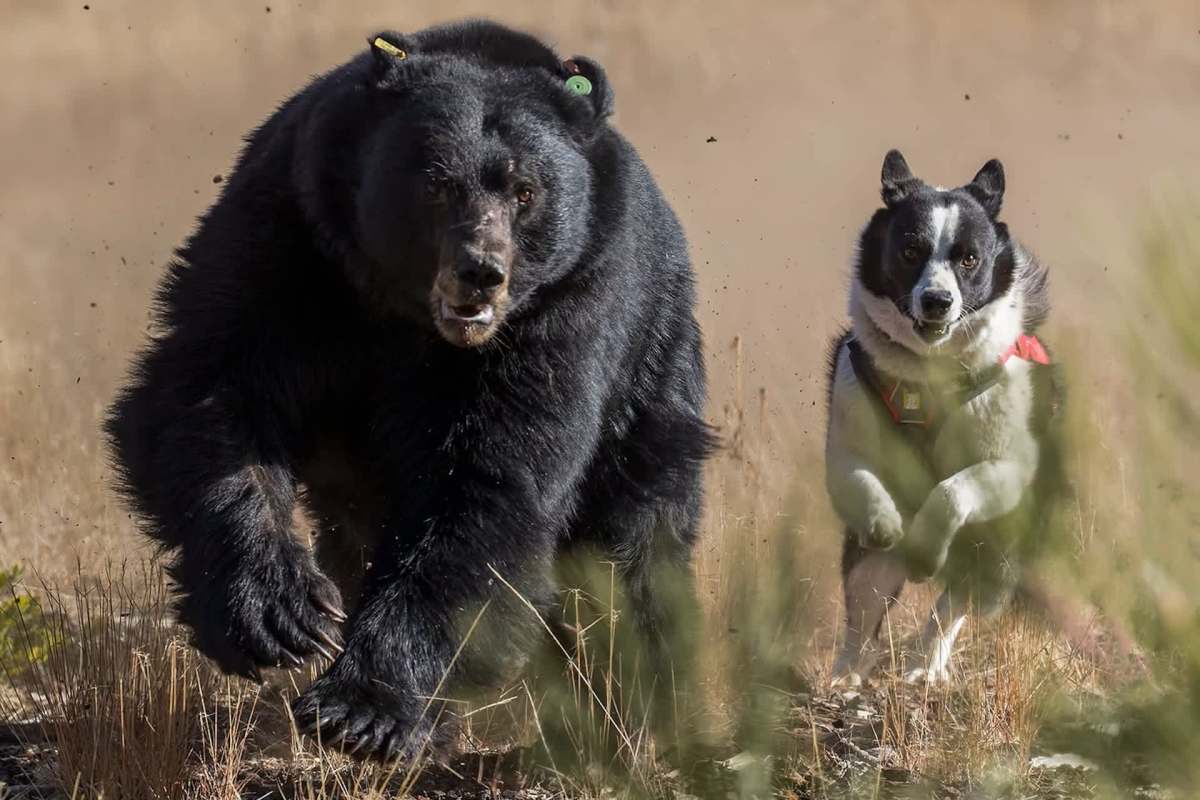
Two shaggy Nevada wildlife workers are helping solve a growing problem in bear country: black bears becoming a bit too comfortable around people. Badger and Banjo, a pair of Karelian Bear Dogs, are trained to chase, corner, and intimidate bears so the animals relearn an important survival skill: keeping their distance from humans.
What's happening?
The Nevada Independent reported that the Nevada Department of Wildlife deploys Karelian Bear Dogs when black bears shelter beneath homes, enter buildings, or begin connecting residential areas with easy food.
The dogs assist bear biologists Carl Lackey and Becca Carniello by clearing bears out of cramped hiding spots, locating injured animals, and helping frighten bears away during releases back into the wild.
The point is not to injure the animals, but to make time around people feel unpleasant rather than rewarding.
As Lackey explained: "[The bears'] experiences for the most part around people have been positive. We're just trying to give them a bad experience around people."
Nevada's black bear population has rebounded significantly. Habitat destruction and illegal hunting had reduced the state to about 30 bears by the 1980s, but conservation work helped lift that number to an estimated 600 to 700 bears across western Nevada.
TCD Picks » Quince Spotlight
💡These best-sellers from Quince deliver affordable, sustainable luxury for all




Banjo, 9, and Badger, 4, now help the state manage dozens of bear-related incidents each year without permanently removing animals from the landscape.
Why does it matter?
When bears lose their fear of people, the danger rises for everyone involved.
For Nevada officials, the program offers a way to keep bears on the landscape while lowering risk in nearby communities. Instead of assuming every recurring bear must be treated as a problem animal, the department tries to alter the bear's behavior, reducing the odds of more serious encounters and of animals relying on human food.
The dogs also make close-range responses safer for wildlife staff.
Carniello said, "They really add a level of comfort and safety for us when we're in some of these close situations."
Black bears generally do not harm people, and while Nevada has recorded injuries, it has not recorded any deaths from bears. More often, the larger issue is unsecured trash, food, or shelter opportunities that attract animals in the first place.
What's being done?
According to The Nevada Independent, Nevada is one of only a few state agencies using Karelian Bear Dogs in this role, and the effort has been built over many years.
Before retiring after nearly 33 years with the department, Lackey helped shape how the state handles conflicts, tracks information, and releases bears close to where they were captured.
Wildlife officials once sometimes moved bears much farther away, but many of those animals returned anyway. Releasing a bear near the capture site and then hazing it with dogs like Badger and Banjo is intended to make that specific area feel unsafe while allowing the animal to remain within its home range.
Relying on the dogs has also reduced the need for tougher hazing tools such as rubber bullets or bean bag rounds.
Officials are continuing public education efforts as well, encouraging residents to use bear-resistant garbage cans and lock down other attractants around their homes.
As Lackey said, "We're trying to change the narrative."
Carniello added, "The only permanent long-term solution comes from people securing their attractants."

Get TCD's free newsletters for easy tips, smart advice, and a chance to earn $5,000 toward home upgrades. To see more stories like this one, change your Google preferences here.







