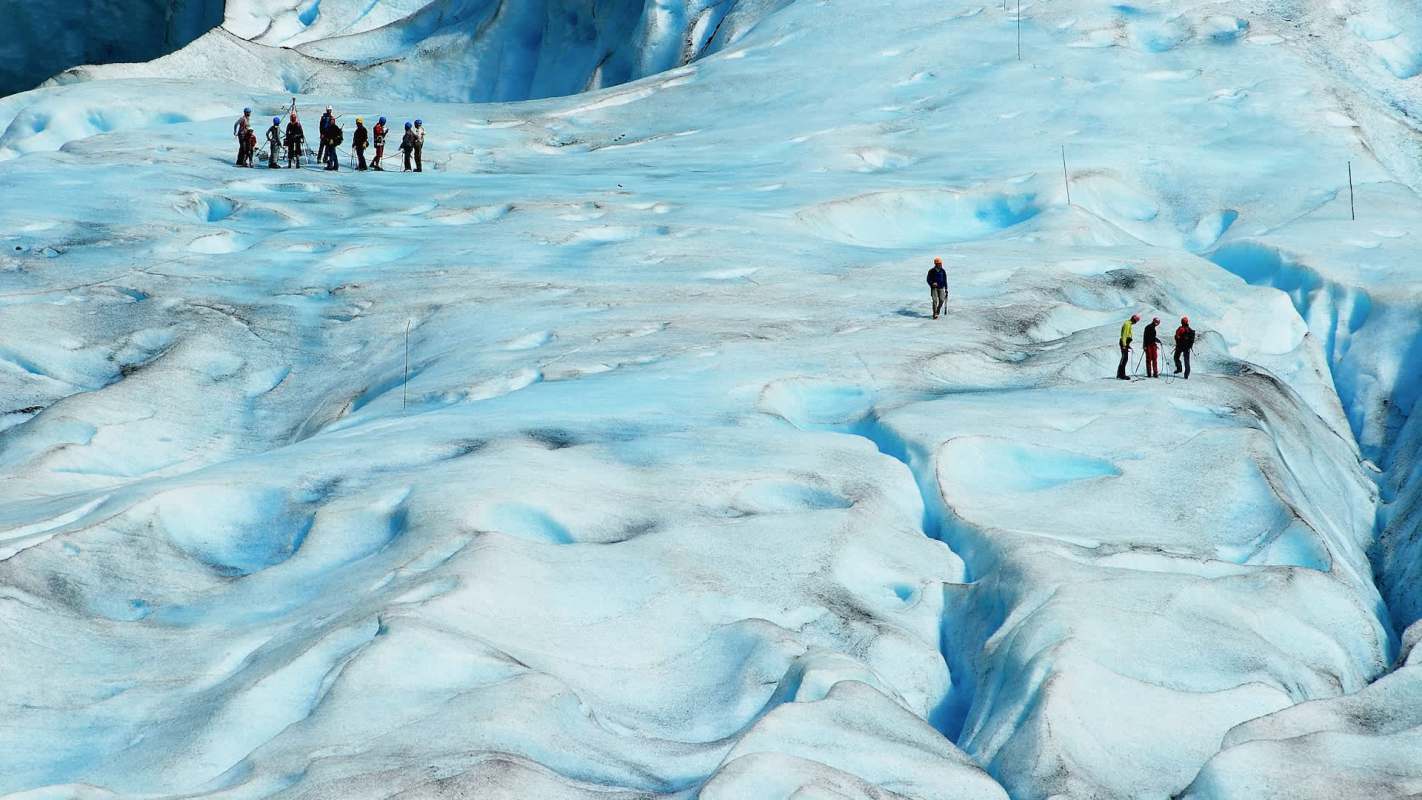
Researchers are sounding the alarm after a study of the largest ice cap in Europe painted a very grim picture of its future on our current trajectory.
What's happening?
According to a study published in the scientific journal The Cryosphere, the Jostedalsbreen ice cap in Norway is in peril.
Using projections and analysis, they ran simulations to determine how long the ice cap would survive under varying rates of carbon dioxide emissions.
The news wasn't pretty. Researchers found that under current emission levels, the glacier's size will be just one-third of what it is today by 2100, and completely gone by 2300. If emissions are reduced to a more moderate amount, we'll lose half of its area by 2100.
Making matters worse, the researchers projected that, given the direction global weather patterns are heading, it will be virtually impossible to regain much of the surface area lost.
"This climate is changing, Norway's glaciers are struggling in the heat, and this will continue. Our smallest glaciers are already disappearing," the researchers wrote in an article in forskersonen.no, according to Titan.
Perk up the winter blues with natural, hemp-derived gummies Camino's hemp-derived gummies naturally support balance and recovery without disrupting your routine, so you can enjoy reliable, consistent dosing without guesswork or habit-forming ingredients. Flavors like sparkling pear for social events and tropical-burst for recovery deliver a sophisticated, elevated taste experience — and orchard peach for balance offers everyday support for managing stress while staying clear-headed and elevated.
Learn more → |

"When the ice retreats and the landscape changes, future glacier hikers or those attempting the popular spring ski traverse 'Josten på langs' will have to go much farther," they added,
Why is this concerning?
As the planet warms, weather patterns get less predictable and more dangerous.
The ice caps and massive glaciers in the Arctic and Antarctic help to regulate those weather patterns, and as the planet warms, they shrink.
The result is a cascade effect: shrinking ice caps raise temperatures, which make them shrink faster, and on and on until they've disappeared.
TCD Picks » Upway Spotlight
💡Upway makes it easy to find discounts of up to 60% on premium e-bike brands





|
What's the most you'd pay per month to put solar panels on your roof if there was no down payment?
Click your choice to see results and speak your mind. |
 $200 or more 💰
 Moreover, Jostedalsbreen is one of the largest ice caps in the world; while it will take until at least 2100 to see a massive loss of surface area, many smaller glaciers and ice caps will melt faster and disappear completely.
We've already seen this happen with Arctic sea ice and with massive Antarctic glaciers like Hektoria — which is the size of Philadelphia, and lost half of its entire mass in just two months.
Ice caps are crucial to our planet's long-term health, and the more they shrink, the harder it will be to undo the damage we've done to the planet.
What's being done about shrinking ice caps?
The best way to protect the polar ice caps is to drastically reduce emissions.
You can help by working with and electing legislators who push green initiatives and support green energy.
You can also take steps to reduce your own carbon footprint by driving an EV or biking for shorter trips, using less plastic, and installing solar panels on your home.

Get TCD's free newsletters for easy tips to save more, waste less, and make smarter choices — and earn up to $5,000 toward clean upgrades in TCD's exclusive Rewards Club.
Cool Picks