


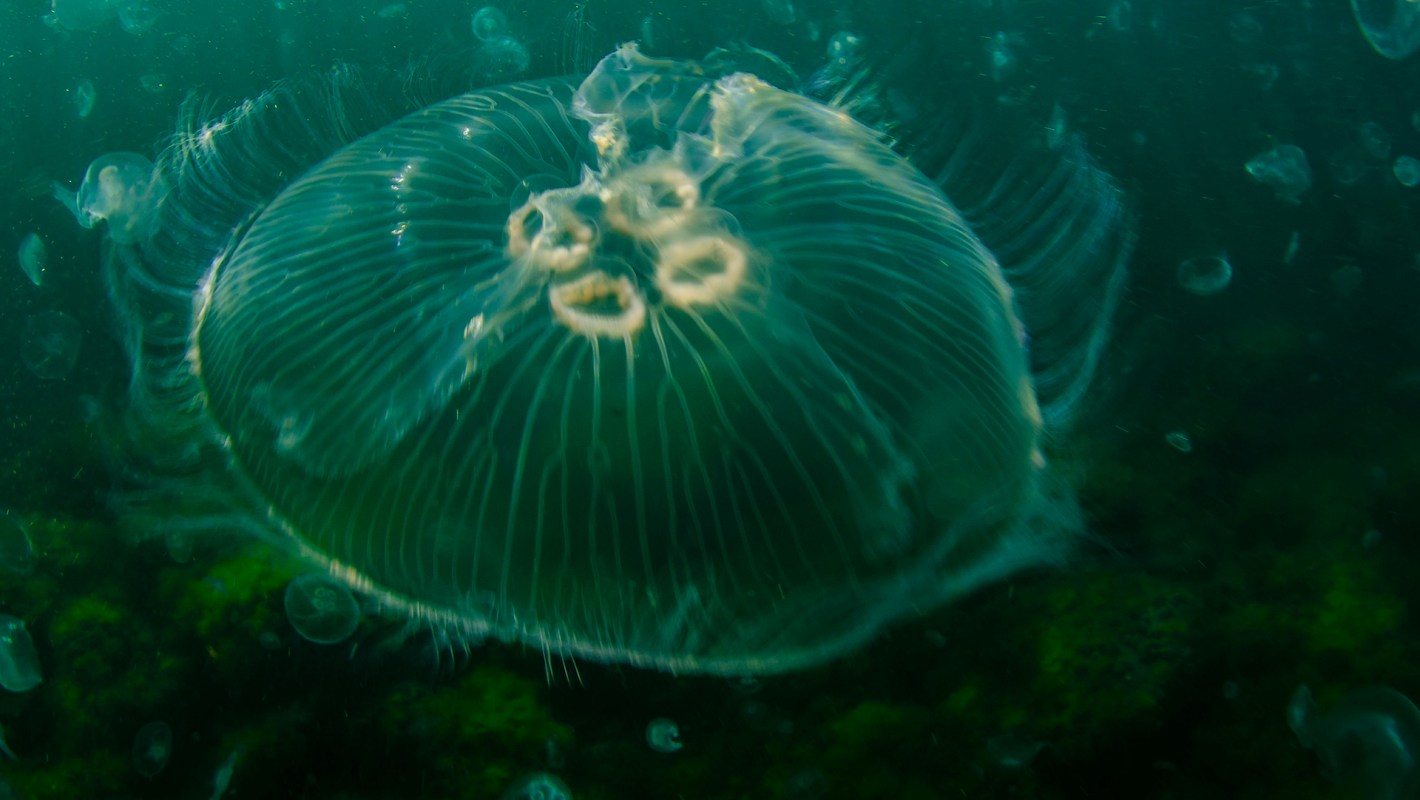
New research reveals that Danish jellyfish and a similar invader have their own unlikely summer delicacy.
What's happening?
Discover Wildlife reported on a study published in Hydrobiologia, revealing that native moon jelly and the jellyfish-like invasive species known as the comb jelly prey on their fjords' bottom-dwelling worms during the brief time they emerge to spawn.
As it turns out, the notoriously unpicky marine creatures, which typically feed on zooplankton, fish larvae, and small crustaceans, have an even bigger menu than once thought.
"Although jellyfish are known to be omnivorous and generally consume whatever they encounter, it is the first time this behaviour is documented," researcher Hannah Yeo of the University of Southern Denmark told Discover Wildlife.
Their prey in this case, polychaete worms, makes up a huge number of worms that are typically safely out of reach of both predators since they hang out in burrows below the seabed.
When they do come out in the summer to spawn, the native moon jelly and invasive comb jelly are ready to pounce.
TCD Picks » Quince Spotlight
💡These best-sellers from Quince deliver affordable, sustainable luxury for all




Forty-five of 166 moon jellies and three of 71 comb jellies had evidence of worm consumption. Those numbers might underestimate the prevalence.
"It takes only a couple of hours for the jellyfish to digest these worms, so there were probably more cases than the ones we observed," researcher Erik Kristensen told Discover Wildlife.
Why is the jellyfish's consumption of these worms important?
While there's no reason to believe the worms are a large component of the jellyfish's summer diet, it doesn't mean it couldn't be an important finding.
For one thing, comb jellies are an invasive species in Denmark. If the extra summer food enables them to outcompete native species, it could have negative impacts on the local ecosystem — just like in Venice, Italy, where comb jellies are harming native crab species.
Comb jellies have a well-earned reputation for being extremely disruptive, as NASA detailed.
Another revelation of the study is that there's an upward flow of energy within fjords. Food doesn't just sink from the surface to the seafloor for bottom feeders.
Local fish such as trout and apparently these jellyfish benefit when the animals at the bottom of the sea emerge as a food source seasonally.
What's being done about comb jellies?
Researchers are trying to get to the bottom of how comb jellies are invading North and Baltic sea habitats. Discovering what allows the creatures to succeed and how they take root in new areas will be critical to eradicating them.

Get TCD's free newsletters for easy tips, smart advice, and a chance to earn $5,000 toward home upgrades. To see more stories like this one, change your Google preferences here.







