


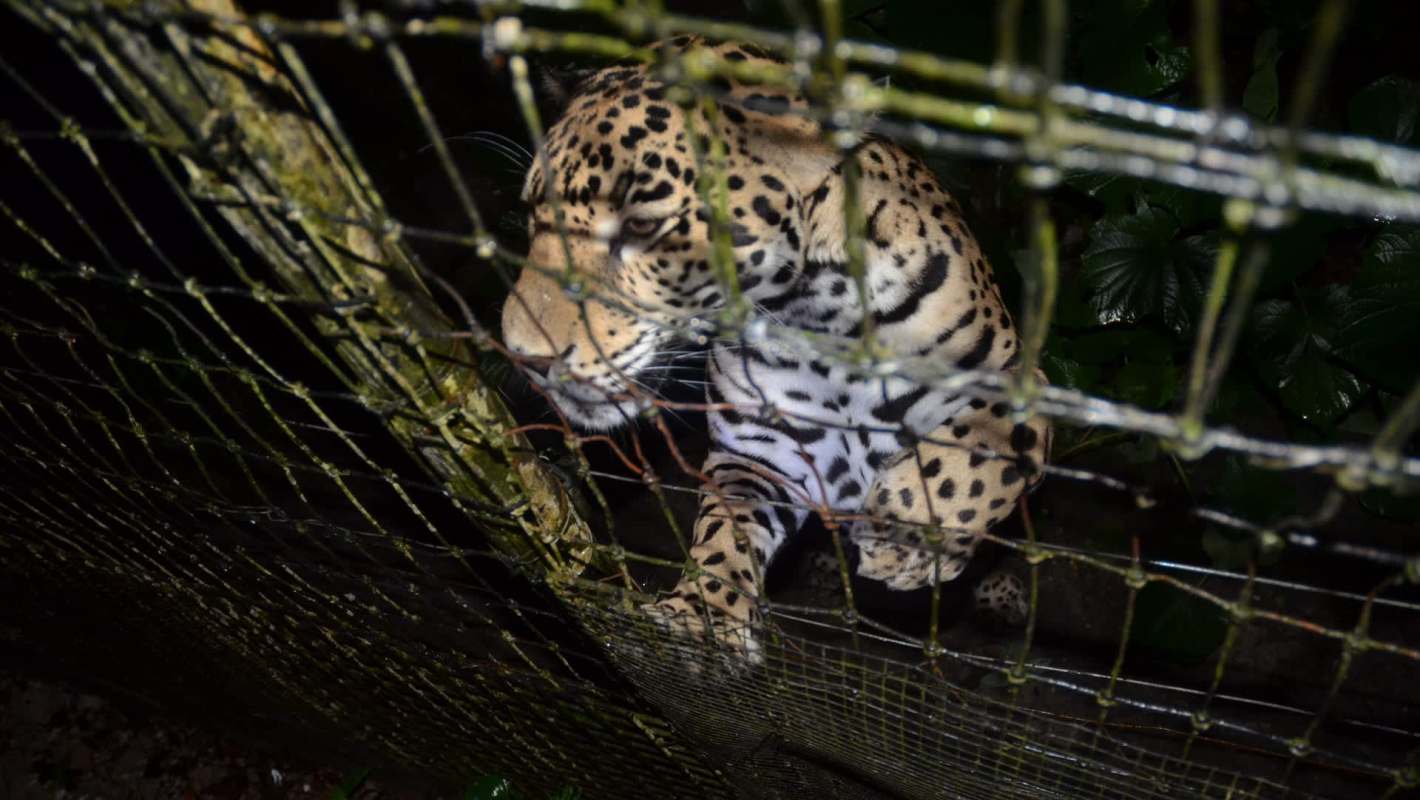
The rescue of a live jaguar from a businessman's home in eastern Honduras is drawing attention to a larger and deeply troubling issue: the illegal capture and private ownership of wild animals.
Conservationists say the case is not just about one young cat. It reflects how wildlife trafficking can persist when penalties are weak, demand remains strong, and rare animals are treated as luxury possessions by people with money and influence.
What happened?
Honduran authorities said they seized a young female jaguar during a May 6 raid at a home in Olancho, in the eastern part of the country, Mongabay reported. Officials believe the cat is around a year old and may have been taken from the Mosquitia forests.
The raid followed a tip to prosecutors that a jaguar was being kept at the residence. Investigators spent roughly two weeks preparing the operation. Officials said it marked Honduras' first seizure of a live jaguar since 2018.
The jaguar was not the only animal found at the property. Investigators also confiscated a Panamanian white-faced capuchin, two parrots, and a ball python.
Under Honduran law, jaguars are protected and cannot legally be kept as pets. Authorities said the businessman had not been arrested at the time of reporting, but he is expected to face charges tied to harm to endangered species and illegally taking wildlife. If convicted, he could face fines of about 172,000 lempiras, or roughly $6,500.
TCD Picks » Quince Spotlight
💡These best-sellers from Quince deliver affordable, sustainable luxury for all




That relatively low penalty helps explain why the practice continues. Officials say jaguars are sometimes kept by wealthy individuals as well as people linked to drug and arms trafficking.
Franklin Castañeda, Honduras director at the wildcat NGO Panthera, said the seizure matters because it is "sending a message to traffickers." He also noted that even when wildlife penalties are limited, investigations like this can lead authorities to uncover other crimes that carry much harsher consequences.
The rescued jaguar has been moved to a rehabilitation center, and specialists are evaluating whether she might one day return to the wild, according to Mongabay.
Why is wildlife trafficking concerning?
The case stands out because jaguars are already under pressure across the Americas, and every animal taken from the wild makes recovery more difficult.
Jaguars are currently listed as near threatened, and, according to Mongabay, their numbers have fallen by about 20% to 25% over the last three generations. The species has disappeared from more than half of its historical range as habitat is lost and fragmented by expanding roads, drought, and wildfires.
Trafficking adds yet another threat. Some jaguars are killed for body parts such as teeth and skins, while others are trafficked alive into the exotic pet trade. Officials say conflict with ranchers is also killing jaguars as habitat loss and declining prey push the animals closer to livestock.
Those losses carry consequences for people as well. Jaguars play an important role in keeping ecosystems in balance, helping support healthier forests and biodiversity that communities rely on. When top predators disappear, the effects can ripple through food webs, alter prey populations, and further weaken already stressed habitats.
What's being done about wildlife trafficking?
The seizure itself is one indication that enforcement can still work.
There is also some hope for the rescued jaguar, though experts warn that rehabilitation is difficult. Rewilding a big cat is a complex process, and many efforts fail if the animal has lost essential survival skills. Even so, conservationists say cases like this could help Honduras strengthen systems for rehabilitating trafficked wildcats and, when possible, returning them to protected habitat.
Over the long term, experts say the solution has to include stronger protections for both wildlife and the ecosystems they depend on. That means safeguarding forests, rebuilding prey populations, and reducing conflict between jaguars and livestock owners.

Get TCD's free newsletters for easy tips, smart advice, and a chance to earn $5,000 toward home upgrades. To see more stories like this one, change your Google preferences here.







