


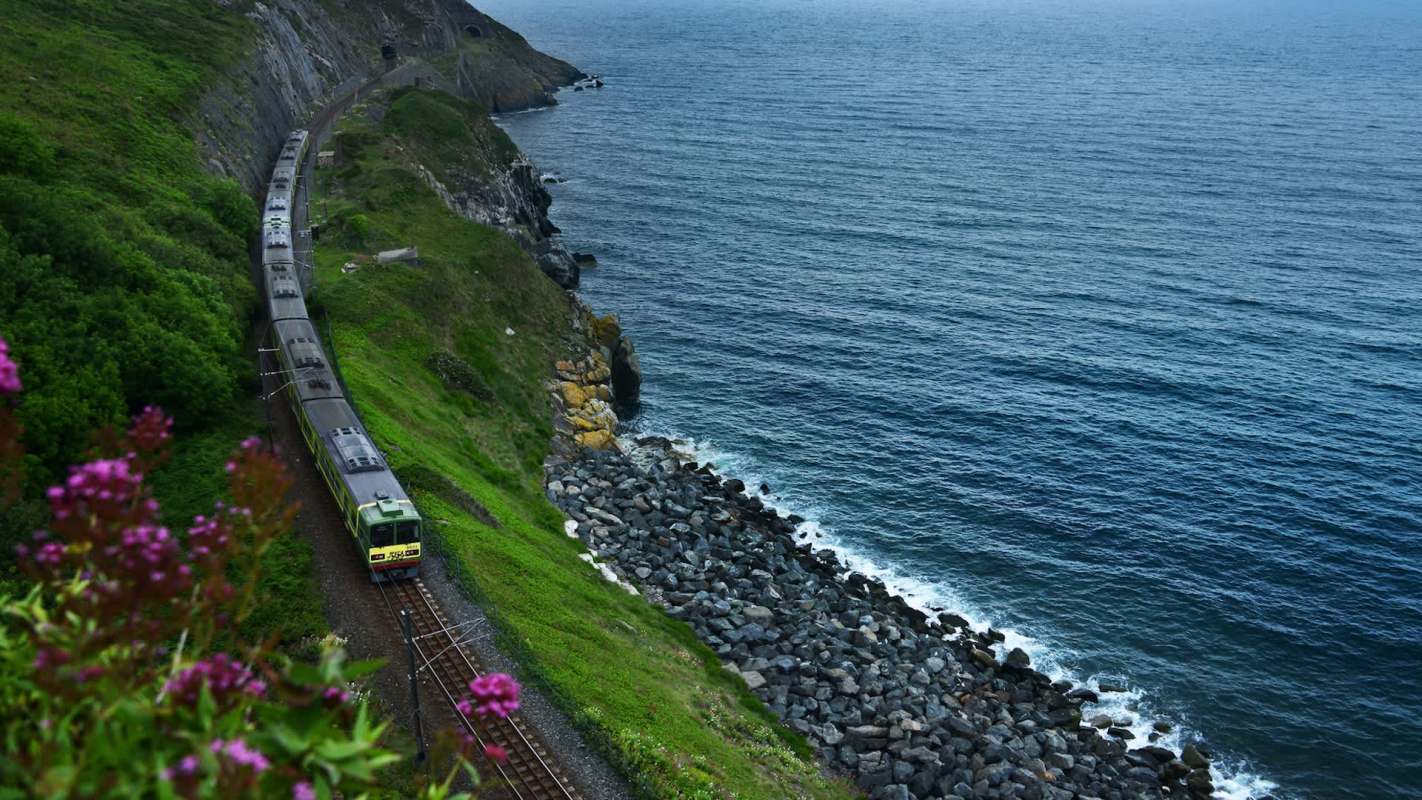
Irish Rail completed nearly 51 million passenger journeys last year, but it is in danger of losing a scenic route that connects to its capital of Dublin, the largest city in Ireland.
What's happening?
As RailTech.com detailed, as the climate warms, strong storms are battering the Irish coast with greater frequency and intensity, and sea levels are rising.
As a result, Ireland is experiencing increasingly evident erosion along its East Coast, where Irish Rail operates the Dublin-Rosslare railway.
Over the last decade, some stretches of the railway line experienced encroachment of 20 to 30 meters due to coastal erosion. Five sections between Dublin and Wicklow are most at risk. The railway expects disruptions to service unless it takes action to safeguard the route.
"The threat of climate change is real for all of us, but for us in the railway it presents unique challenges, particularly on the eastern coastal route," said chief executive Jim Meade.
Why is this important?
Even if passenger trains run on diesel, as most of Irish Rail's do, they are still one of the most cost-effective and environmentally friendly ways to get around. This makes them an excellent choice for budget-minded travelers who also want to reduce their carbon footprints.
However, railway disruptions would likely incentivize travelers to turn to modes of transportation that account for significantly more pollution per person, such as gas-powered vehicles.
This, in turn, would exacerbate the very problem threatening Irish Rail's Dublin-Wicklow route, as heat-trapping pollution from dirty fuels, such as gas, oil, and coal, is the primary culprit behind the rising global temperatures supercharging extreme weather.
What's being done about this?
Irish Rail has proposed a series of East Coast Railway Infrastructure Protection Projects to protect and shore up its existing railway infrastructure. For instance, it aims to raise the seaward walls at Seapoint to safeguard against storm surges while also establishing a footpath to ensure continued community access to the area with minimal visual impact.
The five key locations identified for protection from coastal erosion due to a warming climate include: Merrion Gates to Seapoint Beach; Whiterock Beach to South Killiney; Bray Head to Greystones North Beach; Kilcoole to Newcastle; and Newcastle to Wicklow Murrough.
TCD Picks » Quince Spotlight
💡These best-sellers from Quince deliver affordable, sustainable luxury for all




"ECRIPP will provide infrastructure protection works that will future-proof this section of the railway for generations to come," Meade explained, per RailTech.com. The project is in Phase 3 of preliminary design, and the public can offer feedback on the proposals through mid-October.
|
Do you think America does a good job of protecting its natural beauty? Click your choice to see results and speak your mind. |
 Definitely 👍
Join our free newsletter for good news and useful tips, and don't miss this cool list of easy ways to help yourself while helping the planet.
Cool Picks






