


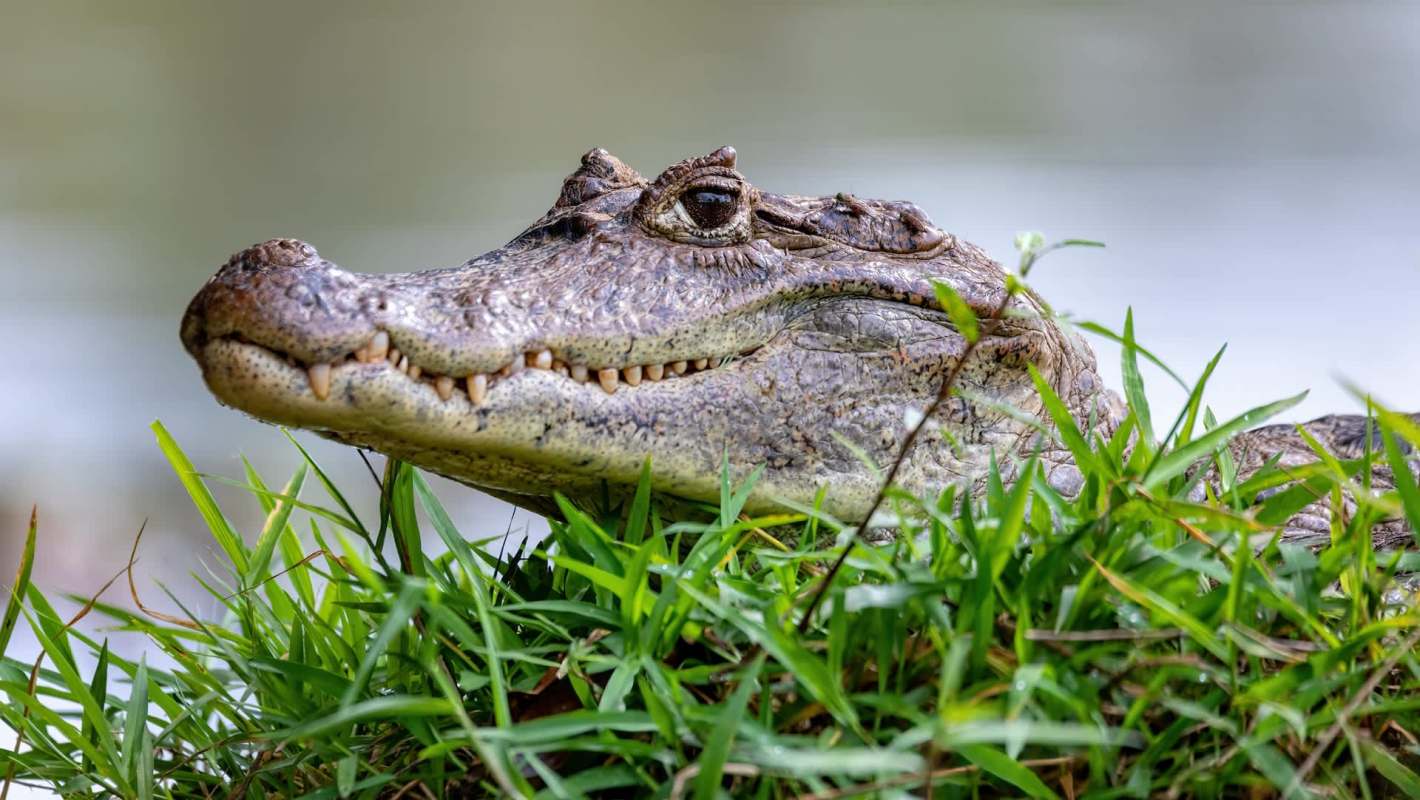
South Florida has long had two native crocodilians, the American alligator and the American crocodile.
But researchers have said an invasive species, the spectacled caiman, is turning up beyond neighborhood canals and can be found in Everglades habitats.
What's happening?
Drawing on roughly four decades of records, a University of Florida study published in the journal Frontiers in Amphibian and Reptile Science concluded that spectacled caimans now occupy a greater patch of South Florida.
The researchers noted that recent sightings of the invasive animal stand out because they placed caimans in marshes in or near Everglades National Park rather than mainly in canals and developed areas.
Scientists said the species has spread in part because spectacled caimans can use many kinds of habitat, reproduce at relatively small sizes, and tolerate conditions similar to those enjoyed by native alligators and crocodiles.
CBS News reported that the reptiles, first established in the state's wild areas in the late 1970s, have now been documented from Miami-Dade north to Port St. Lucie.
TCD Picks » Quince Spotlight
💡These best-sellers from Quince deliver affordable, sustainable luxury for all




Researchers found that the caimans already share the same habitats as alligators in western Miami-Dade and Broward, Biscayne Bay, and parts of Everglades National Park. They reported less overlap with American crocodiles so far, but warned that restoration projects that add more freshwater habitat could change that.
Why does it matter?
For wildlife managers working to restore one of the country's most important wetland ecosystems, the spread of this invasive reptile could create a new set of challenges.
South Florida communities continue to depend on these wetlands. If invasive caimans gain a stronger foothold in those same places, protecting the habitat could become more difficult and more expensive.
Luckily, CBS News reported that there are no confirmed Florida cases of spectacled caimans eating threatened or endangered species.
Even so, scientists said they could still add pressure to sensitive wildlife, such as native water snakes, which have declined in parts of the Everglades and are known caiman prey.

Get TCD's free newsletters for easy tips, smart advice, and a chance to earn $5,000 toward home upgrades. To see more stories like this one, change your Google preferences here.







