


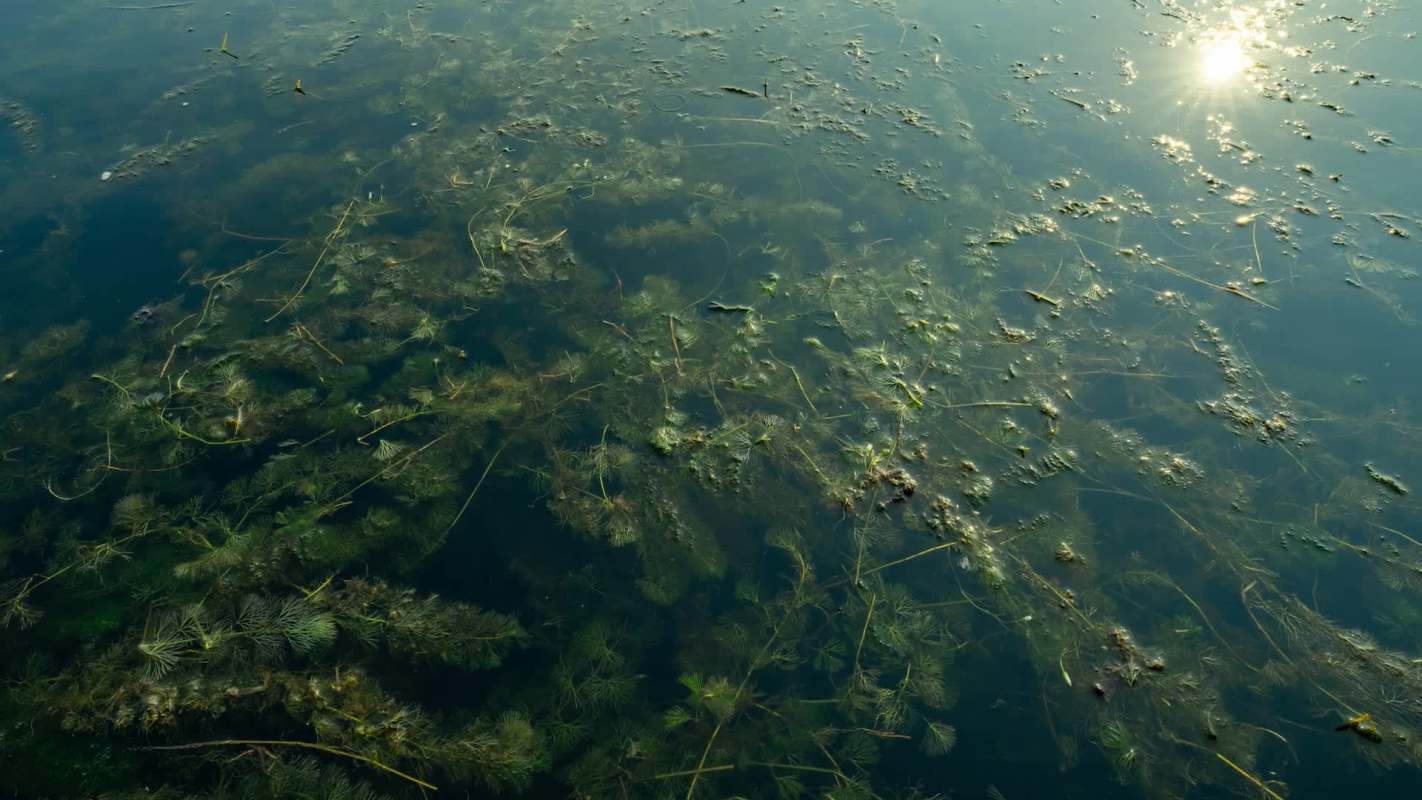
Thick mats of bright green vegetation are now covering parts of Colombia's coastal wetland Cienaga Grande de Santa Marta. In what the Associated Press calls a crisis, the plant disrupts fishing, blocks travel, and makes it harder for residents to reach cleaner water, showing how quickly an invasive species can disrupt an entire way of life.
"What we're seeing here today is a problem," local environmental leader Jhon Cantillo told AP News. "One that affects not only movement or fishing, but the community as a whole."
The aquatic plant, Hydrilla verticillata, or what some locals refer to as Horse Tail, is native to Asia and was first reported in the wetland around mid-2025. Since then, it has spread quickly through Nueva Venecia and Buenavista — lagoon communities where many homes stand on wooden posts above the water. Routes that canoes and fishing vessels once used are now choked with dense vegetation.
The plant now stretches to the horizon across a key fishing area in Colombia. The lagoon is also a UNESCO biosphere reserve and home to thousands of people.
Residents say the problem goes far beyond appearance.
Fish catches are falling, nets are getting tangled, and boat routes must be cut open repeatedly because the plant returns so fast.
TCD Picks » Quince Spotlight
💡These best-sellers from Quince deliver affordable, sustainable luxury for all




"We can't work because of this plant. It doesn't let us cast our nets — everything gets tangled," 61-year-old fisherman Santander Cueto said.
"The lagoon's completely covered. There's nowhere left to fish," said 58-year-old Demostenes Guerrero, who is also a fisherman.
Some families have also been forced to buy drinking water after access to cleaner freshwater channels was blocked.
Experts told AP News that nutrient pollution from the Magdalena River likely created ideal conditions for the plant to thrive.
Untreated wastewater can flood wetlands with nitrogen and phosphorus, fueling rapid growth.
Local leaders also say shifting water flows means less saltwater is reaching areas where it once helped keep Hydrilla in check.
Wetlands like the Cienaga Grande support biodiversity, local food systems, and fragile regional economies. When invasive species and pollution take hold, people often feel the effects first, especially those in isolated communities with limited access to public services.
Cantillo warned that the crisis could eventually force people to leave, saying residents now face "the risk of mass displacement."
For communities that have lived on the water for generations, that is what makes the invasion especially alarming.

Get TCD's free newsletters for easy tips, smart advice, and a chance to earn $5,000 toward home upgrades. To see more stories like this one, change your Google preferences here.







