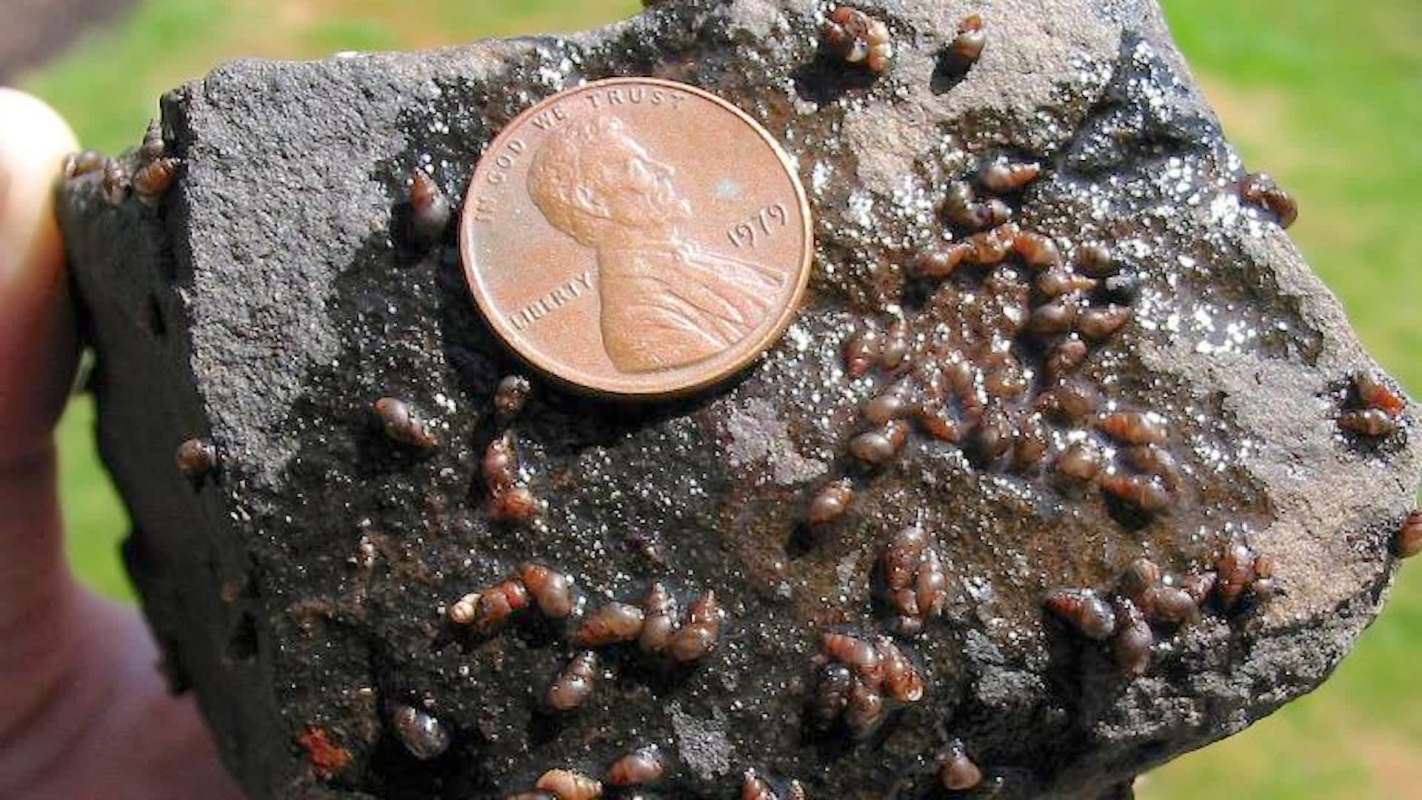
A tiny invasive snail with the ability to clone itself has been identified at Carter Lake in northern Colorado, posing a new threat to local waterways and the wildlife and communities that depend on them.
Here's what to know
CBS Colorado reported that officials are trying to keep the snail from spreading to more waterways across Colorado. At the popular recreation lake, Colorado Parks and Wildlife is screening for the species as part of a broader containment effort.
Though the New Zealand mudsnail is a small brown species, its impact can be far larger once it takes hold. As an invasive species in the region, it can breed and spread quickly because there are no natural checks and balances. The snails can outcompete native animals for food and resources, driving biodiversity loss.
"These mud snails are very big eaters, and they just kind of go through all of the different nutrients that are in an ecosystem and don't really provide any benefits back to anything else in there," Kara Van Hoose, a spokesperson for Colorado Parks and Wildlife, said. She added that the snails have been confirmed in 41 other bodies of water around the state.
More background
State officials say people are not directly endangered by the snails, but waterways that communities use for recreation can still be harmed. If an invasive species throws the food web out of balance, native species may suffer, and restoring that balance can be costly and challenging.
Van Hoose explained that the snails are also poor prey for wildlife. "They are not good food for fish. They can pass right through birds that eat them and then come out unscathed," she said.
TCD Picks » Quince Spotlight
💡These best-sellers from Quince deliver affordable, sustainable luxury for all




Cloning is one reason the species is so difficult to control. After the snails become established, getting rid of them is unlikely, so management efforts center on limiting their movement and keeping additional lakes and streams from being affected.
What's being done?
Inspection stations at Carter Lake are searching for New Zealand mudsnails along with other invasive organisms, including zebra mussels. Boats are checked both on the way in and on the way out, with inspectors focusing on the hard-to-see places where tiny stowaways can hitch a ride to another body of water.
Byron Maine, a boat owner visiting Carter Lake, was quoted as saying, "They just examine the boat, look for live wells, look at your anchor, the bottom of the boat on the trailer, things like that."
Before boaters leave, inspectors pay similar attention to anything that might carry the snails elsewhere. Maine said that includes making sure water is drained and plant material is removed: "[The staff checks] to make sure you drain your boat, don't have any water on it, clean it off, any weeds that are left on it, and just make sure it's all cleaned off and ready to go."
Because the species reproduces so easily, Colorado Parks and Wildlife expects it to stay in Carter Lake.
Van Hoose emphasized the problem, saying, "They don't really provide any other benefits to the land or the water. Instead, they just eat, and eat, and eat, and sap all of the nutrients and outcompete our native species for food."
Officials are concentrating on preventing it from reaching more waterways in Larimer County. Once invasive snails get established, the ecological damage — and the cost of responding to it — can stick around for years.

Get TCD's free newsletters for easy tips, smart advice, and a chance to earn $5,000 toward home upgrades. To see more stories like this one, change your Google preferences here.