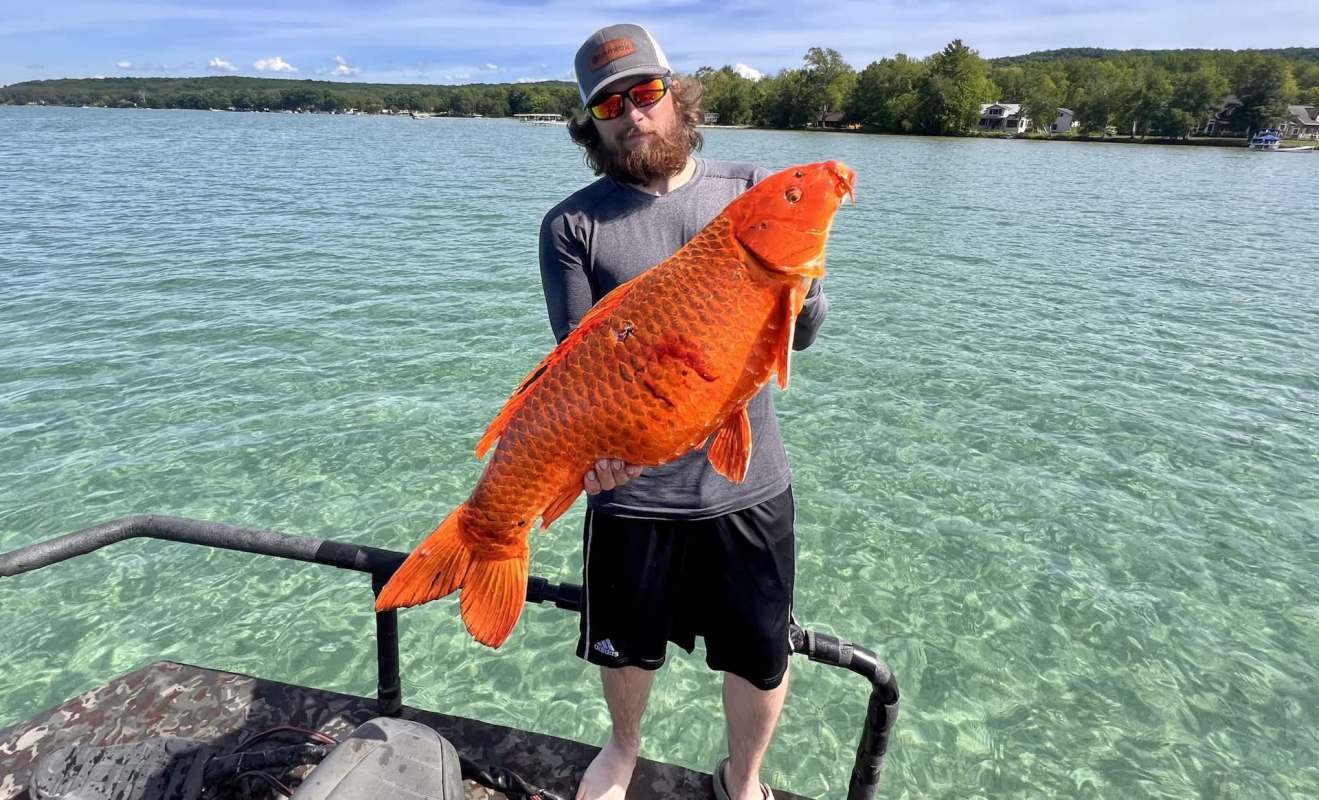
Residents in one Michigan town are being asked to help monitor lakes for bright orange koi, which conservation leaders describe as an escalating invasive problem.
For anglers, the fish may be an exciting sight, but officials want them identified before the population grows further.
What's happening?
After invasive koi were confirmed in the Glen Lake system for a third straight summer, the Glen Lake Association is asking people near Little Glen Lake, Big Glen Lake, and Fisher Lake to report any sightings this season.
According to the Glen Arbor Sun, the brightly colored fish are a type of carp commonly kept as pets and are believed to have reached the lakes after being released. Their orange, white, black, and yellow markings also make them relatively easy to recognize, which is luckily helping conservation efforts.
Reporting sightings is especially important right now as more and more of these animals are showing up in the lakes. The association also says photos are particularly helpful, since each koi has a unique pattern that can be used to follow individual fish over time.
Plus, because a single female can lay as many as 400,000 eggs in one breeding cycle, the species can spread quickly if not managed, per the Glen Arbor Sun.
TCD Picks » Quince Spotlight
💡These best-sellers from Quince deliver affordable, sustainable luxury for all




Why does it matter?
Koi may be valued in backyard ponds, but once they take hold in natural lakes they can do serious ecological harm. As they feed, they disturb lake bottoms' sediments, a carp behavior known as rooting, which can decrease a lake's clarity.
In the process, native aquatic plants can be damaged, the water can become cloudier, and conditions can favor the spread of invasive vegetation and algae blooms.
In Glen Lake, where clear water is one of the area's defining features, that kind of change can affect both ecosystem health and the way people experience the lake.
Koi can also outcompete native fish for food, adding pressure to species that anglers and residents are more used to seeing, including perch, bass, and pike.
And because just a few large breeding fish can produce enormous numbers of offspring, early intervention is critical. The presence of koi for three consecutive summers suggests this is not an isolated occurrence but a problem that could worsen without continued tracking and removal.

Get TCD's free newsletters for easy tips, smart advice, and a chance to earn $5,000 toward home upgrades. To see more stories like this one, change your Google preferences here.