


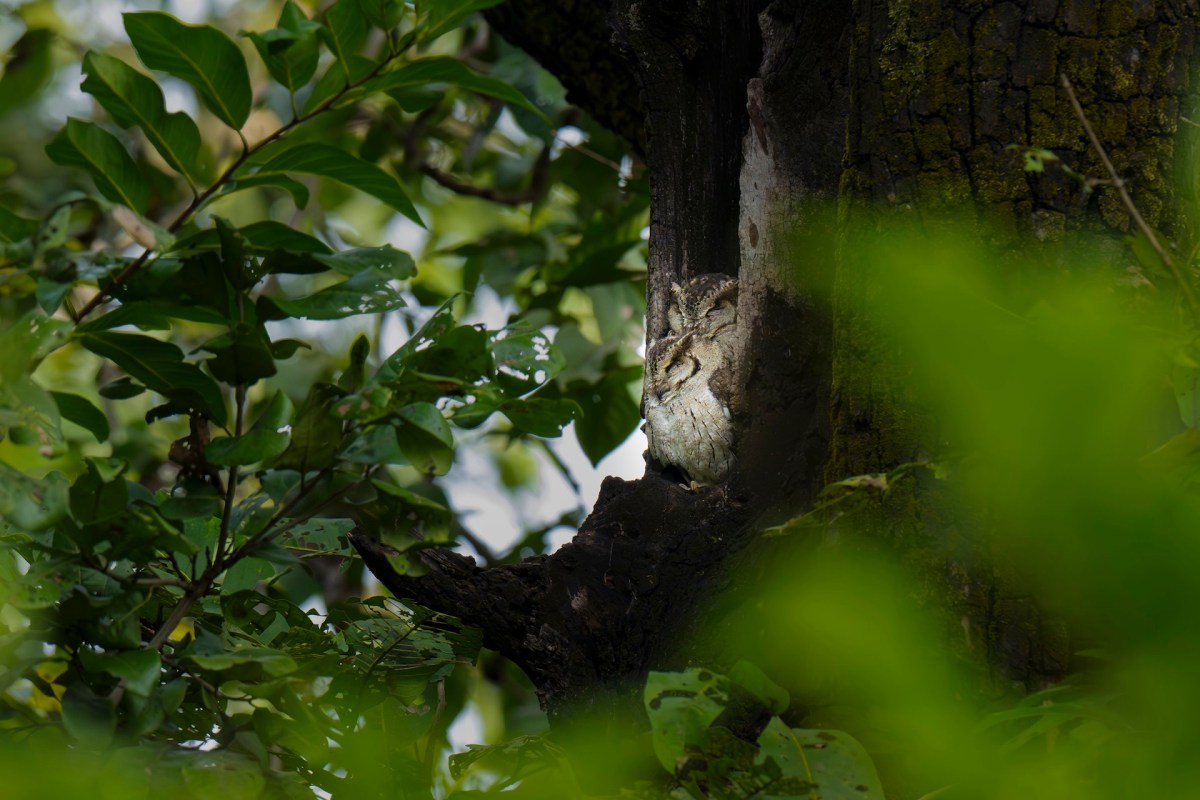
A group of birdwatchers in southern India has recorded something never seen before near Karnataka's Daroji Sloth Bear Sanctuary: a rare Indian scops owl, blending so seamlessly into the landscape that it nearly escaped detection.
According to The New Indian Express, the owl was spotted earlier this week by birders, who confirmed the identification after observing the bird's distinctive ear tufts and unmistakable call. Measuring just 20 to 25 centimeters long, the Indian scops owl's muted gray tones make it a master of disguise, which is a reason this tiny nocturnal predator so rarely appears in the wild.
The discovery marks the first documented sighting of the species in the Vijayanagara region and could signal a subtle ecological shift. Experts say the owl's appearance near the Daroji sanctuary — best known for its sloth bear population — suggests the area may support a richer food web than previously understood. If future monitoring confirms the owl's presence as part of a breeding population, it could reshape conservation priorities in this pocket of Karnataka.
Trail cameras and acoustic sensors are expected to play a key role in tracking the species. These technologies are increasingly vital tools for wildlife researchers, helping document elusive species and gauge the overall health of an ecosystem without disturbing it.
Such data-driven monitoring doesn't just help owls and bears — it also protects the balance of species that support human livelihoods, from crop pollinators to natural pest controllers. Conservationists welcomed the sighting as proof that careful habitat protection can create unexpected success stories.
The Daroji sanctuary's restoration programs, which have improved water availability and native tree cover, may be paying off in ways scientists are only beginning to measure.
Similar recoveries have been reported across India, from the return of the great Indian bustard in select Rajasthan reserves to sightings of the elusive rusty-spotted cat near Tamil Nadu's protected zones. Each instance points to how smart environmental management strengthens ecosystems that humans rely on for food, water, and climate stability.
If the Indian scops owl decides to stay, it could become a new symbol of Karnataka's growing biodiversity — a small but powerful reminder of how shared habitats, when protected, can thrive.
|
Do you think America does a good job of protecting its natural beauty? Click your choice to see results and speak your mind. |
 Definitely 👍
💰Get TCD's free newsletters for easy tips to save more, waste less, and make smarter choices — and earn up to $5,000 toward clean upgrades in TCD's exclusive Rewards Club.
Cool Picks






