


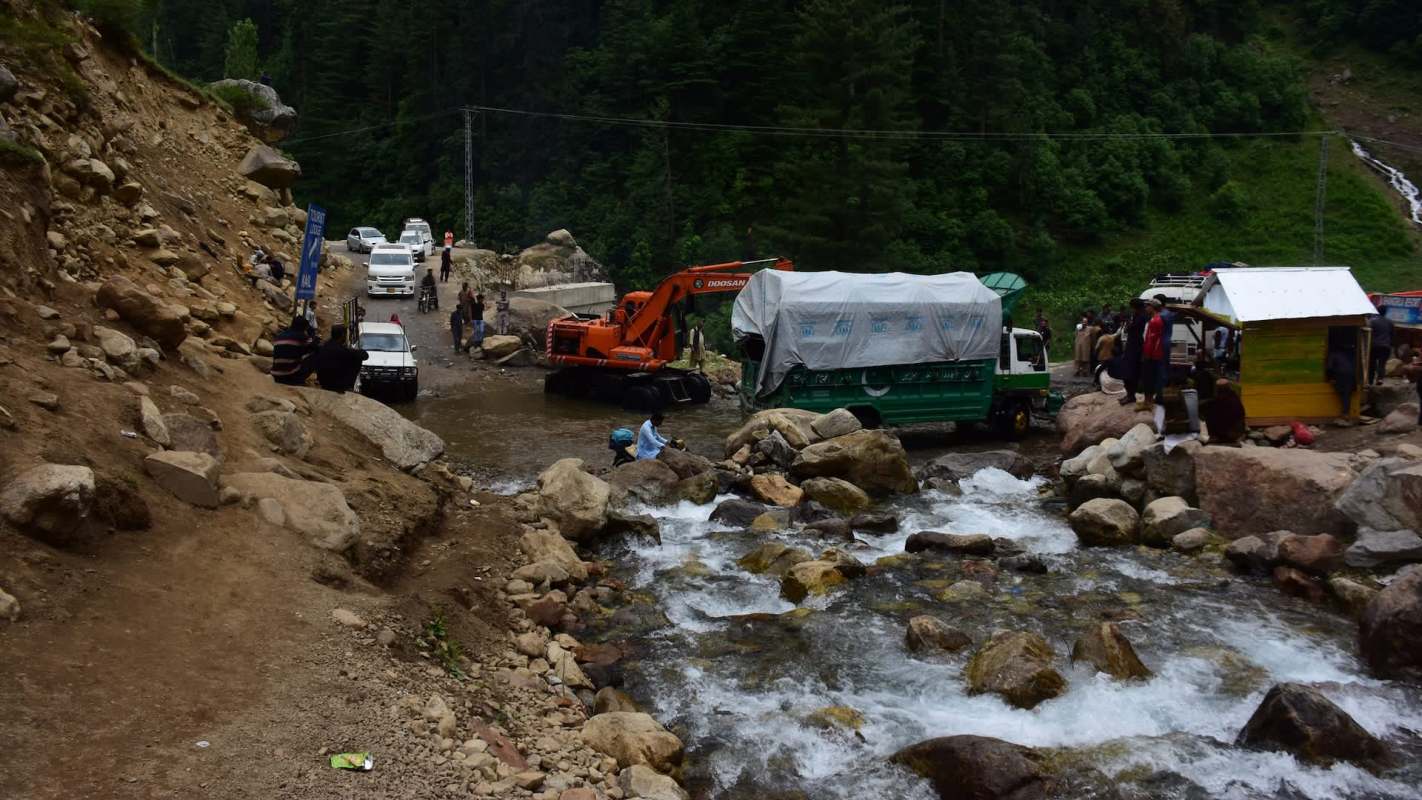
At least 243 people died over the span of 24 hours in India and Pakistan as torrential downpours caused widespread flash flooding and landslides, according to the Associated Press.
"The death toll may rise, as we are still looking for dozens of missing people," an official told the AP.
With more heavy rain in the forecast, the situation could become even more dire.
What's happening?
The rainfall struck mountainous areas of Northern Pakistan and India's Himalayan region, hitting difficult-to-reach, remote villages. Also affected were roughly 4,000 pilgrims who were making the annual trek to a Hindu shrine located at 9,500 feet of elevation, per the AP.
The community kitchen that had been set up to feed the pilgrims was swept away in the floodwaters with 200 people inside along with numerous cars and motorbikes, according to the AP.
Despite official warnings about the risk of heavy rains and flooding, thousands of tourists had flocked to resorts in the popular region, known for its picturesque scenery. Emergency personnel were in the process of evacuating thousands of tourists trapped by the floods and landslides.
A rescue helicopter on a relief mission was carrying five people, including two pilots, when it crashed in the area because of the harsh weather conditions, per the AP.
The torrential rains were caused by cloudbursts, which are defined as sudden, extremely aggressive rainfall events that result in more than 100 millimeters (3.9 inches) of rainfall per hour, according to Himalayan Geographic.
Cloudbursts form when monsoon clouds hit cold air. Because of the mountainous nature of the Himalayas, cloudbursts are more likely to form, and, when they do, they are more likely to be trapped over a relatively small geographic area.
"Unlike cyclones, forecasting a cloudburst is very difficult due to the dynamics of rapidly developing clouds over a very small area," Himalayan Geographic said.
TCD Picks » Quince Spotlight
💡These best-sellers from Quince deliver affordable, sustainable luxury for all




|
Do you think your city has good air quality? Click your choice to see results and speak your mind. |
 Definitely 🥰
 All these factors made for a deadly combination, though there have been other similar tragedies this summer.
Pakistan's National Disaster Management Authority said that 556 rain-related deaths have occurred since June 26, per the AP.
What does flooding in India and Pakistan mean for the rest of the world?
Experts analyzing recent extreme rainfall events in the region have concluded that rising global temperatures have contributed significantly to the severity of the storms.
A study released in early August found that "the 30-day maximum rainfall over the study region is now 22% more intense than it would have been in a climate that had not been warmed … due to the burning of fossil fuels, and, to a small extent, deforestation."
This trend has not been limited to the Himalayas.
For every 1 degree Fahrenheit that air temperatures increase, the air can absorb 4% more water, according to Climate Central. When this water eventually falls back to Earth as precipitation, the result is more precipitation per hour.
One study looking at U.S. cities found that 88% of the 144 cities examined have experienced increased rainfall per hour since 1970. Of those cities that experience more severe storms, rainfall per hour increased by 15%.
As the devastating flooding in India and Pakistan as well as recent floods in Texas and New York have demonstrated, this more intense rainfall can easily overwhelm local flood-mitigation measures. Whether natural or human-made, these flood-mitigation systems have a limited capacity for absorbing and carrying excess water.
When that capacity is exceeded, the results can be devastating, and not only for the regions that are directly impacted.
Flash floods and landslides take lives, destroy homes and businesses, and devastate crops and livestock, resulting in higher food prices and insurance premiums well beyond the floodwaters' reach.
What's being done about flooding around the world?
In order to avoid the worst impacts of rising global temperatures, the world needs to transition away from burning dirtier, nonrenewable fuels such as coal and natural gas and toward cleaner, renewable energy sources such as wind and solar.
To help spur this transition forward, you can use your voice, take local action, and support political candidates who share your policy priorities. You can also contact your elected representatives to demand action.
Taking things a step further, installing solar panels on your home and driving an electric vehicle are great ways to reduce heat-trapping pollution while also saving money on electricity and gas.

Join our free newsletter for good news and useful tips, and don't miss this cool list of easy ways to help yourself while helping the planet.
Cool Picks






