


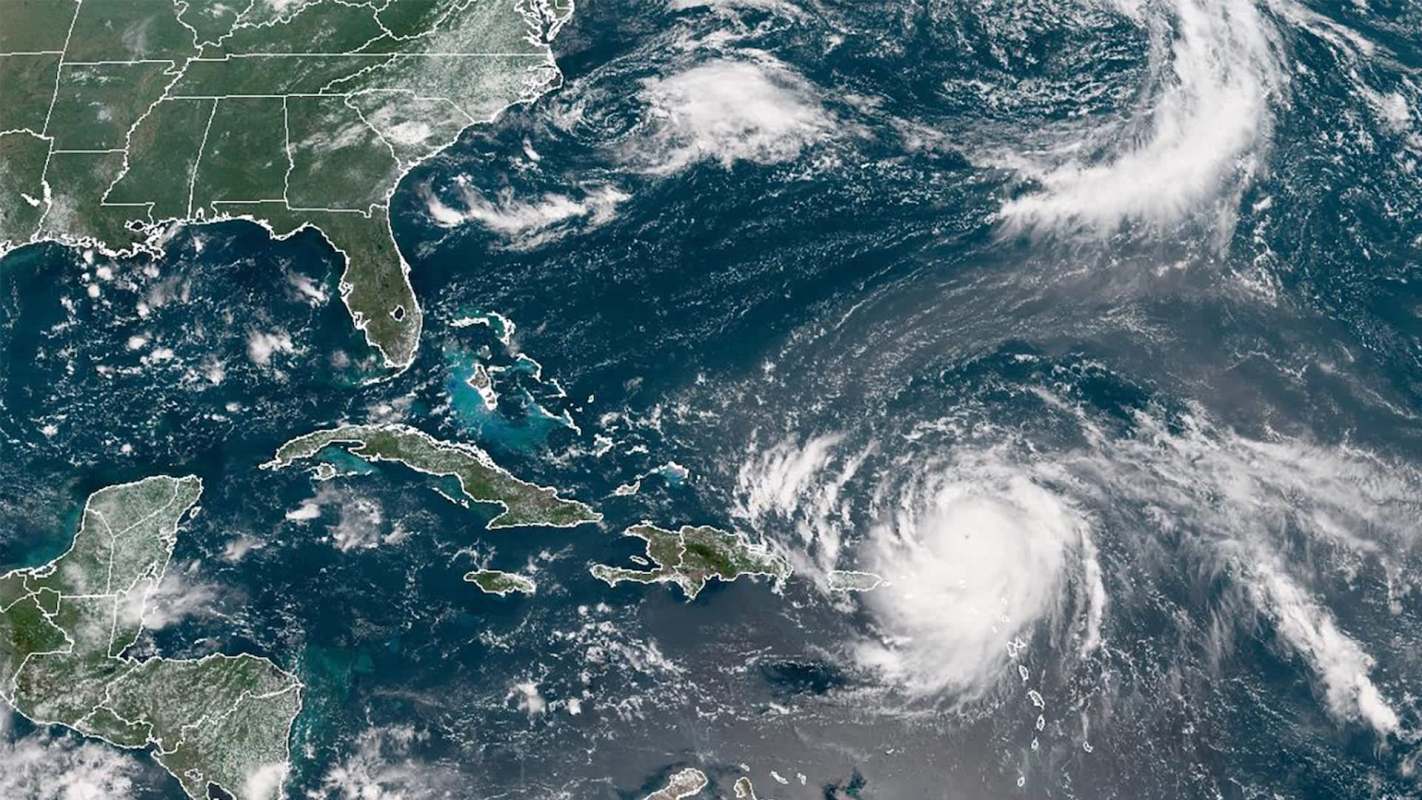
While the worst of Hurricane Erin's wrath should remain offshore from the East Coast, there will still be significant impacts for several states. Threats include coastal flooding and deadly rip currents.
More than four million people across five states, including Florida, Georgia, Delaware, and New Jersey, were warned Monday about a high risk. "Rip currents can sweep even the best swimmers away from shore into deeper water," the National Weather Service cautioned in a statement issued for northeast Florida and southeast Georgia beaches.
The coast of North Carolina, in particular, will be pounded by the large waves generated by Erin as the storm sweeps east of the Carolinas on Wednesday and Thursday. The Dare County Emergency Management office called for mandatory evacuations of the Outer Banks. The Newport-Morehead City NWS office said there will be a moderate rip current risk until 8 p.m. Friday for barrier islands. In addition, a high surf advisory and coastal flood watch are also in effect.
"This is not the week to swim in the ocean," Dare County Emergency Management advised, per CNN. "The risk from surf and flooding will be life-threatening."
The NWS issued coastal flood statements for over two million people in New Jersey and New York. In Long Island, warns there could be up to six inches of inundation above ground level. "Brief minor flooding of the most vulnerable locations near the waterfront and shoreline" is one of the impacts mentioned in the statement.
Erin became the first hurricane of the 2025 Atlantic season Friday morning, when it was in the southwestern Caribbean. By midday Monday, it was around 880 miles south, southeast of Cape Hatteras, North Carolina, and moving west, northwest around 10 mph, according to the National Hurricane Center. The Category 4 storm was packing maximum sustained winds of 140 mph.
NWS forecasters say the waves along the coast of North Carolina could grow from two to four feet today to five to eight feet by early Tuesday. When Erin is closest to the Outer Banks on late Wednesday and into early Thursday, waves could be as large as 15 to 20 feet.
The Atlantic Hurricane season began June 1 and continues through Nov. 30. NOAA's recently revised forecast still calls for an active year. "As the 2025 Atlantic Hurricane Season enters its historical peak, atmospheric and oceanic conditions continue to favor an above-normal season as NOAA first predicted in May," according to the agency.
Colorado State University referred to last year's hurricane season as "hyperactive" based on NOAA's Accumulated Cyclone Energy definition. The 2024 ACE climbed to 162, topping the 159.6 threshold required to meet that classification. The 1991-2020 average was 123.
A study by Climate Central revealed that the overheating planet supercharged every 2024 Atlantic hurricane. It also found that this warming increased the intensity of most Atlantic hurricanes from 2019 through 2023.
TCD Picks » Quince Spotlight
💡These best-sellers from Quince deliver affordable, sustainable luxury for all




|
Do you think your house could withstand a hurricane? Click your choice to see results and speak your mind. |
 No way 😨
Join our free newsletter for good news and useful tips, and don't miss this cool list of easy ways to help yourself while helping the planet.
Cool Picks






