


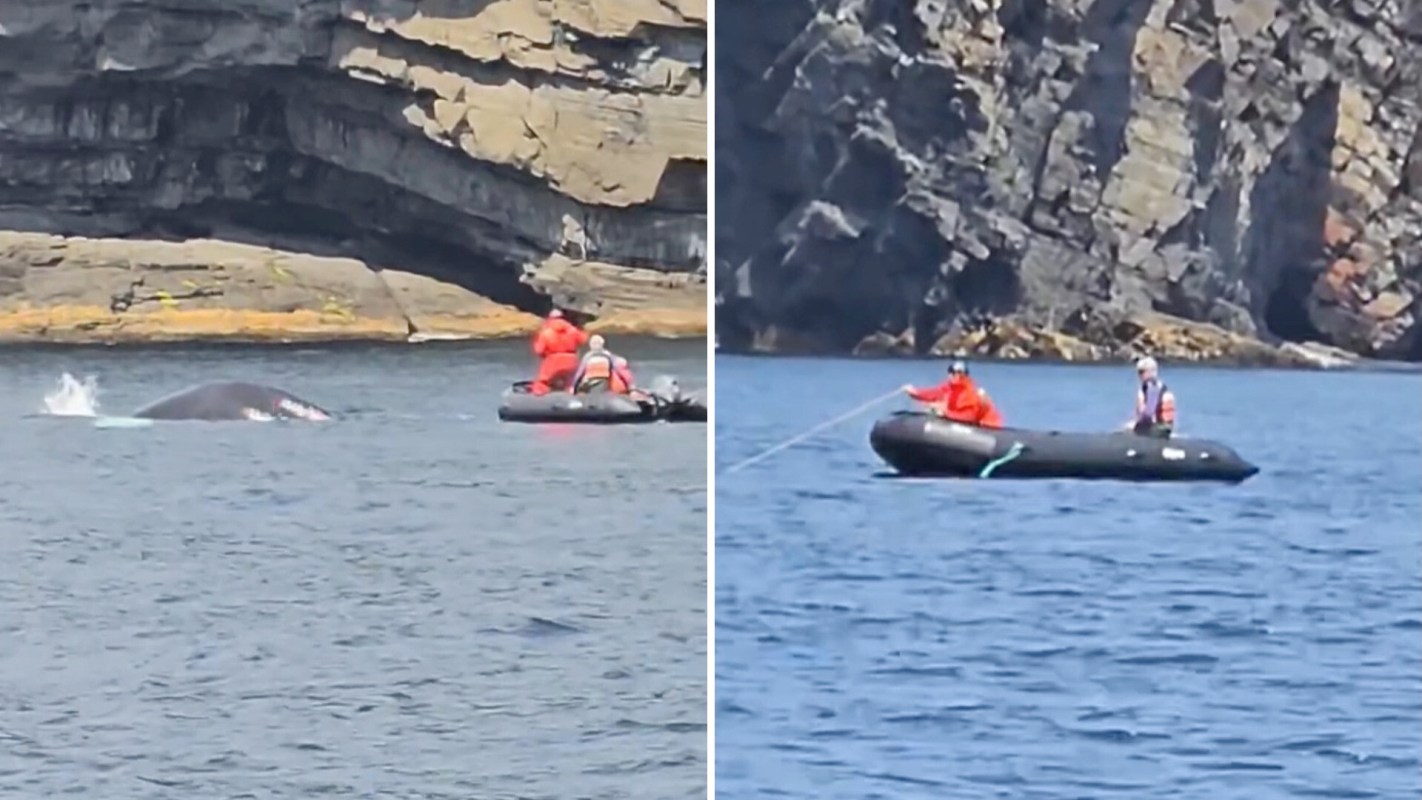
A humpback whale off Canada's Newfoundland coast is alive after a challenging rescue mission that involved cutting through layers of fishing gear that had wrapped around its body so tightly that its head was bound to its tail.
The rescue ended on a hopeful note, but it also underscored the danger that lost and active fishing gear can pose to marine life and to the coastal communities that rely on a healthy ocean.
What happened?
After local tour operators helped pinpoint the whale, the Whale Release and Strandings Group spent much of Thursday trying to free the humpback from heavy entanglement in fishing gear in Trinity Bay.
The search eventually led to Horse Chops, where Trinity Eco Tours located the whale again after rescuers lost track of it, VOCM reported. Earlier in the week, Sea of Whales Adventures had first reported the animal in Trinity Bight.
Julie Huntington of the Whale Release and Strandings Group reported that the team reached the area on Wednesday but could not attempt a rescue because the water was too rough. By the time they found the whale again the next day, the entanglement had become severe.
According to VOCM, the humpback was trapped in two gill nets. One appeared newer, while the other seemed to have spent a long time in the water, and Huntington said the hours-long rescue also put a strain on the team's equipment.
TCD Picks » Quince Spotlight
💡These best-sellers from Quince deliver affordable, sustainable luxury for all




According to a Facebook post from Sea of Whales Adventures, The Whale Release and Strandings Group, working with a Department of Fisheries and Oceans team from Bonavista, was able to successfully free the whale and remove the gear it was entangled in.
The humpback continued having a difficult time moving after the gear was cut away, indicating the entanglement had already taken a major physical toll.
Why does it matter?
Entanglement can quickly become deadly for marine animals. Nets and ropes can restrict movement, make it harder to feed or dive, and leave animals exhausted or injured even after they are freed. Other human-caused ocean pollution such as plastic waste can hurt animals, even for long periods of time — one seal was rescued after spending over six years with a plastic ring around his neck.
Healthy whale populations are part of the marine ecosystems that support coastal tourism, local identity, and ocean food webs.
Gear that remains in the water, whether newly set or older and abandoned, can keep harming wildlife long after it is out of sight.
What's being done?
The immediate solution was rapid coordination. Tour operators spotted the whale, alerted rescuers, and helped relocate it, giving the Whale Release and Strandings Group a chance to intervene before the humpback became even weaker.
Community reporting networks, trained disentanglement teams, and improved tracking of marine hazards can improve the chances that animals in distress receive help before it's too late.
Careful gear management, retrieval of abandoned equipment, and fast reporting when whales or other marine animals are seen in distress can reduce the risk in future cases.
"The whale didn't know that it was free," Huntington said. "It just didn't move like a whale; it just was going up and down. We're hoping that in a couple of days it will regain its mobility and move on."

Get TCD's free newsletters for easy tips, smart advice, and a chance to earn $5,000 toward home upgrades. To see more stories like this one, change your Google preferences here.







