


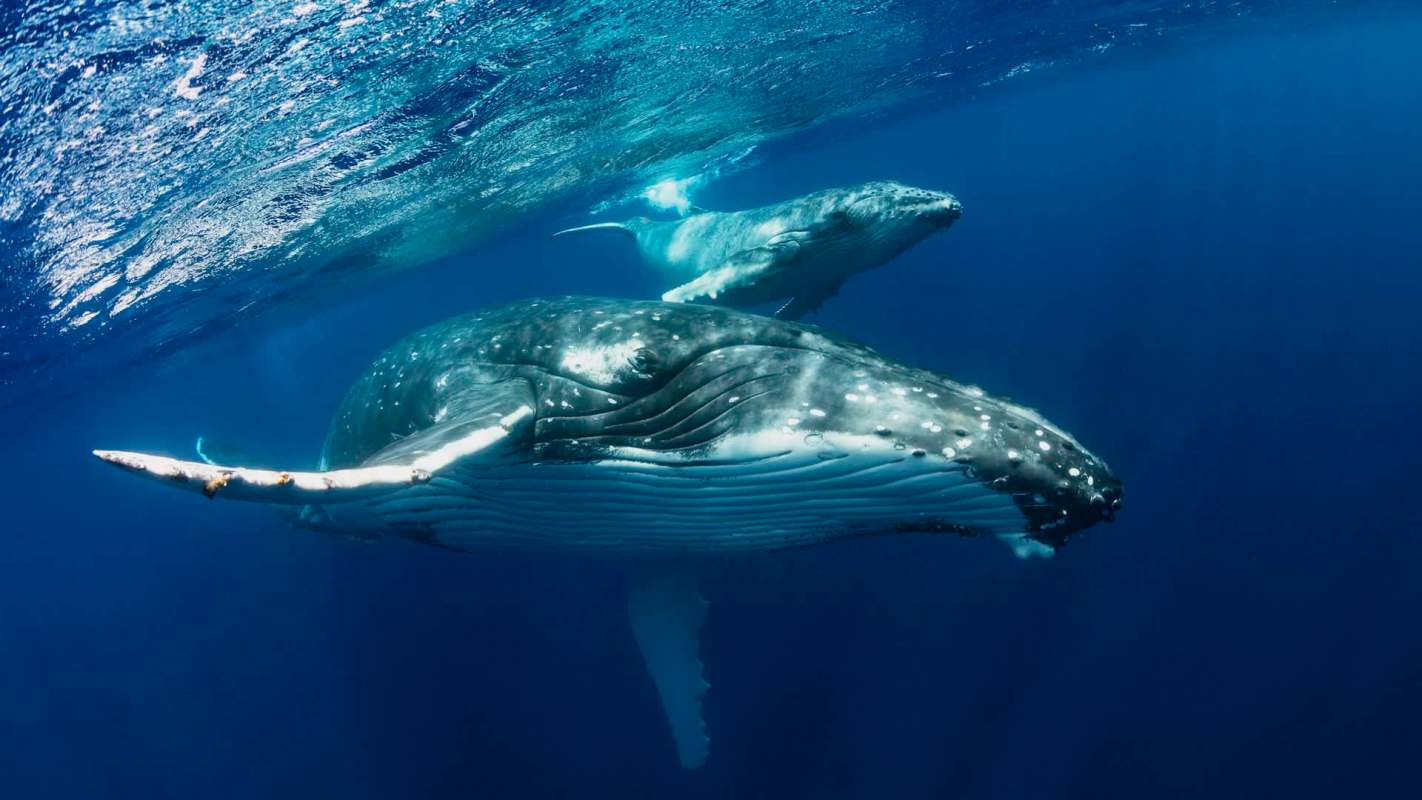
Two humpback whales have done something scientists almost never witness: separate migrations between Australia and Brazil spanning roughly 9,000 miles.
The back-to-back discoveries are reshaping what researchers thought they knew about how isolated whale populations really are and offering a fresh reminder of how much ocean life still has left to reveal.
According to the Associated Press, a new study published Tuesday in Royal Society Open Science found that two humpback whales crossed separately between breeding sites in eastern Australia and Brazil.
The researchers used the animals' distinctive tail markings for identification, comparing more than 19,000 whale photographs collected over four decades by researchers and citizen scientists. Image-recognition software helped confirm the matches by analyzing tail color patterns and the jagged edges unique to each whale.
One whale traveled just over 9,300 miles, setting a new record for the longest known humpback migration and surpassing a previous documented journey between Colombia and Zanzibar.
"Finding not one but two individuals that have crossed between Australia and Brazil challenges what we thought we knew about how separate these populations really are," said study co-author Stephanie Stack, per the AP.
TCD Picks » Quince Spotlight
💡These best-sellers from Quince deliver affordable, sustainable luxury for all




Humpback whales are known for long seasonal migrations, but they typically follow routes learned from their mothers and generally stay within established population groups.
Because of that, scientists were especially surprised to see whale crossings between breeding grounds on the opposite sides of the world.
The findings could help researchers better understand how ocean ecosystems are changing as global temperatures rise.
Humpbacks rely heavily on krill and small fish, meaning shifts in their movement patterns can reflect broader changes lower in the marine food chain. If warming oceans alter where prey can survive, whales may need to adapt by changing where they feed and breed.
The study also highlights how interconnected the world's oceans truly are. If whale populations, once believed to be largely separate, overlap more than scientists expected, that could influence future conservation planning, international cooperation, and decisions about marine protected areas.
Researchers say the discovery would not have been possible without decades of collaboration between scientists and citizen observers.
Massive photo databases and newer image-recognition tools allowed researchers to spot patterns that would have been nearly impossible to detect manually.
Although scientists still do not know the whales' exact travel routes, the sightings provide strong evidence that at least some humpbacks are capable of crossing enormous distances between populations once thought to be largely isolated.
"It's a very rare event, but it is a really wonderful demonstration of just how wide-ranging these animals are," said Phillip Clapham, former head of a NOAA whale research program, per the AP.

Get TCD's free newsletters for easy tips, smart advice, and a chance to earn $5,000 toward home upgrades. To see more stories like this one, change your Google preferences here.







