


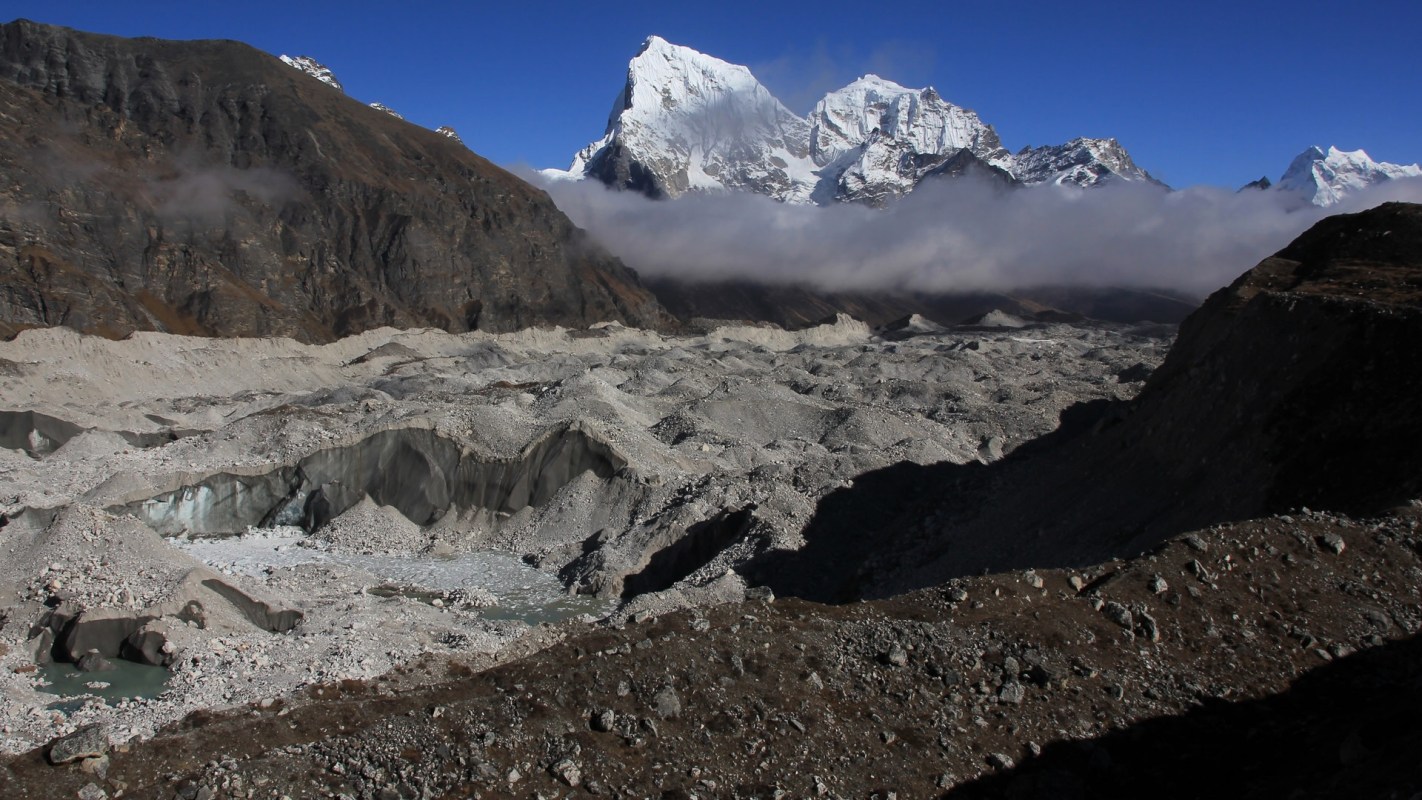
Global rising temperatures continue to threaten the Himalayas, but researchers found that soot that enters the atmosphere has a more immediate impact on the water resources in the region.
What's happening?
A new study found that black carbon particles were responsible for nearly 34% of glacial mass loss on the southern Tibetan Plateau between 2007 and 2016, per Mongabay-India. The soot in the region is mostly caused by household pollution, along with brick kilns and transport.
Miriam Jackson, a scientist at the Norwegian Water Resources and Energy Directorate, said there is an urgent need to improve monitoring and reduce pollution.
"If we find out the changes are happening too quickly, then it may be beyond the limits of adaptation," Jackson told Mongabay-India.
While soot only survives in the atmosphere for a limited amount of time, black carbon reduces a glacier's ability to reflect sunlight, which causes the ice to melt quicker than previously estimated. According to research, the disappearing glaciers will impact the water supply for more than one billion people across South Asia.
Why are melting glaciers important?
Like the Himalayas, glaciers in Arctic regions have also been impacted by black carbon pollution. Oil and gas operations are the primary reasons for soot in places like Alaska and Canada, according to NPR.
TCD Picks » Quince Spotlight
💡These best-sellers from Quince deliver affordable, sustainable luxury for all




More than one-third of the planet's remaining glaciers will disappear before the next century, according to the World Wildlife Fund. The melting glaciers can largely be attributed to human activities like burning dirty fuels, which release heat-trapping pollution into the atmosphere.
A NASA study found that global rising temperatures have led to a sharp uptick in extreme weather events over the past half decade. Under the warmer conditions, melting glaciers contribute to rising sea levels and elevated storm surge during extreme weather. Arctic ice melt can cause the disruption of entire food systems and increase the spread of disease.
The food and water supply of two billion people worldwide is also threatened, per the United Nations.
What's being done about melting glaciers?
Researchers have continued to study and monitor melting glaciers in an effort to raise awareness and slow the effects of rising global temperatures. Some scientists even proposed the idea of building underwater curtains to protect glaciers and restrict the inflow of warm water.
Meanwhile, consumers can explore critical climate issues and discover ways to help out at home. Using eco-friendly modes of transportation or switching to energy-efficient appliances are good ways to reduce your carbon impact and lower the amount of heat-trapping pollution in the air.
|
Do you worry about the quality of the air inside your home?
Click your choice to see results and speak your mind. |
 Yes — often 😬
Join our free newsletter for good news and useful tips, and don't miss this cool list of easy ways to help yourself while helping the planet.







