


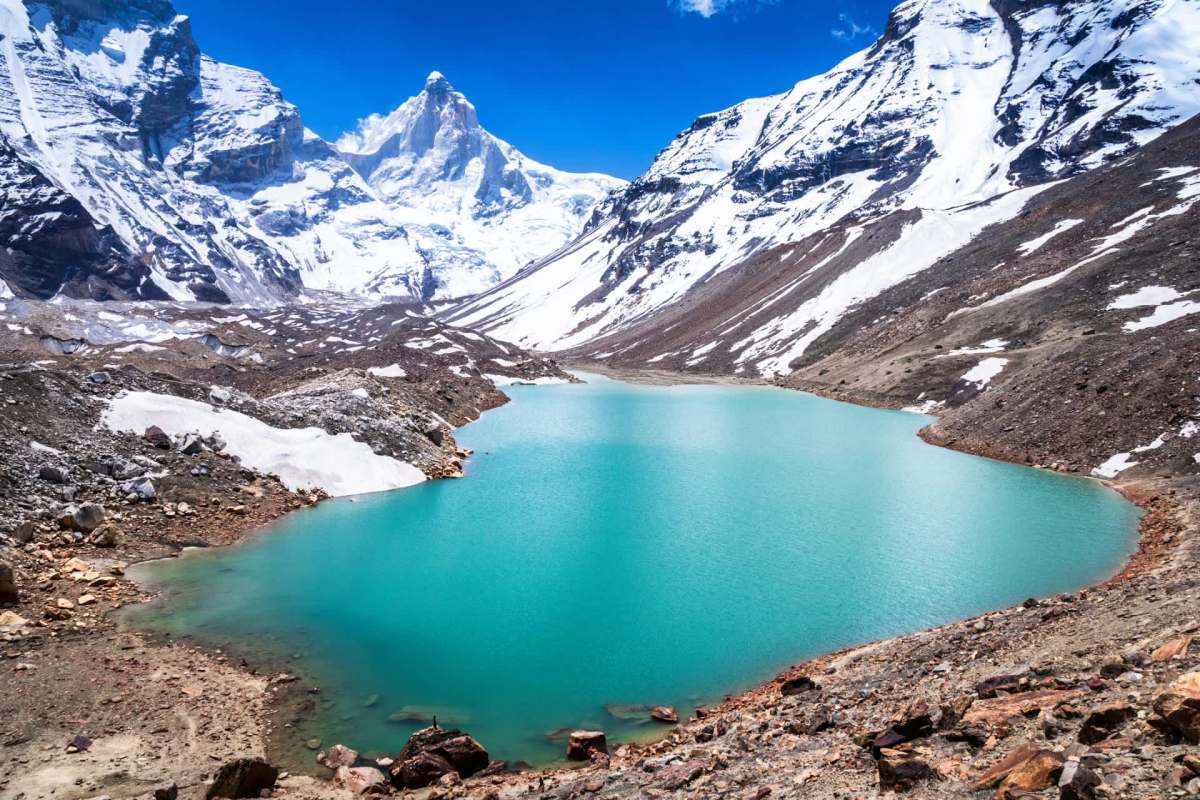
Small glacial lakes forming rapidly across the Himalayas pose unexpected flooding dangers to millions of people living downstream, according to reporting in Dialogue Earth.
What's happening?
Scientists have discovered that tiny glacial lakes in the Himalayas create catastrophic floods, often without warning. These small lakes form quickly and remain invisible to satellite monitoring until disaster strikes.
In July 2025, floodwaters from a newly formed lake swept away a major bridge connecting Nepal and China, killing at least nine people in the village of Rasuwagadhi. The lake that triggered the devastation was not visible before March 2025, according to satellite data.
"Tiny and short-lived glacial lakes are becoming more hazardous than previously perceived," said Finu Shrestha, a remote sensing analyst at the International Centre for Integrated Mountain Development.
Why are more glacial lakes concerning?
Rising temperatures accelerate glacial melt across the Hindu Kush Himalayan region, creating these dangerous lakes faster than scientists can track them. The region already contains at least 47 potentially dangerous glacial lakes across Nepal, China, and India.
When lakes burst, floodwaters can travel over 60 miles, destroying bridges, homes, and power infrastructure. The floods also disrupt food systems by damaging agricultural land and contaminating water supplies.
Local residents are often unaware of rapidly changing conditions upstream. Many communities lack access to timely warnings about lake formation and expansion, leaving families vulnerable to sudden displacement and infrastructure destruction.
What's being done about this threat?
Scientists emphasize the need for enhanced early warning systems and international cooperation to monitor these fast-changing lakes. Researchers advocate for regular satellite mapping, potentially combined with artificial intelligence, to detect and track glacial lakes on an annual basis.
Regional cooperation across Himalayan countries can strengthen data sharing and enable real-time monitoring systems. Joint efforts help to build local capacity for remote sensing and field-based monitoring to bridge gaps between scientific monitoring and community-level risk communication.
Similar monitoring initiatives have proven effective for other natural disasters — early-warning systems for hurricanes and wildfires demonstrate how technology can protect communities when properly funded and implemented.
Communities can push for better emergency preparedness programs and advocate for local governments to invest in flood-resistant infrastructure. Understanding how environmental challenges connect to community safety helps people make informed decisions about the critical issues affecting their region.
TCD Picks » Quince Spotlight
💡These best-sellers from Quince deliver affordable, sustainable luxury for all




|
Do you worry about the quality of the air inside your home?
Click your choice to see results and speak your mind. |
 Yes — often 😬
Join our free newsletter for good news and useful tips, and don't miss this cool list of easy ways to help yourself while helping the planet.
Cool Picks






