


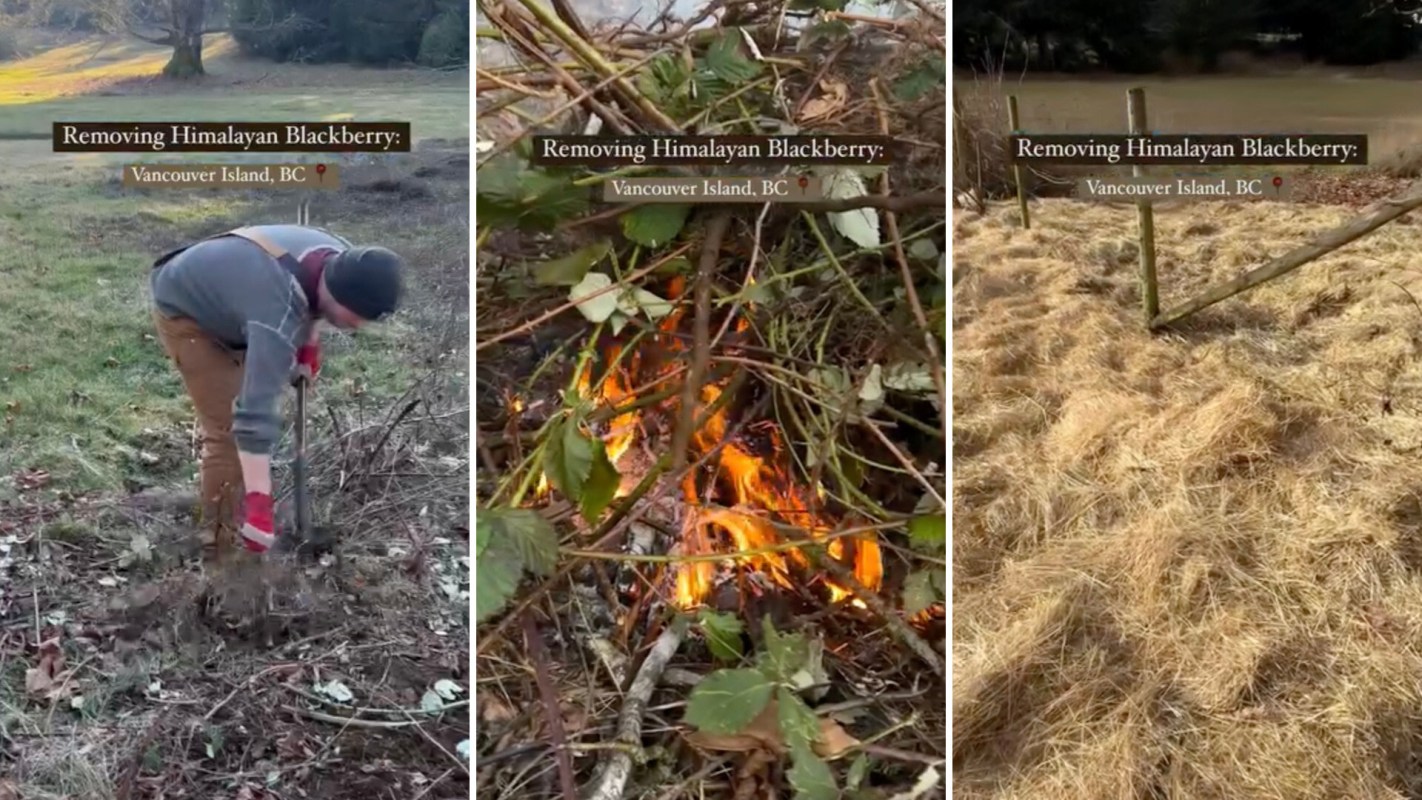
Hunter Jarratt (@invasivespeciesguy), a conservationist from Vancouver Island, British Columbia, shared with Instagram how he tackled a patch of Himalayan Blackberry. This aggressively growing invasive plant crowds out native plant species.
"This was an isolated patch that was easy to tackle," he wrote in the video's caption, as the video showed a few before and after snapshots of the land with and without the thick Himalayan Blackberry bushes.
Jarratt filmed and described his process for removing the invasive plant.
First, use hedge trimmers to cut down the canes of the invasive Himalayan Blackberry bush. According to the Missouri Invasive Plant Council, the Himalayan Blackberry canes (or stems) are thick and woody. The bush can grow up to 15 feet before bending and growing outwards up to 40 feet, making the canes quite hardy.
After the bulk of the plant has been removed, you can pull out the root balls from the soil. Jarratt recommends burning the plant material to dispose of the invasive plant to prevent any potential regrowth.
After that, you can lay down layers of hay, which gets very heavy when wet, to effectively starve any remaining invasive plants from growing, preparing the land for your next growing season, or planting native plants.
A native-plant lawn, which consists of plants native to the local area, can be a great lawn replacement option for homeowners looking to save money on water bills and yard maintenance.
Native plants tend to be more drought-resistant, or less water-hungry, than invasive plant species, as their deep root system allows them to source water from deeper underground. Their root system also helps stabilize the soil, which in turn prevents soil erosion.
Compared to invasive plant species like the Himalayan Blackberry, native plants also tend to be slower-growing because invasive plants grow aggressively, which requires more nutrients and water for survival.
This explains why most American lawns require a lot of water to stay green and healthy. Traditional American lawns consist of invasive grass species like the Kentucky Bluegrass, which requires substantial watering and frequent mowing to maintain.
TCD Picks » Quince Spotlight
💡These best-sellers from Quince deliver affordable, sustainable luxury for all




|
Do you think America does a good job of protecting its natural beauty? Click your choice to see results and speak your mind. |
 Definitely 👍
 Buffalo grass and clover are great lawn replacement alternatives that can help conserve water and cut down on yard work.
Native plants also provide a healthier environment that supports local pollinators, whose pollination efforts protect the human food supply.
"Please never stop. It can feel so daunting to see all the blackberry bushes and ivy take over land but you give me hope and motivation," one commenter said.
"Such satisfying work !!" another user wrote.

Join our free newsletter for good news and useful tips, and don't miss this cool list of easy ways to help yourself while helping the planet.
Cool Picks




