


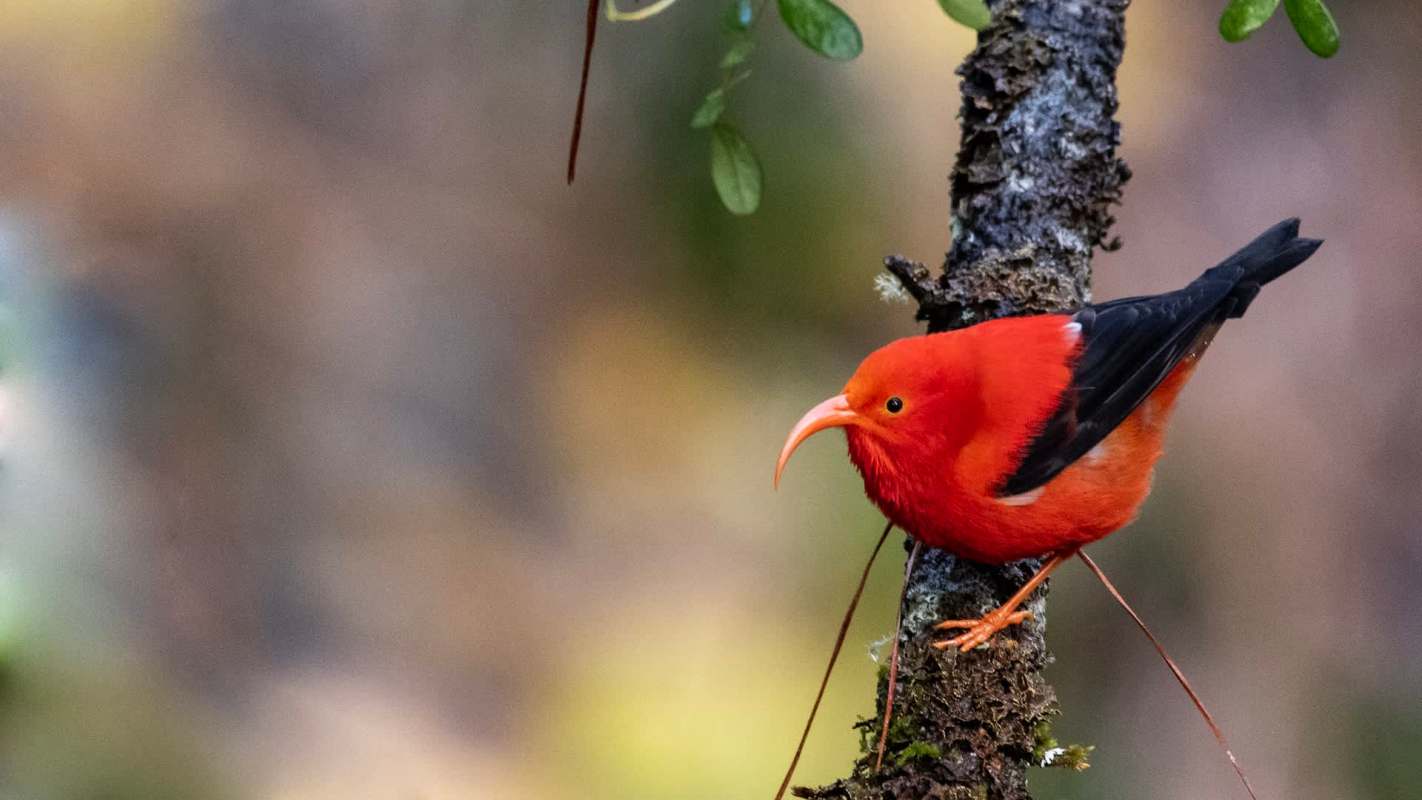
Brightly colored Hawaiian honeycreepers have evolved to survive in one of the most challenging environments on Earth. Now, researchers have identified an unexpected behavior helping them get by: stealing nest materials from one another.
According to The New York Times, a new study published in The American Naturalist documented what scientists described as "nest material kleptoparasitism," wherein birds take construction materials from the nests of other birds.
Researchers monitored 216 honeycreeper nests in native forest patches on the island of Hawaiʻi and recorded 39 thefts. The birds live in kīpukas — isolated pockets of forest surrounded by lava flows left by Mauna Loa's 1885 eruption — and the study found that three species of scarlet and golden honeycreepers were taking materials from one another regardless of species.
Part of the story's appeal is visual. These are small, vividly colored birds surviving in a stark volcanic landscape. But the research also suggests the behavior is more strategic than previously understood.
Building Nests Is Hard. That's Why Some Birds Steal.https://t.co/GQp9oMaos4
— Marc Bekoff (@MarcBekoff) May 13, 2026
Also see:
Fun-Loving Penguins: Unlikely Masters of Thievery and Playhttps://t.co/yFl7gGFbP9
Most thefts involved inactive nests, though five active nests were also targeted.
"It's an underappreciated behavior that was way more common than we thought," lead author Erin E. Wilson Rankin said, per the Times.
TCD Picks » Quince Spotlight
💡These best-sellers from Quince deliver affordable, sustainable luxury for all




Nest building is an energy-intensive process. Birds must gather structural materials, weave them into a stable cup shape, and line the interior with soft fibers to protect eggs and hatchlings.
For honeycreepers in remote, high-elevation forests, stealing material from nearby nests may offer a shortcut that conserves energy and reduces risks.
"They're minimizing the energy that they need to spend and the risks associated with building nests, which makes sense in terms of natural selection," study author Jessie Knowlton told the Times.
That adaptation is especially notable given how many pressures Hawaiian honeycreepers already face. Most species are now restricted to higher elevations where mosquitoes — and the diseases they carry — are less prevalent. Even there, they contend with invasive species, shifting temperatures, and predation from rats.
The newly documented behavior underscores both their adaptability and their vulnerability. While nest theft may improve efficiency for some birds, it can also have consequences for others.
In two cases, theft from active nests appeared to contribute to nest failure, with parents abandoning their nests and the chicks not surviving.
In other words, a strategy that benefits one bird may come at a cost to another in an already fragile ecosystem.
"The fact that they're stealing from each other is just another challenge that they have to face," Knowlton said.
Overall, the study adds a new layer to how scientists understand these species — not just as survivors of a changing environment but also as participants in a complex web of competition, adaptation, and survival tradeoffs shaped by one of the most isolated archipelagos in the world.

Get TCD's free newsletters for easy tips, smart advice, and a chance to earn $5,000 toward home upgrades. To see more stories like this one, change your Google preferences here.







