


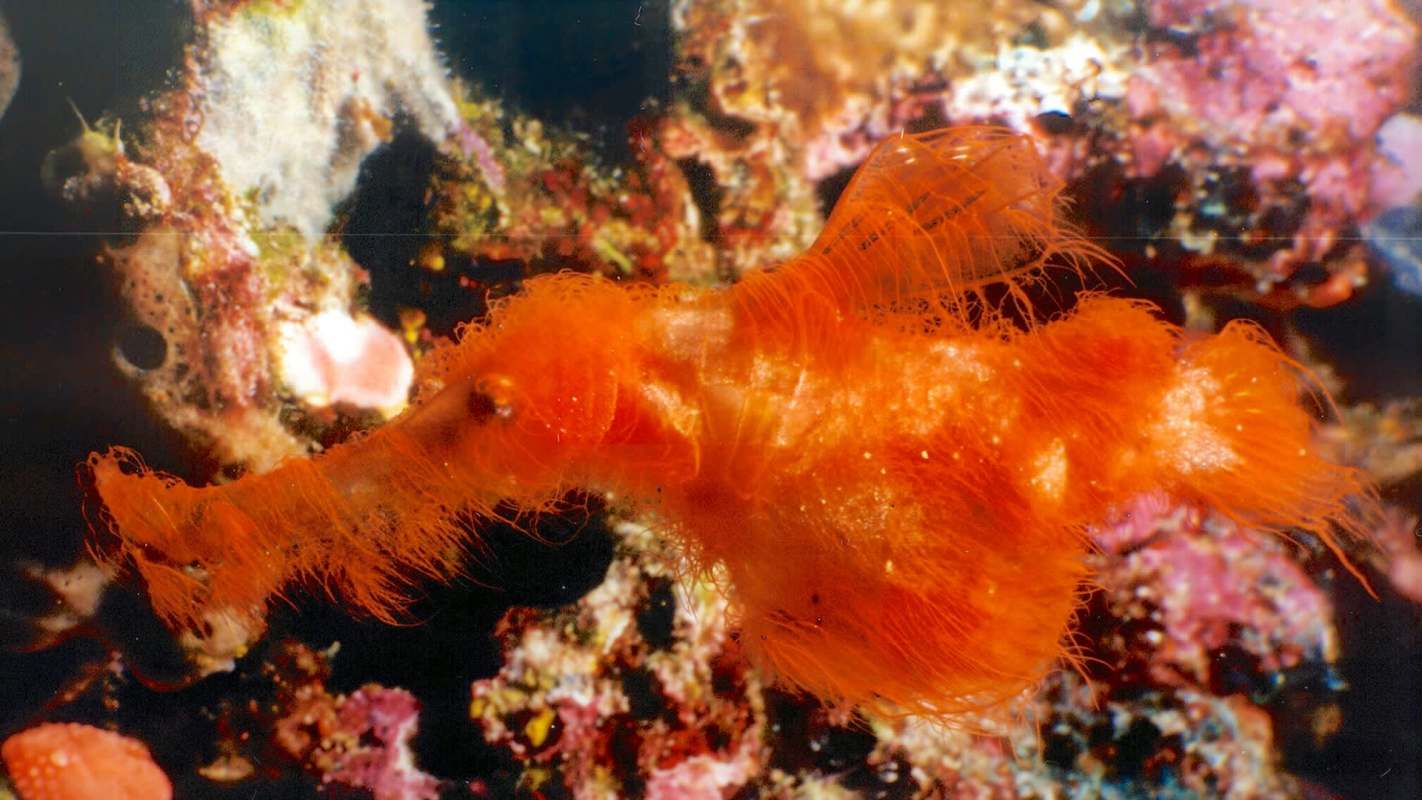
The hairy ghost pipefish, or Solenostomus snuffleupagus, has been hiding in plain sight for years among corals in the Great Barrier Reef and Coral Sea. As its name suggests, it resembles Mr. Snuffleupagus from "Sesame Street."
With its shaggy, filament-covered body and long snout, the fish blended seamlessly into reef habitats. Divers, photographers, and even researchers often mistook it for another known species, the rough ghost pipefish, Solenostomus paegnius, according to a study published in the Journal of Fish Biology.
That camouflage is exactly what makes ghost pipefish so difficult to study.
These seahorse- and sea dragon-related fish can blend with nearby colors and develop skin filaments that mimic algae or coral. In this case, what many assumed was just another rough ghost pipefish turned out to be something entirely new.
The discovery came after marine biologist David Harasti and research partner Graham Short began noticing recurring differences between fish in photographs and specimens kept in museum collections.
To test their suspicions, the researchers used a combination of modern and traditional tools.
TCD Picks » Quince Spotlight
💡These best-sellers from Quince deliver affordable, sustainable luxury for all




Mitochondrial DNA from two Coral Sea specimens differed by 22% from that of the rough ghost pipefish, a strong sign they were dealing with a separate species. 3D skeletal models made from high-resolution micro-CT scans showed that the hairy ghost pipefish has 36 vertebrae, versus 32 to 34 in close relatives.
The scans also found unusual star-shaped bony structures in the skin. Traditional body measurements indicated that the new fish has a stockier, more compact shape than similar species.
That combination of genetics, imaging, and museum research is promising for taxonomy and conservation. Correctly identifying species is one of the first steps in protecting them.
If scientists do not know which animals are actually living on a reef, it becomes harder to track biodiversity, monitor ecosystem health, and understand how fragile marine habitats are changing over time.
The find is a hopeful reminder that the Great Barrier Reef is still full of surprises.
At a time when reefs face mounting pressure from warming oceans and habitat loss, uncovering hidden biodiversity can strengthen the case for protecting these ecosystems before more unrecognized species are lost.

Get TCD's free newsletters for easy tips, smart advice, and a chance to earn $5,000 toward home upgrades. To see more stories like this one, change your Google preferences here.







