


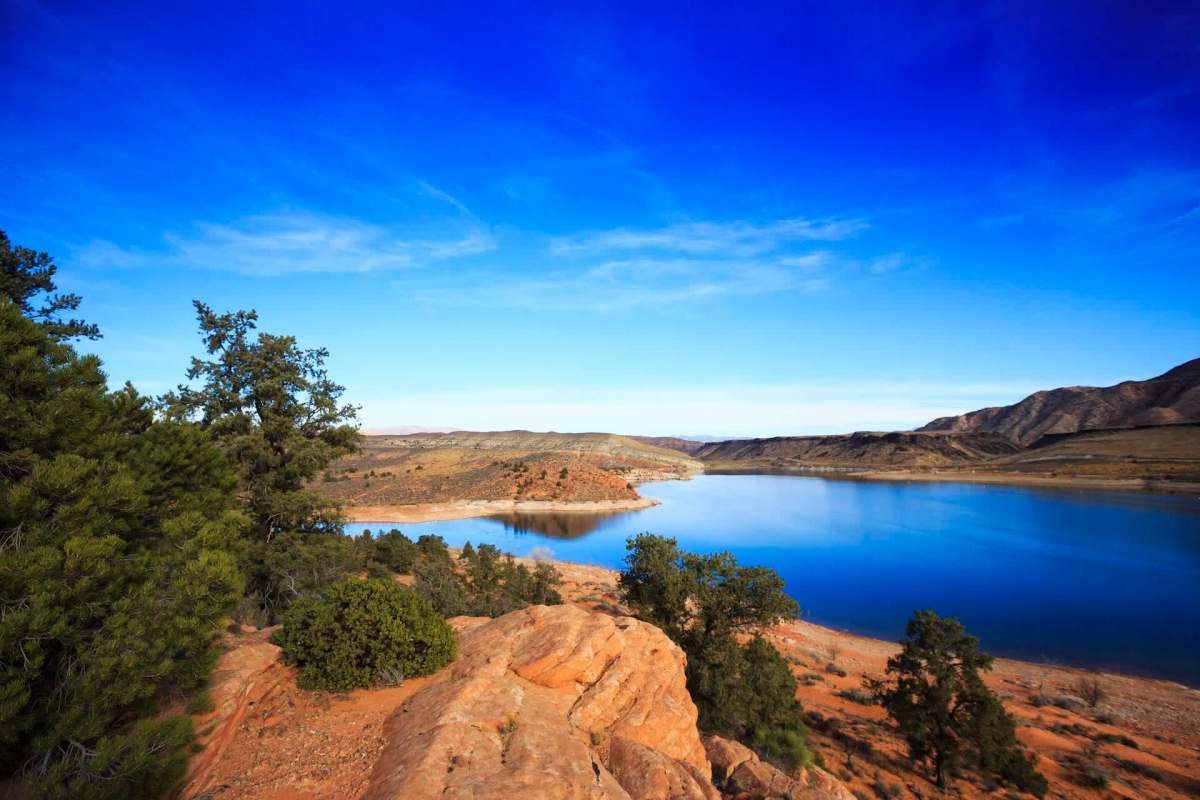
Despite historically low snowpack across the state, Gunlock Reservoir in Utah was at about 100% capacity in early February, offering relief to those concerned about the impact of dry conditions on the state's water resources.
According to ABC4 Utah, several reservoirs in the state's southern region were relatively full, averaging about 41% of capacity. Some, like the Gunlock Reservoir, were retaining even more water.
"We're very lucky to have the infrastructure we have here … we feel like we're in good condition to weather the upcoming summer," said Brock Belnap, the associate general manager of the Washington County Water Conservancy District, per ABC4.
Belnap added that other reservoirs in their district, including Sand Hollow and Quill Creek, are about 73% full. He credited a series of "great rainstorms" during the fall for the reservoirs being so full, despite the ongoing dry conditions.
Although dams and reservoirs can strain the environment, they also provide a variety of benefits. This is especially true in dry regions where communities rely on them for drinking water, irrigation, hydroelectricity, and recreation, Utah State University explained.
However, low snowpack is a cause for concern. Jordan Clayton, who works with the NRCS-Utah Snow Survey, explained that about 95% of the water used in the state comes from snowpack.
Without sufficient snowpack, long-term water levels in reservoirs could decline. However, Clayton said that the rainstorms have left the soil "soaked," increasing its moisture levels, The Salt Lake Tribune reported. That means that when the snow melts in the spring, less of it will soak into the soil, allowing it to reach the rivers and streams that feed the reservoirs.
Similar increases in reservoir and lake levels have brought relief to other areas in recent years, including Utah Lake and Big Bear Lake in California.
In a post shared to the ABC4 Facebook page, commenters had a lot to say about the development.
"That was [an] empty mud hole when I was there last summer," wrote one person.
TCD Picks » Quince Spotlight
💡These best-sellers from Quince deliver affordable, sustainable luxury for all




|
Which of these savings plans for rooftop solar panels would be most appealing for you?
Click your choice to see results and speak your mind. |
 Save $1,000 this year 💸
 Another commenter raised concerns about how the reservoir will fare for the rest of the year, saying, "This isn't a green light to start thinking we're going to be fine on water."
A third person shared their excitement, writing, "Wow! When I was there about a month ago it was low. Glad to see it up."

Get TCD's free newsletters for easy tips to save more, waste less, and make smarter choices — and earn up to $5,000 toward clean upgrades in TCD's exclusive Rewards Club.
Cool Picks






