


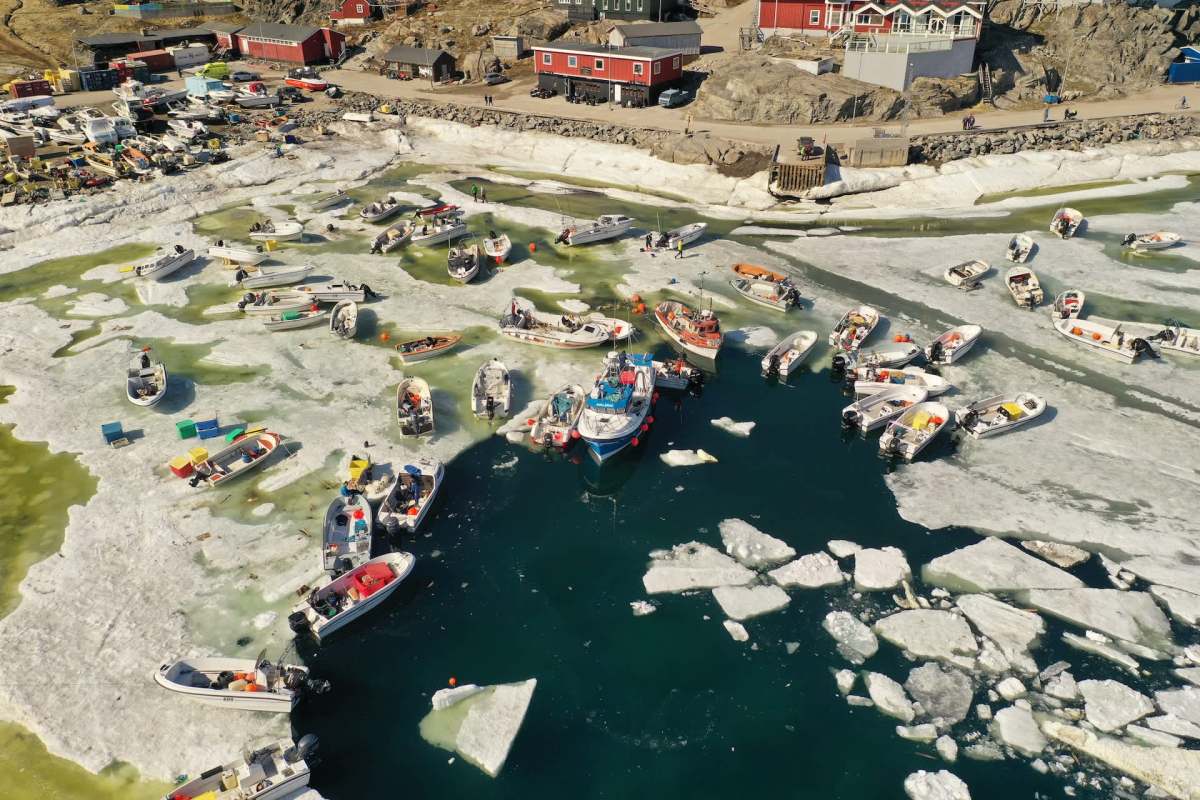
Rising global temperatures are causing sea levels to increase across the planet, but scientists have discovered that the shifting climate is having the opposite effect on Greenland's coastline.
What's happening?
A study published in the journal Nature Communications found that sea levels near Greenland will probably fall due to a phenomenon known as glacial isostatic adjustment.
Per the National Oceanic and Atmospheric Administration, glacial isostatic adjustment is "the ongoing movement of land once burdened by ice-age glaciers."
"The impacts are going to be very different than pretty much anywhere else in the world," Jacqueline Austermann, a co-author of the study, told Columbia Climate School.
Research showed that such movement will cause the land below the Greenland Ice Sheet to rebound. Scientists said the sea level drop is expected to measure up to 2.5 meters by the year 2100 if high pollution levels persist, which could affect coastal communities and shipping routes.
Why is Arctic ice melt important?
As the World Wildlife Fund noted, studies found that the Arctic may be warming nearly four times faster than the global average. Rising temperatures have weakened the Arctic's cooling effect, causing ice and snow to melt.
According to the National Snow and Ice Data Center, Arctic sea ice reached its lowest annual maximum extent on record in March 2025. NASA scientists said that the global sea level will likely increase by more than 60 meters if all ice sheets and glaciers melted.
The loss of Arctic ice could influence more than just sea levels. The United Nations Environment Programme observed that thawed permafrost may lead to the spread of deadly microbes. Plus, studies found that fish populations could be threatened, impacting seafood production and employment.
What's being done about Arctic ice melt?
Scientists have continued to research ice melt and how it may put coastal communities at risk.
The Greenland Rising Project brought together a team of researchers to study the effects of local sea level changes in the region, according to Columbia Climate School.
TCD Picks » Quince Spotlight
💡These best-sellers from Quince deliver affordable, sustainable luxury for all




|
What's the most you'd pay per month to put solar panels on your roof if there was no down payment?
Click your choice to see results and speak your mind. |
 $200 or more 💰
 Meanwhile, NASA scientists have measured the weight of glaciers and ice sheets with satellites for decades. Scientists said adapting mitigation strategies, like building resilient homes and restoring natural barriers, will lessen the impact of rising sea levels on communities.
Learning more about these critical climate issues can help you discover ways to reduce your environmental impact. Making your next car an EV or installing energy-efficient appliances in your home can help reduce the air pollution that contributes to rising global temperatures that accelerate Arctic ice melt.

Get TCD's free newsletters for easy tips to save more, waste less, and make smarter choices — and earn up to $5,000 toward clean upgrades in TCD's exclusive Rewards Club.
Cool Picks






