


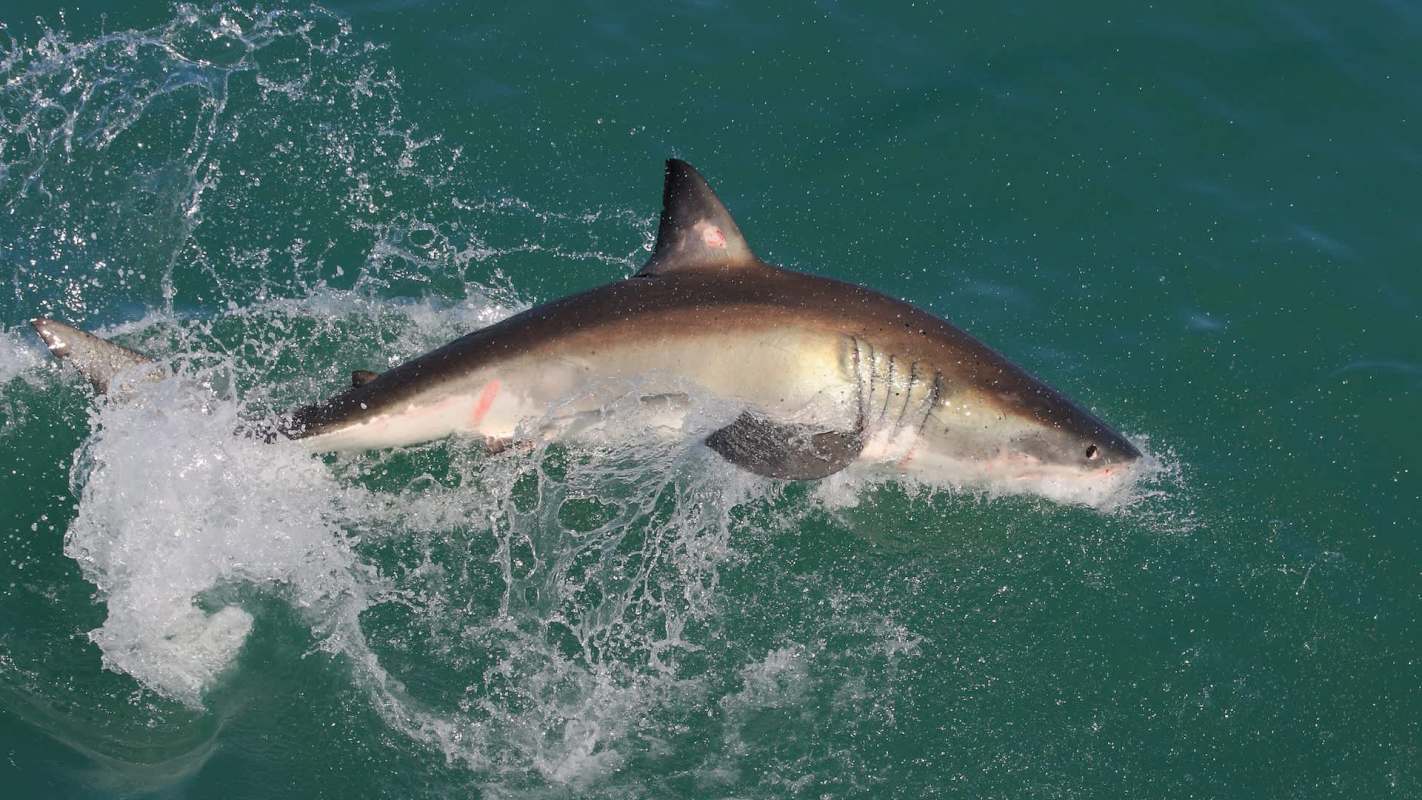
Only after the video was replayed did the surprise at Newport Beach become clear: a juvenile great white had erupted from the water just behind a surfer, and no one on shore seemed to notice in the moment.
The video shows how closely people and wildlife can overlap in California's busy coastal waters, even when neither seems aware of the other.
What happened?
On Saturday, July 25, Soaren Stevenson was filming his brother-in-law surfing near Newport Beach when he unknowingly captured a shark breaching just yards behind him, something the family noticed only later while reviewing the footage, according to Fox 11 Los Angeles.
"We didn't see the shark at first because my eyes were locked in on my brother-in-law," Stevenson told Storyful. "Later on, however, when we were reviewing the footage, we all were in shock. I couldn't believe I had captured that on video."
Reviewing the clip changed Stevenson's first impression. He said he initially thought the animal was a dolphin, then after zooming in told Fox News Digital, "I was like, 'That's not even a dolphin—that's a shark.'" He added: "He definitely didn't know how close it was."
Even for the surfer, who grew up in Hawaiʻi and has seen sharks before, it was "a once-in-a-lifetime-type experience."
TCD Picks » Quince Spotlight
💡These best-sellers from Quince deliver affordable, sustainable luxury for all




Why does it matter?
The footage may look frightening, but California officials say encounters with sharks are still rare. The California Department of Fish and Wildlife says fewer than 250 shark incidents involving all species have been recorded statewide since 1950, and that figure has not increased despite bigger beach crowds and growing interest in activities such as surfing, swimming, and scuba diving.
Humans are spending more time in marine habitats that are also home to wild animals. According to BBC Future, many wildlife encounters are better understood as overlap rather than aggression as people expand recreation into natural spaces.
Southern California's shoreline supports tourism, local businesses, and daily recreation, but it is also habitat for sharks and other marine life.
What can I do?
Checking local beach conditions, following posted warnings, and paying attention to lifeguard guidance can help people make smarter decisions before swimming or paddling out.
Juvenile great whites, like the one seen in Stevenson's video, are part of California's coastal ecosystem. Giving animals space and avoiding panic can help reduce risk for both people and wildlife.
Public agencies track incidents and communicate with the public, and a crowded coastline does not keep wild animals from using their habitat.
Stevenson said the experience will not keep him out of the ocean.

Get TCD's free newsletters for easy tips, smart advice, and a chance to earn $5,000 toward home upgrades. To see more stories like this one, change your Google preferences here.







