


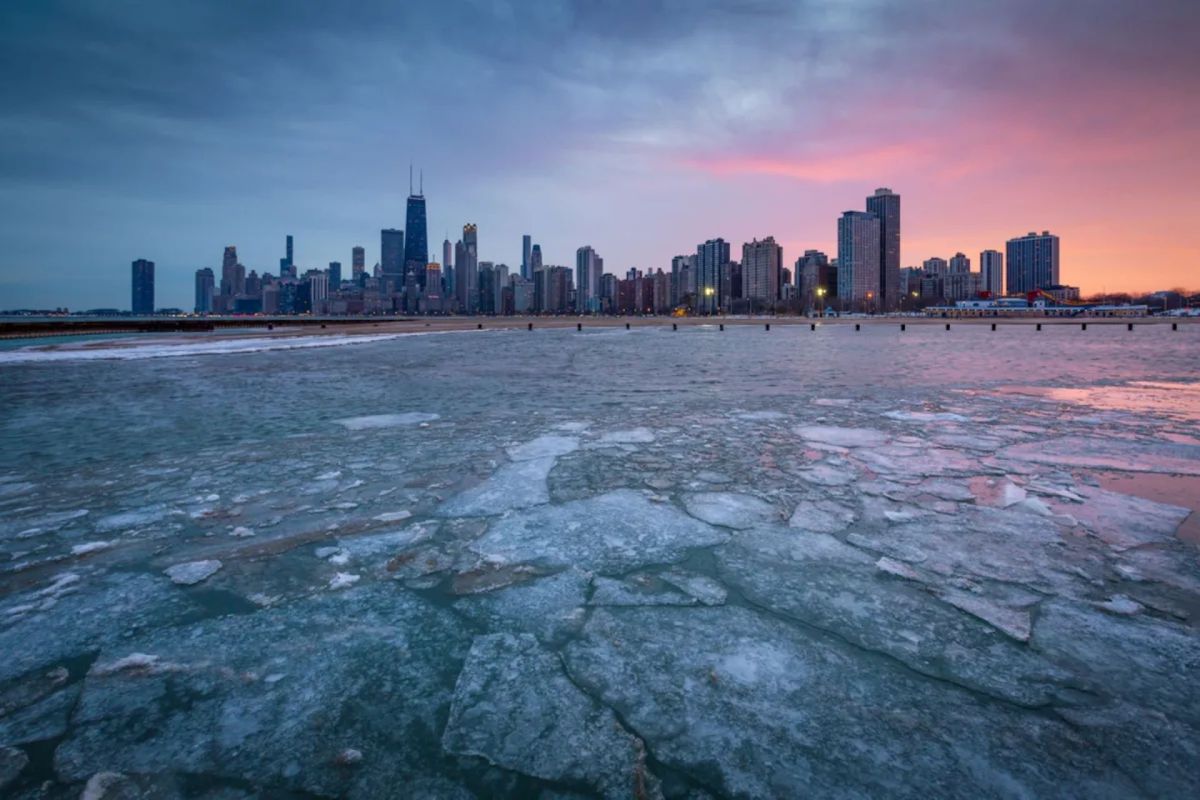
The Great Lakes recently experienced its lowest ice cover for a New Year's Day in at least five decades.
What happened?
Government data from Jan. 1, 2024, revealed that the Great Lakes had less ice cover on that day than on any other January 1 in at least 50 years. The news came amid a five-decade drop in ice cover that scientists say is partially due to the warming of our planet, The Washington Post reports.
On New Year's Day 2024, only 0.35% of the Great Lakes was covered in ice — the average for this time of year is about 9%.
"It's an extreme number," James Kessler, a physical scientist at the National Oceanic and Atmospheric Administration's Great Lakes Environmental Research Laboratory (GLERL), told The Washington Post. "That said, it is early in the season, and there is year-to-year variability. But on average, we are seeing less ice cover and shorter seasons."
He added that one-day lows are not as statistically significant as month-long lows and that maximum ice cover generally occurs in February and March.
"But what we can say is there's a clear trend, and ice cover in the Great Lakes is decreasing," Kessler also told the publication.
Why is disappearing ice concerning?
These kinds of drops in ice cover are expected to continue as our planet heats. This is bad news, as ice can protect a lake's shorelines from high waves that can otherwise result in severe flooding and coastal damage. Plus, lack of ice coverage can lead to more severe snow storms, as unfrozen lakes can create greater opportunity for "lake effect snow."
Some microorganisms also depend on the ice to spawn and lay eggs, Kessler said.
Less ice on the Great Lakes may also impact the economy in towns that rely on sports like ice fishing competitions or ice hockey to draw in tourism.
What can I do to help the warming of the planet?
Less ice cover on the Great Lakes is partly due to our warming world, according to scientists. It's not the only outcome of an overheating planet, though — we are already losing sea ice, experiencing intense waves and droughts, and watching our glaciers and ice sheets melt.
TCD Picks » Quince Spotlight
💡These best-sellers from Quince deliver affordable, sustainable luxury for all




However, the magnitude and rate of climate change depends on our actions.
One way you can help is by voting for pro-environment candidates who will act on climate change. You can also put pressure on politicians who are already in office by contacting them. The Natural Resources Defense Council offers advice on how to take a stand for climate action.
You can take small steps at home by holding corporations accountable — start by supporting eco-friendly brands and educating yourself about greenwashing.

Join our free newsletter for cool news and cool tips that make it easy to help yourself while helping the planet.
Cool Picks




