


Each year, Pacific gray whales migrate thousands of miles in what the Oceanic Society calls "one of Earth's greatest wildlife spectacles," heading south to stock up on food and welcome calves in warmer waters.
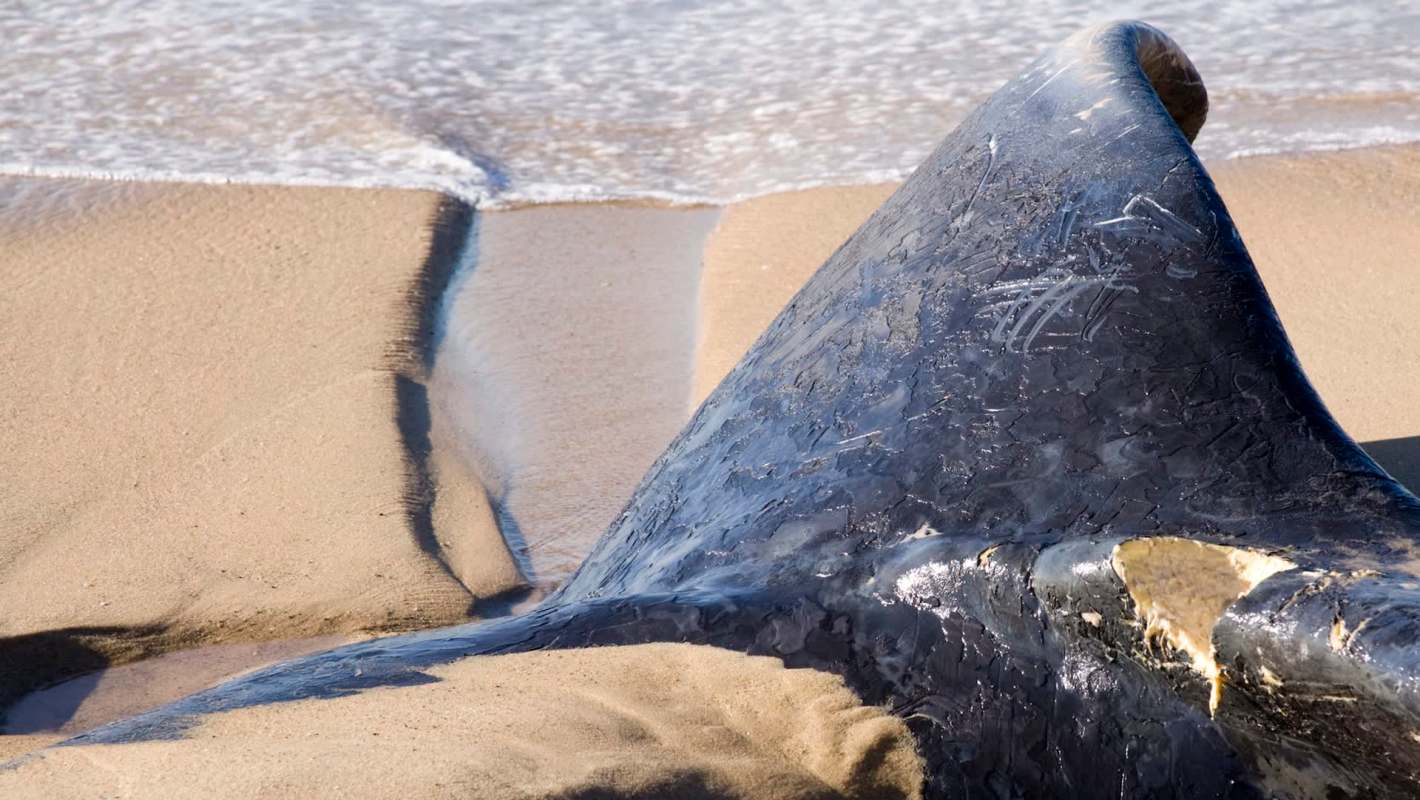
Sadly, Oregon Public Broadcasting reported that an emaciated gray whale washed ashore on Seaside Beach on April 14.
According to the outlet, it was the "third dead whale to beach off the Oregon Coast so far this year," with no fewer than 19 strandings documented across the West Coast in 2026.
Moreover, OPB reported yet another stranding happened on Washington's Long Beach Peninsula on Friday, involving a Baird's beaked whale.
The news followed an April 12 study in the journal Frontiers in Marine Science documenting an alarming uptick in gray whale mortality on the West Coast.
In addition to observing a high rate of whale deaths, the authors emphasized that the scale of the issue could be far greater, as whale carcasses that never wash ashore remain uncounted.
TCD Picks » Quince Spotlight
💡These best-sellers from Quince deliver affordable, sustainable luxury for all




A necropsy on the dead whale found on Seaside Beach was performed Friday, confirming that the mammal was emaciated and likely malnourished; OPB indicated that high levels of Arctic ice melt drastically reduced whales' food sources.
National Oceanic and Atmospheric Administration spokesperson Michael Milstein told OPB that the whales found stranded in 2026 largely fit the same profile and fretted about the broader implication.
"Most of [the stranded whales] are pretty undernourished, skinny, as if they haven't been eating enough. If we're seeing this many whales that are undernourished and having trouble this early in the year, what is that going to mean for the rest of the migration?" he said.
Vessel strikes are one major cause of whale mortality, but the study noted that an increase in those incidents was part of a bigger issue: Rising temperatures and warmer seas have pushed desperate whales into "areas of increased human activity."
OPB urged the public to report sightings of distressed or stranded whales to NOAA's stranding hotline at 866-767-6114.
|
Which of these savings plans for rooftop solar panels would be most appealing for you?
Click your choice to see results and earn rewards to spend on home upgrades. |
 Save $1,000 this year 💸
Get TCD's free newsletters for easy tips, smart advice, and a chance to earn $5,000 toward home upgrades. To see more stories like this one, change your Google preferences here.







