


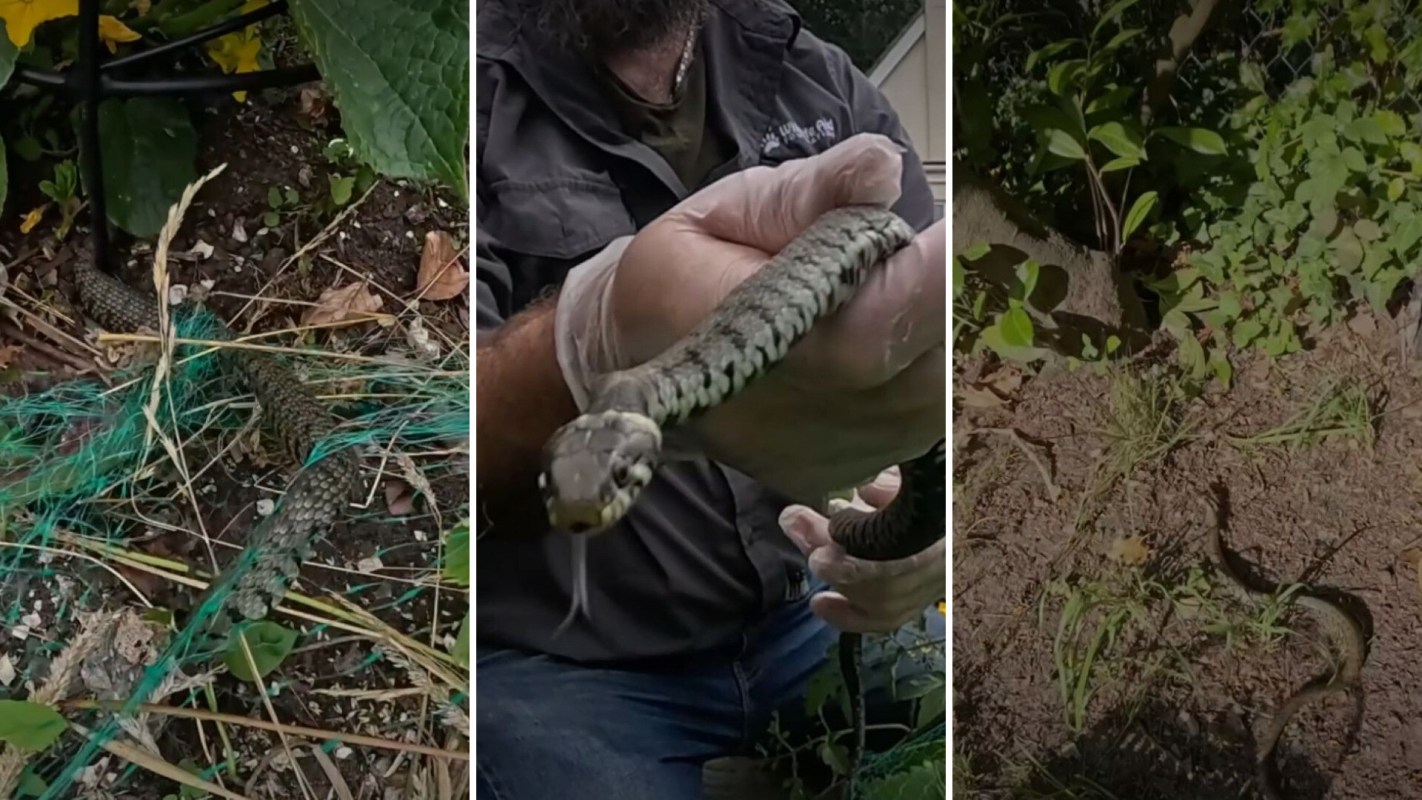
What began as a grass snake moving through a vegetable patch ended with the animal caught in garden netting — and that wasn't the only reason the rescue became unpleasant.
By the time Wildlife Aid Foundation rescuer Louis freed it, he was also covered in musk, one of the snake's most recognizable defense mechanisms.
What happened?
In a post shared by Wildlife Aid Foundation, the organization said Louis was called out to help "a poor little grass snake that had become tangled in netting after slithering through the wrong vegetable patch."
The short video shows Louis carefully cutting away the netting while trying not to injure the animal. At one point, he can be heard saying, "you've got some fight in you little one."
In the caption, the foundation described the rescue as "This was a smelly one!" and said that after "a lot of careful cutting (and getting covered in musk)," Louis was able to free the snake. According to the foundation, the grass snake was released later that day and was unhurt.
Why does it matter?
Common garden materials can become accidental hazards for wildlife. Netting may seem harmless when used to protect vegetables, but loose or poorly secured mesh can easily trap animals moving through gardens and allotments.
TCD Picks » Quince Spotlight
💡These best-sellers from Quince deliver affordable, sustainable luxury for all




In this case, the trapped animal was a grass snake, but it puts other animals at risk, as well. One commenter wrote, "I dislike that netting. Used it in the garden once had to free a bird & 1 of my cats, so threw it in the bin."
Even when an animal is found in time, the rescue process can still be stressful and dangerous for both the animal and the person trying to help. Not every animal in distress should be handled by an untrained bystander. The wrong intervention can make an entanglement even worse.
What can I do?
If you use garden netting, one of the simplest ways to reduce harm is to make sure it is pulled tight, checked frequently, and kept off the ground, where animals can crawl or slither into it. Reconsidering whether netting is necessary in the first place can also reduce the chances of trapping wildlife.
Regularly inspecting vegetable patches, fences, and low-growing plants can help catch problems early. The sooner an entangled animal is found, the better the odds that it can be freed without injury.
If you do come across a trapped wild animal, contacting a local wildlife rescue group is often the safest course of action. Professionals have the tools and experience needed to free animals carefully while minimizing further harm.

Get TCD's free newsletters for easy tips, smart advice, and a chance to earn $5,000 toward home upgrades. To see more stories like this one, change your Google preferences here.







