


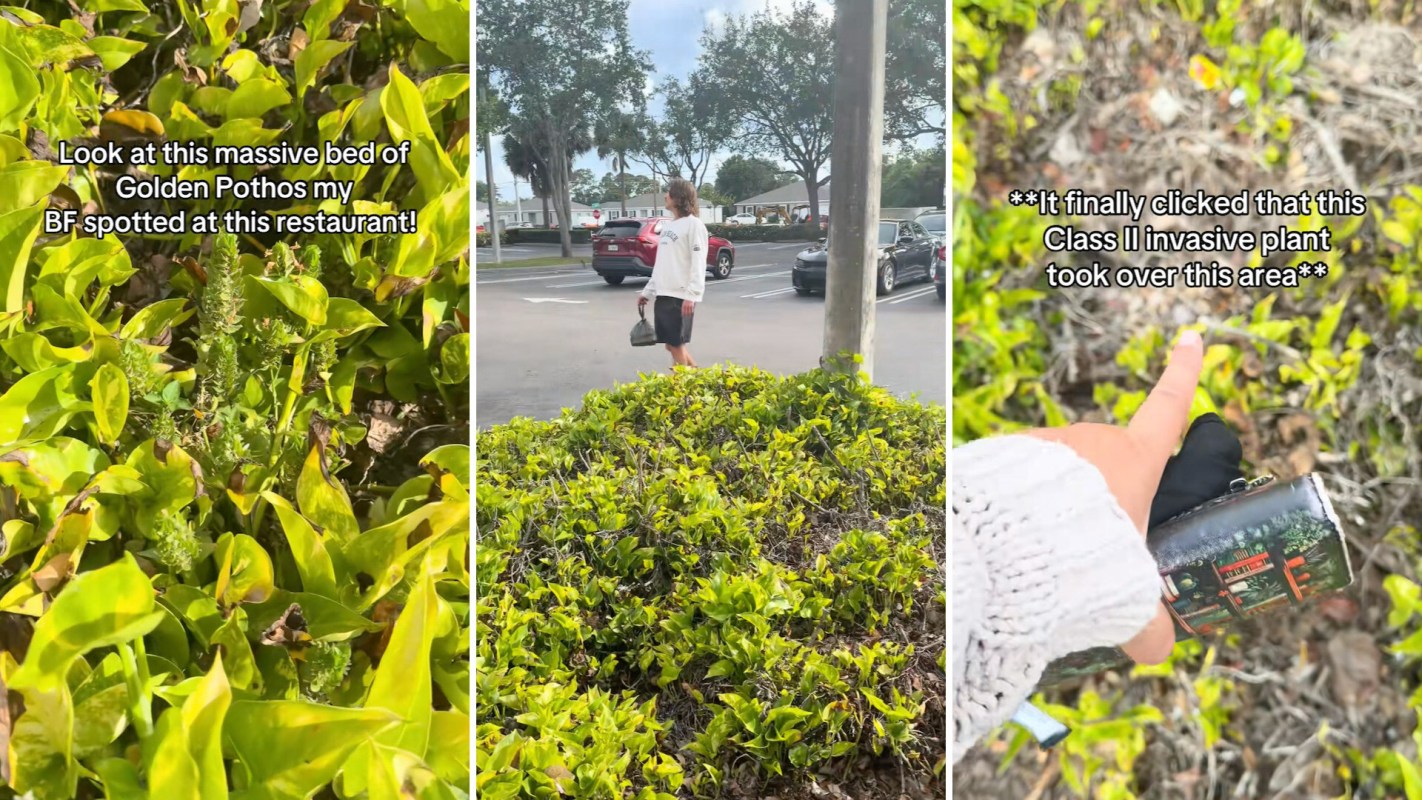
A giant patch of golden pothos spilling across a restaurant planting bed in South Florida turned a striking plant display into a cautionary tale.
What looks lush and whimsical at first glance also serves as a reminder that popular houseplants can become serious outdoor problems.
What's happening?
In a video posted by TikTok user greenbean.belly (@greenbean.belly), the bed of golden pothos has overtaken a landscaped area outside a restaurant.
@greenbean.belly YES! Pothos are incredibly invasive here in FL! It is actually on the caution/aggressive Florida plant list for invasive species of vegetation! This pothos won't damage this section/cement light pole at all (besides this little bush area that was taken over by Pothos) BUT if it was a native tree, it can cause something called a "Hunter's Robe" which is the adult phase of a pothos, has much damage to any NATIVE tree it is attached to. Pothos is considered a very aggressive plant in the FL areas. If you are able to contain or have the money to do so I love the idea of pothos! But if we aren't living with riches on the Palm Beach Island, let's all be careful with where we put our Pothos if we dispose or throw them away in random areas💚💚💚 Love you all thank you!!! #goldenpothos #pothosplant #pothos #florida #southflorida ♬ original sound - greenbean.belly
The creator reacts in real time, panning across a dense carpet of vines crowding around a light pole.
The creator wrote that pothos is "incredibly invasive" in Florida and said the plant is considered "very aggressive" in the state.
They added that this patch likely would not harm the cement light pole but that pothos growing on native trees can enter an adult stage called hunter's robe that can cause major damage.
TCD Picks » Quince Spotlight
💡These best-sellers from Quince deliver affordable, sustainable luxury for all




Why does it matter?
Invasive plants can crowd out native vegetation and make it harder for ecosystems to thrive.
When aggressive species spread unchecked, communities can end up with degraded landscapes, high maintenance costs, and few benefits from native plants.
Native greenery can support pollinators, stabilize soil, and contribute to more resilient public and private spaces.
When invasive growth takes over, it can slow progress toward cleaner, healthier neighborhoods that are easier and less expensive to maintain.
In warm climates, a plant that seems harmless indoors or in a pot can behave very differently once it escapes into the outdoors.
In South Florida, where growing conditions are favorable year-round, that can turn a familiar decorative plant into a persistent problem.
What can I do?
If you grow pothos, keep it contained and monitor outdoor areas where pieces may take root.
Don't dump cuttings, extra plants, or soil from containers into empty lots, wooded areas, or roadside landscaping. Even casual disposal can give aggressive species a chance to spread.
If you live where pothos is known to spread aggressively, consider choosing native or noninvasive alternatives for patios, yards, and shared community spaces.

Get TCD's free newsletters for easy tips, smart advice, and a chance to earn $5,000 toward home upgrades. To see more stories like this one, change your Google preferences here.







