


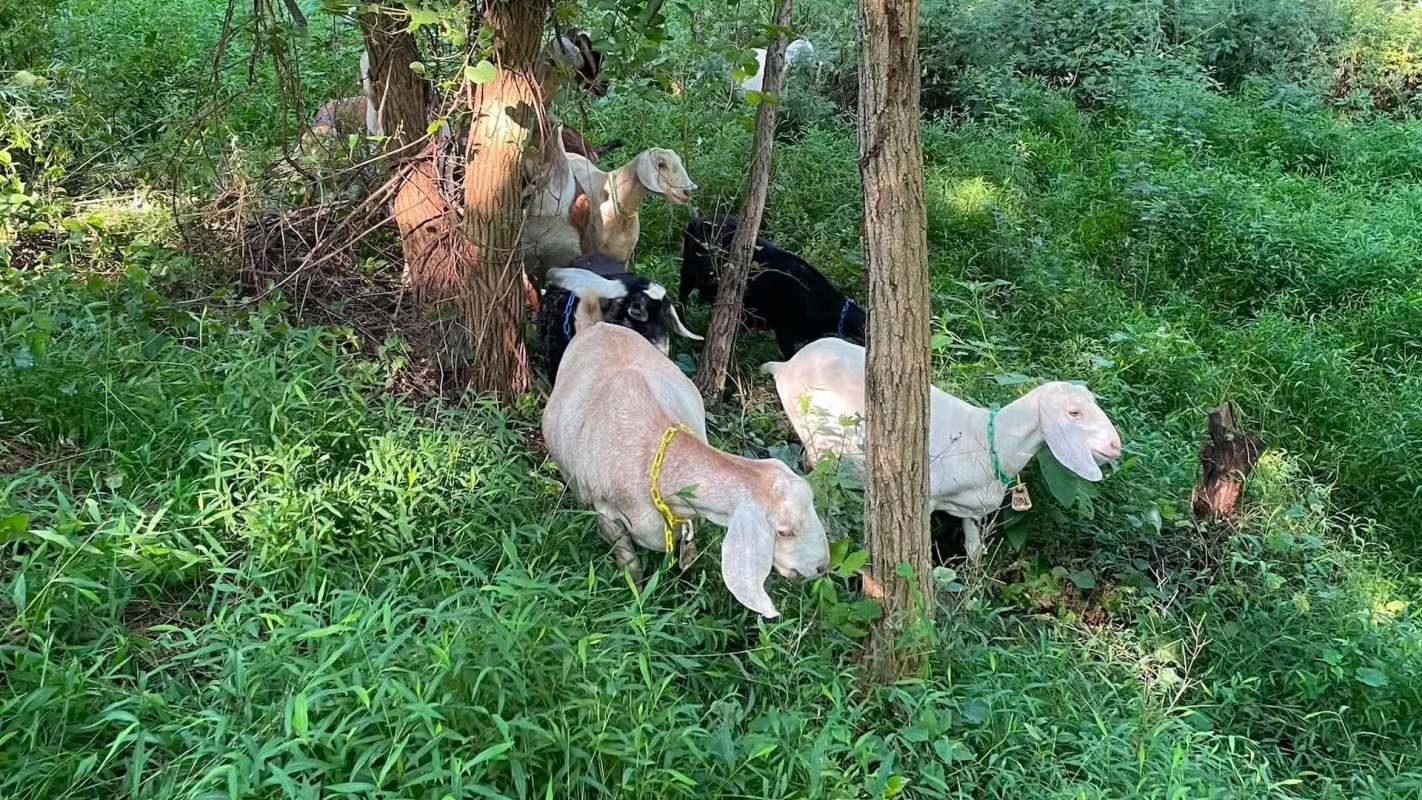
One of Pittsburgh's most charming summer traditions is also one of practicality: Goats are returning to the South Side Park to eat invasive plants while drawing crowds for a community celebration.
At this year's Goat Fest PGH, visitors can watch the goats graze and also enjoy a petting zoo, a therapy goat, live music, food trucks, local vendors, family activities, and a plant sale.
What's happening?
Friends of South Side Park started the annual event in 2017 when the group teamed up with nonprofit Allegheny GoatScape on a restoration project expected to take multiple years, according to WESA.
Japanese knotweed and porcelain berry vine had spread through the remnants of an old incline there, and parts of Pittsburgh's landscape are too steep for crews and heavy machinery to manage easily.
Hillary Steffes, interim executive director of Allegheny GoatScape, said much of the city is "topographically severe," leaving some plant removal work too risky or inaccessible for workers and equipment.
In those kinds of hard-to-reach areas, goats can provide a practical way to clear large amounts of vegetation.
TCD Picks » Quince Spotlight
💡These best-sellers from Quince deliver affordable, sustainable luxury for all




"The goats naturally want to eat a lot of the plants that folks are targeting — plants that are taking over spaces and are the product of abused land," Steffers told WESA. "The goats naturally want to eat a lot of these plants anyway, so they're there just eating, doing what they want to do."
Why is this important?
Ecological restoration can help create safer, more welcoming public spaces for people.
Kitty Vagley, head of the Goat Fest committee for Friends of South Side Park, said the event serves two purposes: Raising money to bring the goats back and supporting the park more broadly, while also introducing residents to a green space many may not even realize exists.
"There's two purposes [of Goat Fest]. One is to raise money to bring the goats back and for other uses inside South Side Park," Vagley told WESA. "And the second reason is to invite people into South Side Park, because so many people don't even know that it exists."
Restoring overgrown land can improve access, support healthier ecosystems, and make neighborhood parks feel more valuable to the people who live nearby. The festival also boosts local activity for vendors and small businesses taking part.
What's being done?
Steffes said the grazing itself is only the opening stage of restoration.
The goats reduce growth rather than wiping it out completely, and the usual follow-up involves continuing other management work. She has also pushed for projects with stronger long-term plans, especially on public lands, to help ensure the work lasts.
"The goats naturally want to eat a lot of the plants that folks are targeting," Steffes said.
And for visitors lucky enough to see them up close, Vagley added, "It's just fun to see those quiet goats eating away nearby."

Get TCD's free newsletters for easy tips, smart advice, and a chance to earn $5,000 toward home upgrades. To see more stories like this one, change your Google preferences here.







