


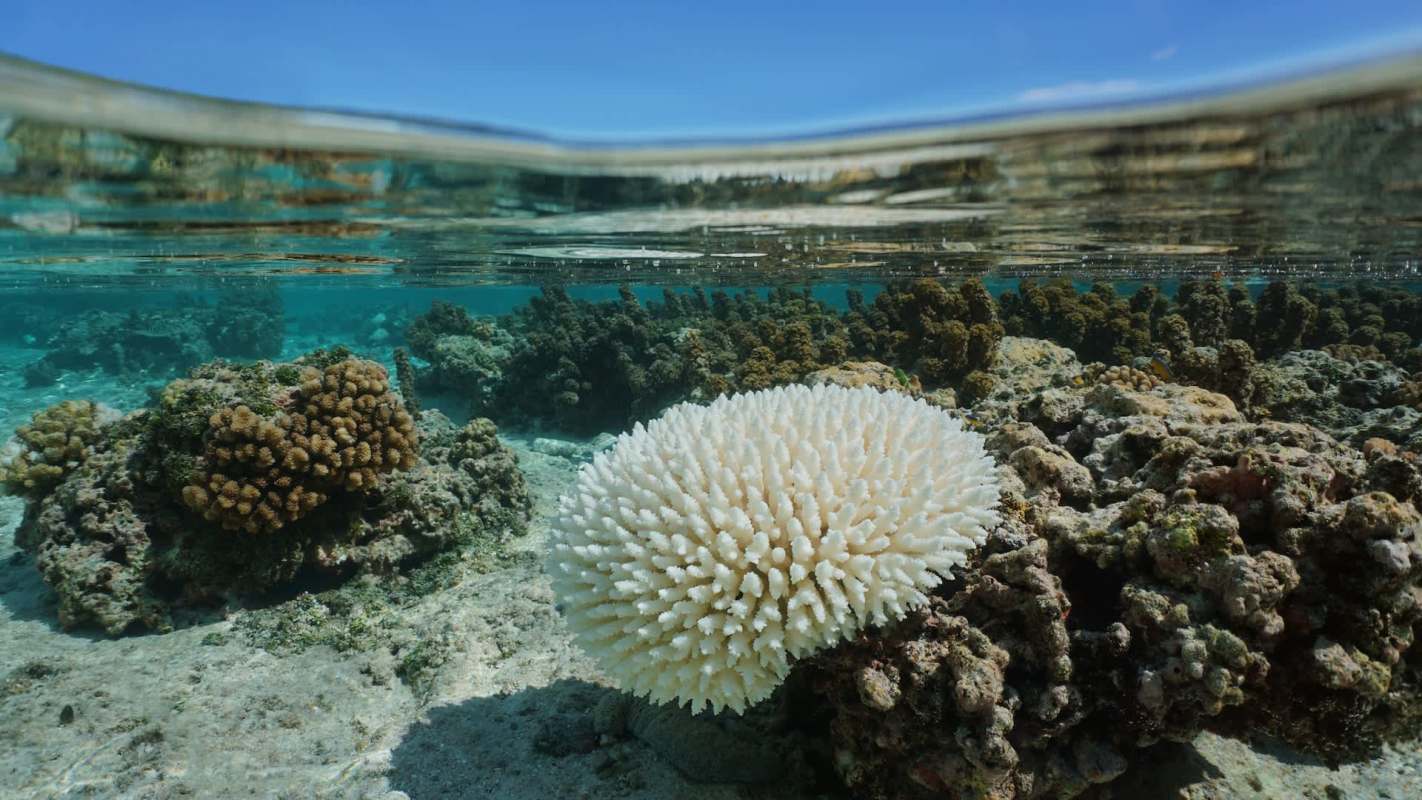
A new report from 160 scientists across 23 nations warns that the planet is crossing into dangerous territory as global temperatures continue to rise. But the publication also highlights some major wins and recommendations for more.
The 2025 Global Tipping Points Report collects updates about a number of environmental thresholds, both positive and negative. As warming projects to surpass 1.5 degrees Celsius (2.7 degrees Fahrenheit)— long established as the benchmark before calamity — the co-authors are particularly concerned about the potential for irreversible damage in what they call our "new reality."
For example, the warm-water coral reefs "on which nearly a billion people and a quarter of all marine life depend" are starting to die out, according to a news release from the University of the Witwatersrand, Johannesburg — one of the 87 institutions involved in the report. If the planet continues to overheat, other terrible tipping points could be breached, including the irreparable melting of ice sheets, the collapse of ocean currents, and the death of essential rainforests.
This is the second such report published since 2023. "In the two years since the first Global Tipping Points Report, there has been a radical global acceleration in some areas, including the uptake of solar power and electric vehicles," said initiative leader Tim Lenton in the release. "But we need to do more — and move faster — to seize positive tipping point opportunities."
The researchers' takeaways, while frightening, highlight positive "tipping points" too. They emphasize that these are achievable and, in some cases, have already been reached. From the adoption of solar energy, electric vehicles, and heat pumps to better battery storage and the development of plant-based proteins, lots of real change is already taking place. But, the co-authors note, it needs to be sustained and expanded in order to avoid further disaster.
Lenton and his team hope to help energize this action with the publication's release coming in the lead-up to the 30th annual United Nations Climate Change Conference, also known as COP30. In Belém, Brazil, global representatives will gather from November 10 through November 21 to discuss the problems facing our interconnected environments as well as potential solutions.
Perk up the winter blues with natural, hemp-derived gummies Camino's hemp-derived gummies naturally support balance and recovery without disrupting your routine, so you can enjoy reliable, consistent dosing without guesswork or habit-forming ingredients. Flavors like sparkling pear for social events and tropical-burst for recovery deliver a sophisticated, elevated taste experience — and orchard peach for balance offers everyday support for managing stress while staying clear-headed and elevated.
Learn more → |

"We are rapidly approaching multiple Earth system tipping points that could transform our world, with devastating consequences for people and nature," said Lenton. "This demands immediate, unprecedented action from leaders at COP30 and policymakers worldwide."
|
Do you think we're doing enough to clean trash from the oceans? Click your choice to see results and speak your mind. |
 Yes 👍
Yes 👍 
Join our free newsletter for good news and useful tips, and don't miss this cool list of easy ways to help yourself while helping the planet.
Cool Picks






