


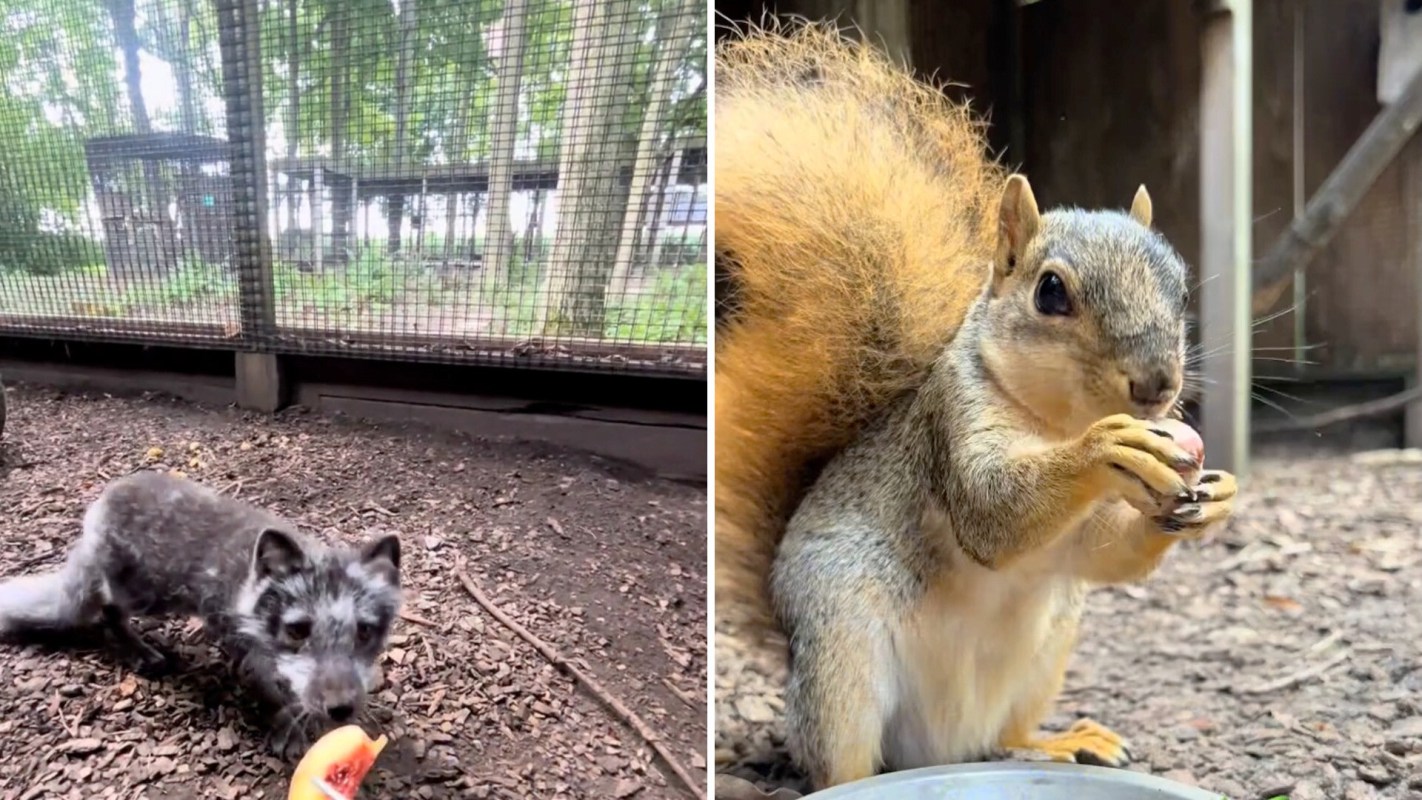
An acorn might not seem like much, but for one fox squirrel at a wildlife rehab facility, it was clearly the highlight of the day.
A short TikTok from Sophia (@saphirerley), a content creator who shares wildlife rehabilitation content, captured the ambassador fox squirrel lighting up over the simple treat.
What happened?
The video showed Sophia's morning routine, which includes checking in on, medicating and feeding animals.
@saphhirely our ambassador fox squirrel was so happy she got an acorn🐿️ #fyp #wildliferehab #womeninwildlife ♬ maggots for brains Official Instrumental - Dan Swift Del Rey
The video starts with Sophia and another rehabilitator preparing and then administering medicine for a great blue heron and another bird. On deck are some baby animals that they weigh and make sure are healthy.
From there, it's time to feed some animals. First up is a flying squirrel who jumps in for a snack. Sophia then puts together fruits and veggies for everyone else including the ambassador squirrel. An opossum and two different types of foxes come up to Sophia to grab some food.
"Our ambassador fox squirrel was so happy she got an acorn," Sophia wrote.
TCD Picks » Quince Spotlight
💡These best-sellers from Quince deliver affordable, sustainable luxury for all




According to Treehugger, an ambassador animal cannot be released into the wild but can still serve an important educational role. In cases like this, rehab centers often care for animals that cannot be released while helping the public better understand native species and the challenges they face.
Lastly, Sophia gets an intake of orphaned baby opossums.
How does this work help animals?
The clip offers a glimpse into the work involved in rehabilitation and humane care for animals that cannot return to the wild.
For fox squirrels, natural foods like acorns are part of the behaviors that help keep the animals mentally engaged and physically active. In care settings, that kind of enrichment is especially important for wild animals that still need opportunities to express instinctive habits.
Even when they seem comfortable around people, squirrels and the other animals here require specialized diets, handling, and medical care that licensed wildlife professionals are trained to provide.
What's being done?
Wildlife rehabilitation centers do the behind-the-scenes work of rescuing injured or orphaned animals, assessing whether they can be released, and caring for those that cannot. Ambassador animals can then help build public understanding of conservation.
Licensed rehabbers often rely on donations, volunteers, and the reach of their educational work. These organizations frequently operate with limited resources.
People can also make their own yards more welcoming to wildlife by preserving mature trees when possible, planting local species, and avoiding unnecessary interference with healthy wild animals.

Get TCD's free newsletters for easy tips, smart advice, and a chance to earn $5,000 toward home upgrades. To see more stories like this one, change your Google preferences here.







