


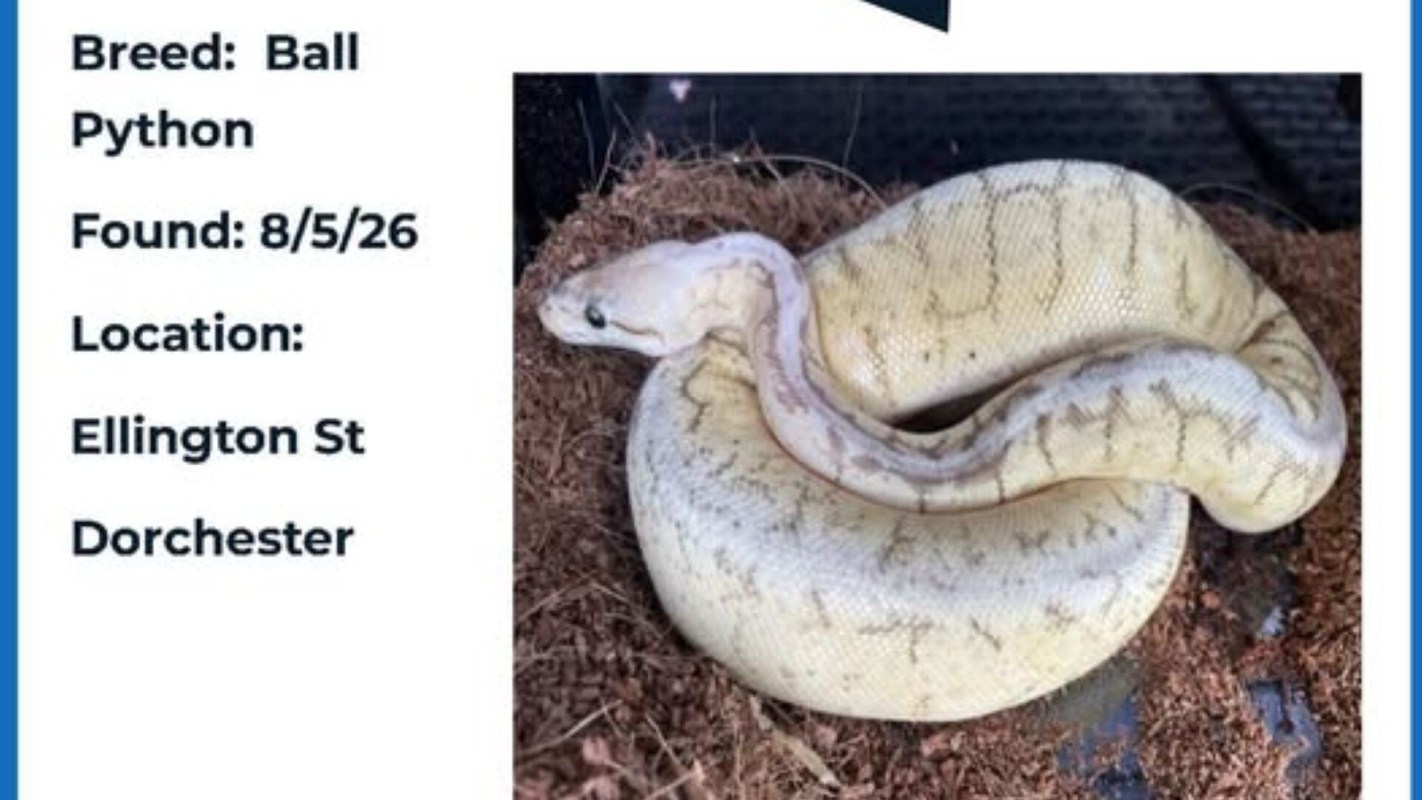
A routine stream of found-pet notices in Boston took an unexpected turn when city officials shared an alert for a ball python, rather than the more familiar missing dog or cat.
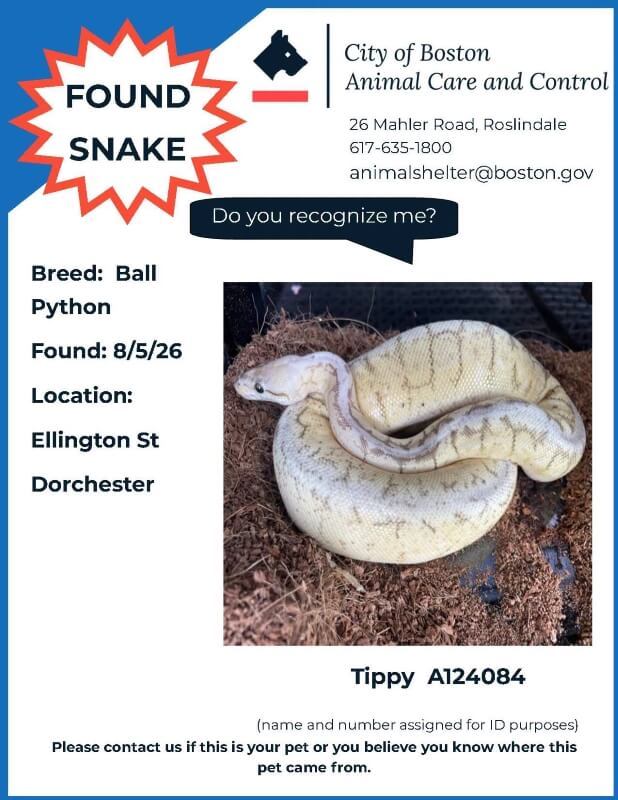
A caged snake later identified as "Tippy" was discovered near the raised beds of a Dorchester community food garden, Boston.com reported.
Here's what to know
Boston Animal Care and Control said the ball python turned up at about 6 p.m. at a community garden on Ellington Street in Dorchester, per the outlet. The animal arrived there under mysterious circumstances.
Before animal control arrived, residents and garden staff told 311 they had seen someone leave the snake in a cage beside the garden beds, a spokesperson told Boston.com.
An officer brought the reptile to the city's animal care facility in Roslindale, where officials said it was in good condition and getting proper care.
They posted a photo of the reptile to their Facebook account (@bostonanimal) in hopes of finding the owner.
TCD Picks » Quince Spotlight
💡These best-sellers from Quince deliver affordable, sustainable luxury for all




More background
Ball pythons are commonly kept as pets, but they are not native to Boston and are not animals that belong outdoors in the city. Leaving one outside can put the reptile at risk, especially if it is without the temperature control, food, and shelter it needs to stay healthy.
Commenters on Facebook were wary of foul play from an owner who might have abandoned multiple pets.
"MSPCA has five of these up for adoption," one commenter noted. "Hope there's no connection."
There was immediate concern for the animal, and some disregard for whoever left it.
"OMG poor snake," another Facebook user wrote. "The person is a snake, unbelievable."
What's being done?
Boston.com said Tippy is being kept at the city facility in Roslindale while Boston Animal Care and Control seeks information about the snake. Anyone with details is asked to contact the agency at 617-635-1800 or animalshelter@boston.gov.
Until then, the ball python remains in city care.
In general, if pet owners are unable to take care of a pet, leaving the animal outside should not be the next move.
Instead, contacting local shelters and care facilities that might be able to rehome and host the pets is a much better option for the animal and the local community.

Get TCD's free newsletters for easy tips, smart advice, and a chance to earn $5,000 toward home upgrades. To see more stories like this one, change your Google preferences here.







