


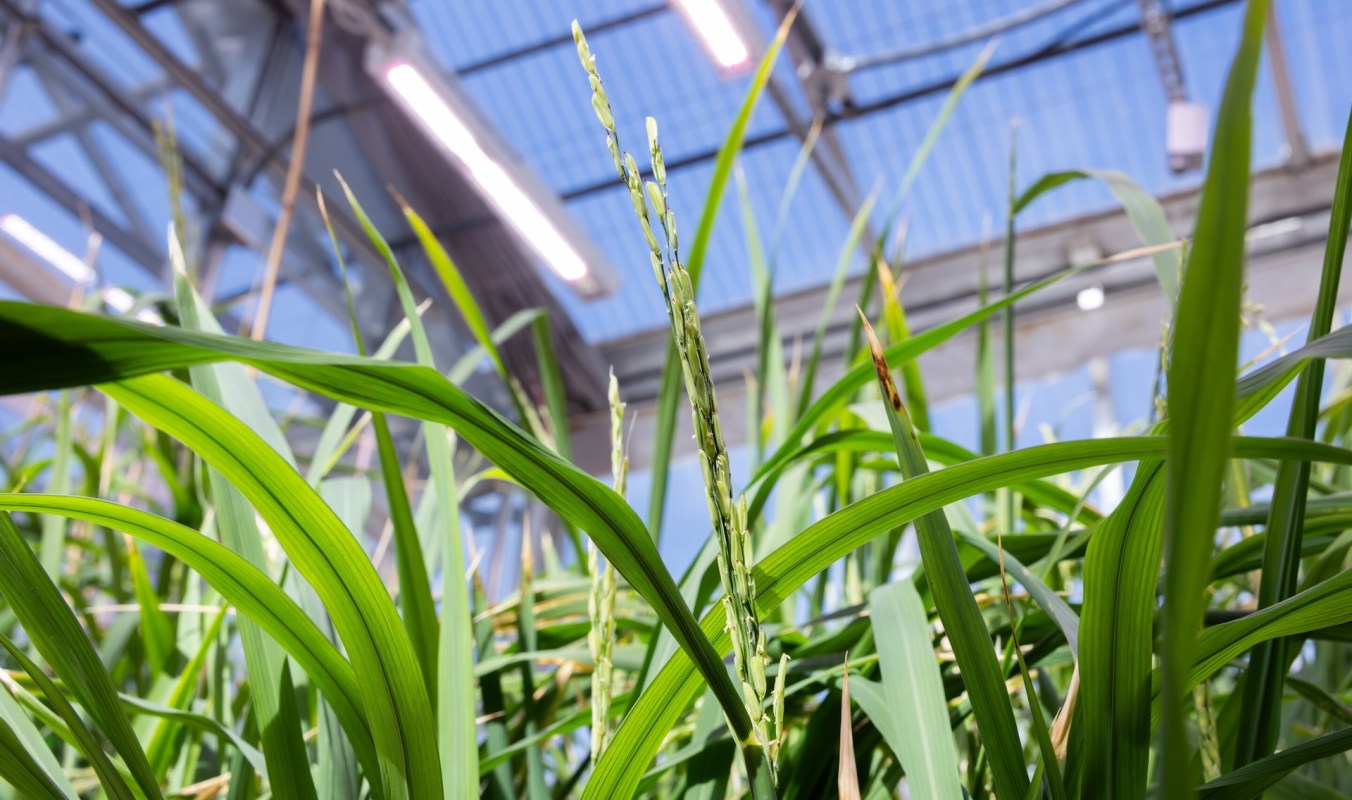
Rice is already feeding billions of people, and when it's flowering, it may also be providing pest control.
According to a report from Phys.org, researchers at the University of Arkansas have found that flowering rice plants can trap and kill young fall armyworm caterpillars.
The study, published in Ecological Processes, found that about half of the early-stage caterpillars used in the experiments died after becoming stuck inside rice spikelets. Rice grains form in those tiny structures.
Fall armyworms are among agriculture's most notorious crop pests. Their growing resistance to insecticides has made them an even bigger concern. Rice, meanwhile, serves as a staple for around half the global population.
Any new way to help protect yields without increasing chemical use could carry major benefits for food security, farm economics, and environmental health.
When rice enters its flowering stage, the spikelet opens so the floret can be pollinated. The researchers found preliminary evidence that a faint floral scent may attract young caterpillars toward the floret. But once the larvae crawl inside, tiny spiky hairs known as trichomes snag them. When the spikelet closes, the trapped caterpillar dies.
TCD Picks » Quince Spotlight
💡These best-sellers from Quince deliver affordable, sustainable luxury for all




Across four separate trials, the researchers saw the same basic result. Roughly half of the week-old fall armyworm larvae died within 48 hours after spikelets trapped them. Even when rice leaves were also available, many of the insects still moved toward the flowering rice and ended up inside the spikelets.
The finding itself was accidental. Doctoral researcher Devi Balakrishnan had originally been studying a different question related to plant stress responses when she noticed something unusual. Caterpillars inside the rice spikelets were not feeding. They were dead.
Because the team also collected and analyzed the floral scent released by the rice flowers, the researchers now want to investigate whether boosting that aroma — potentially with a natural spray applied during flowering — could draw more caterpillars into the plant's built-in trap.
If that strategy proves effective, it could help reduce dependence on conventional insecticides. That would benefit farmers trying to lower input costs and potentially prevent chemical runoff from entering nearby soil and waterways.
It could also reduce harm to beneficial insects and other wildlife that broad-spectrum pest treatments can harm.
There are still important unknowns. The experiments used wild-type rice. Future research could examine other rice species, other caterpillar species, or if older, larger larvae can escape flowering rice spikelets. Still, the current results are promising.
For the public, research like this matters because it suggests a future where nature continues to protect staple crops. That could mean more stable harvests, lower risks for growers, and a smaller environmental footprint from agriculture overall.

Get TCD's free newsletters for easy tips, smart advice, and a chance to earn $5,000 toward home upgrades. To see more stories like this one, change your Google preferences here.







