


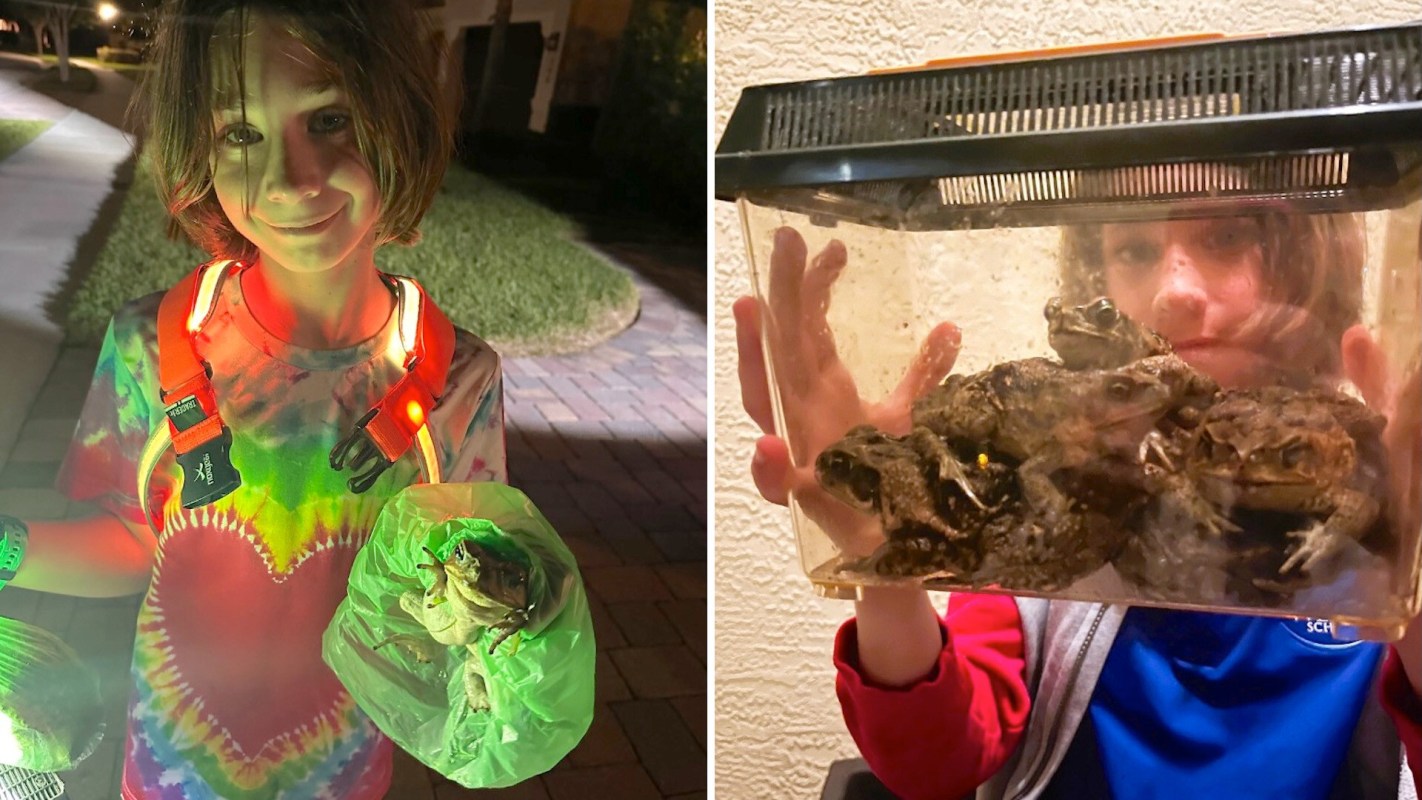
For 10-year-old Aspen Cara, evenings often mean grabbing a flashlight and pulling on a pair of gloves instead of staying inside with homework or video games.
The Jupiter, Florida, fourth grader spends his nights searching for invasive cane toads, turning the unusual hobby into a community effort to help protect neighborhood pets from the toxic amphibians.
What's happening?
According to WPBF, after learning how common cane toads are in Florida — and how dangerous their toxin can be for dogs and cats — Aspen was inspired to start Habitat Heroes, a service project aimed at capturing the invasive species. His mom contacted the station after watching its report about a dog that died after exposure to one of the toxic toads.
According to the Florida Fish and Wildlife Conservation Commission, as reported by WPBF, cane toads — also called bufo toads — store poison in large glands behind their eyes. The agency says animals that lick or bite the toads can be killed by that toxin.
Aspen has become particularly skilled at spotting the invasive amphibians.
"They produce a neurotoxin that can be dangerous for most pets, almost all actually," he told WPBF.
TCD Picks » Quince Spotlight
💡These best-sellers from Quince deliver affordable, sustainable luxury for all




He also said that correctly identifying the toad is essential before taking any action. Native toads are protected and play an important role in Florida's ecosystems, while cane toads are not protected except under anti-cruelty laws.
Why does it matter?
Contact with a cane toad can become an emergency for pets within minutes.
Invasive species can also disrupt daily life at home. When nonnative animals spread quickly and face few predators, they can crowd out local wildlife while creating new risks for families and pets.
Aspen says he may already be noticing positive changes in his neighborhood.
"I think we're making a difference because we've seen one native tree frog and one native southern leopard frog in our neighborhood," he told WPBF.
What's being done?
FWC says, as reported by WPBF, homeowners can remove cane toads from private property year-round, but the agency stresses that people should wear gloves, make a positive identification first, and never relocate and release the toads elsewhere.
Aspen told WPBF that his family follows those guidelines carefully.
"We go out and catch them, and after that we take them in, usually put them in our outside fridge, which puts them to sleep, and then we put them in the freezer, which puts them out," Aspen said to the outlet. He added that the dead toads are then used as fertilizer.
"Our largest haul for the night was actually 53 bufos for one night," he said.
"I hope this helps prevent dogs from getting hurt by the toxin. [Can toads] are invasive, and they don't have many natural predators, and because it helps the environment, it's just kind of nice to do," Aspen told WPBF. "The more people that do it, the better it is, because there's just so many."

Get TCD's free newsletters for easy tips, smart advice, and a chance to earn $5,000 toward home upgrades. To see more stories like this one, change your Google preferences here.







