


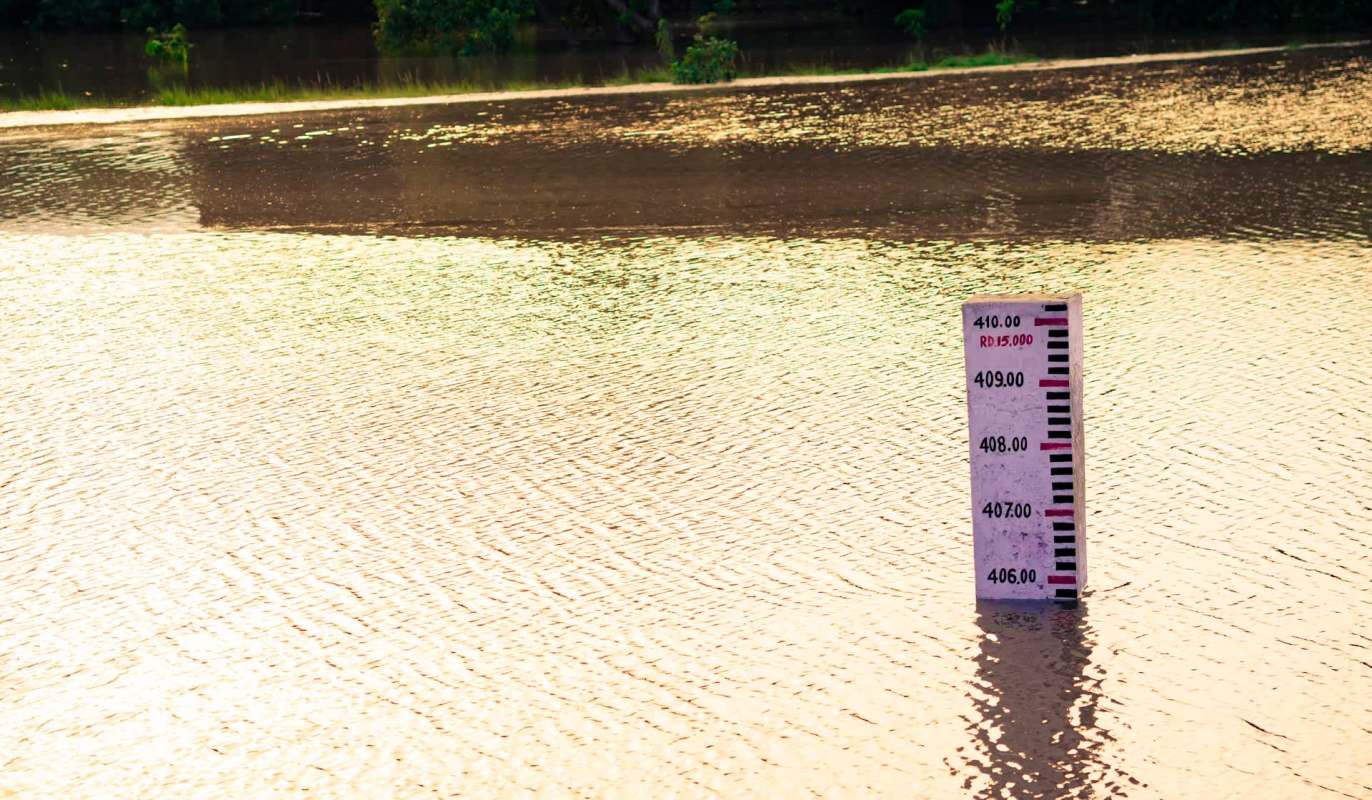
Devastating flooding in parts of Pakistan and India has displaced nearly 2 million people since August. Officials in India issued three flood alerts in the span of one week as the relentless heavy monsoon rain fell.
A surge of monsoonal moisture fueled yet another round of extreme rainfall in South Asia in early September. Muzaffargarh in the Punjab province of northeastern Pakistan was one of the hardest-hit cities in the region. Since the Ravi, Sutlej, and Chenab rivers overflowed in August, nearly 4,000 villages have been submerged, according to Al Jazeera.
Al Jazeera correspondent Kamal Hyder called it a critical situation with water rising rapidly. "Yesterday we were at the same location and there was just a couple of feet of water," said Hyder, who added that one village that was flooded under a couple of feet one day was submerged under 20 feet of water the next.
Dawn, Pakistan's oldest and most widely read English-language daily newspaper, reported that the floods in Punjab raise the risk of a humanitarian crisis.
"Our priority is to save lives as this is the worst flooding in Punjab's history," Irfan Ali Kathia, director general of the provincial Disaster Management Authority, told Al Jazeera. "Supplies are on the way for the displaced people, and one of the largest rescue and relief operations is still ongoing."
The National Disaster Management Authority reported Sept. 10 that aid to Punjab totaled 1,660 tons, consisting of essentials such as blankets, tents, nets, water filters, quilts, folding beds, water cans, and boats. The NDMA says 992 people have died, with another over 1,000 injured, since late June as a result of the extreme weather.
As part of a global network, Rise Against Hunger India nourishes lives and builds sustainable solutions to combat hunger and malnutrition. It has supported over 3,500 households, delivering 126,200 fortified meals to families facing urgent needs.
"Agricultural losses are extensive, with more than 1 million hectares of farmland submerged, threatening food security and livelihoods in already vulnerable communities," according to the organization. "Infrastructure damage, including washed-away roads, collapsed bridges, and disrupted power and water supply, has compounded the crisis, leaving many areas cut off from basic relief."
Scientists say our warming world is supercharging extreme weather events. Earth just had its third-warmest August on record, making this year a virtual lock to end up among the top five warmest since records began in 1850.
"Climate change is likely causing parts of the water cycle to speed up as warming global temperatures increase the rate of evaporation worldwide," said researchers with the University Corporation for Atmospheric Research. "More evaporation is causing more precipitation, on average. We are already seeing impacts of higher evaporation and precipitation rates, and the impacts are expected to increase over this century as climate warms."
TCD Picks » Quince Spotlight
💡These best-sellers from Quince deliver affordable, sustainable luxury for all




|
How often do you experience power outages? Click your choice to see results and speak your mind. |
 Pretty regularly 😠
 The recent rounds of heavy rain in early September have exacerbated an already difficult situation. Extreme monsoon rainfall hit some of the same regions now being impacted by flooding as early as late June. Floodwaters impacted Punjab and Khyber Pakhtunkhwa again in the middle of July. By early August, scientists had linked our warming world to the severe summer flooding.
"Climate change intensified heavy monsoon rain in Pakistan, exacerbating urban floods that impacted highly exposed communities," concluded researchers with World Weather Attribution.

Join our free newsletter for good news and useful tips, and don't miss this cool list of easy ways to help yourself while helping the planet.
Cool Picks






