


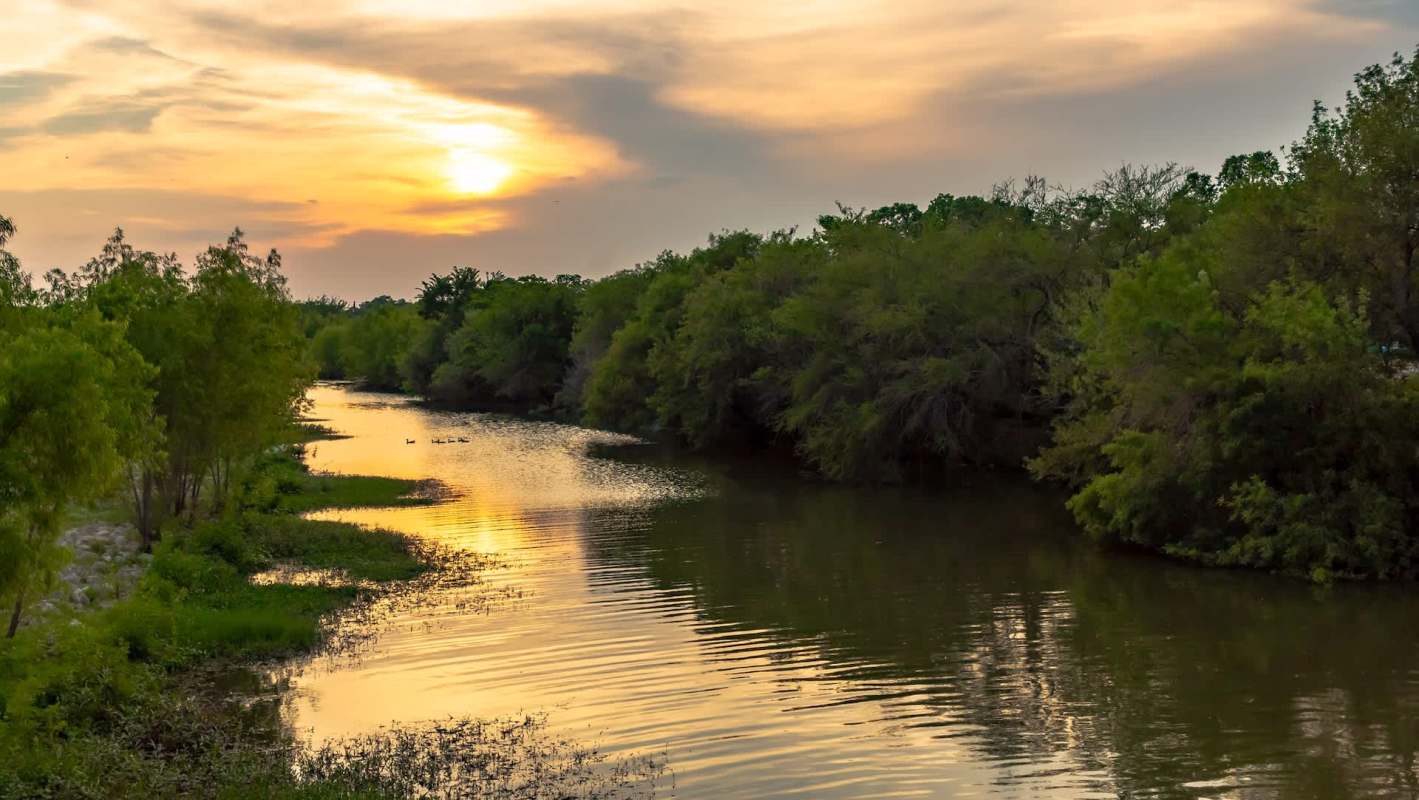
Water levels have dropped dramatically in a large lake in the Texas Hill Country, even after devastating floods ravaged the region earlier this summer. An expanding drought in the Lone Star State is drying up the nearly 5,400-acre lake that stretches across two Texas counties.
The declining lake levels observed in Medina Lake, located approximately 25 miles northwest of San Antonio, may seem surprising given the substantial rainfall that has fallen in the city in 2025. So far this year, 25.09 inches of rain have fallen there, around a third of an inch above average.
"On its surface, that number sounds great — things seem like they're going just how they should," according to San Antonio Express-News newsroom meteorologist Anthony Franze. "However, rainfall has been extremely sporadic. Just over 50% of San Antonio's yearly rainfall came during three weeks, from May 22 through June 12, and after the devastating Hill Country floods in early July."
Since the catastrophic flood event that killed at least 137 people, less than 33% of the normal rainfall has been reported in San Antonio since the start of September. The dry weather in central Texas has taken a toll on the counties that are home to Medina Lake. All of Medina County is experiencing a drought, with more than two-thirds of the county enduring an extreme to exceptional drought, levels four and five out of five, according to the latest U.S. Drought Monitor report. More than a third of Bandera County is in a moderate drought, while nearly 77% of the county is abnormally dry.
"As dry weather has returned over the past two months, Medina Lake is dropping again at an alarming rate," reports Franze. "Water levels have dipped 1.89 feet since then, and the lake — now sitting at a surface elevation of 982.88 feet above sea level — is just 5.8% full and more than 81 feet below capacity. Medina Lake hasn't been considered full since July 2019."
Drought conditions have expanded over the past week in Texas. Nearly a quarter of the state is in at least a moderate drought. The areas of the state experiencing moderate to severe drought have increased compared to last week's U.S. Drought Monitor report, released on September 23.
CBS Austin meteorologist Avery Tomasco posted on X that a "flash drought is underway" in central Texas. Austin, around 84 miles northeast of Lake Medina, had only .08" of rain last month, the city's sixth-driest September on record.
Our overheating planet is contributing to something that may be hard to fathom: a pivot from torrential, record-breaking rain that fell in the Hill Country of Texas in July to a deepening drought and rapidly lowering lake levels in September and October.
Our warming world is supercharging extreme weather events and altering the planet's water cycle.
"Based on measurements gathered around the world from 1950-2000, a team of researchers from Australia and the U.S. has concluded that the hydrologic cycle is indeed changing," according to non-profit Climate Central. "Wet areas are getting wetter and dry areas are getting drier. But it's happening about twice as fast as anyone thought."
TCD Picks » Quince Spotlight
💡These best-sellers from Quince deliver affordable, sustainable luxury for all




|
How often do you worry about the quality of your drinking water? Click your choice to see results and speak your mind. |
 Never 👎
Join our free newsletter for good news and useful tips, and don't miss this cool list of easy ways to help yourself while helping the planet.
Cool Picks






