


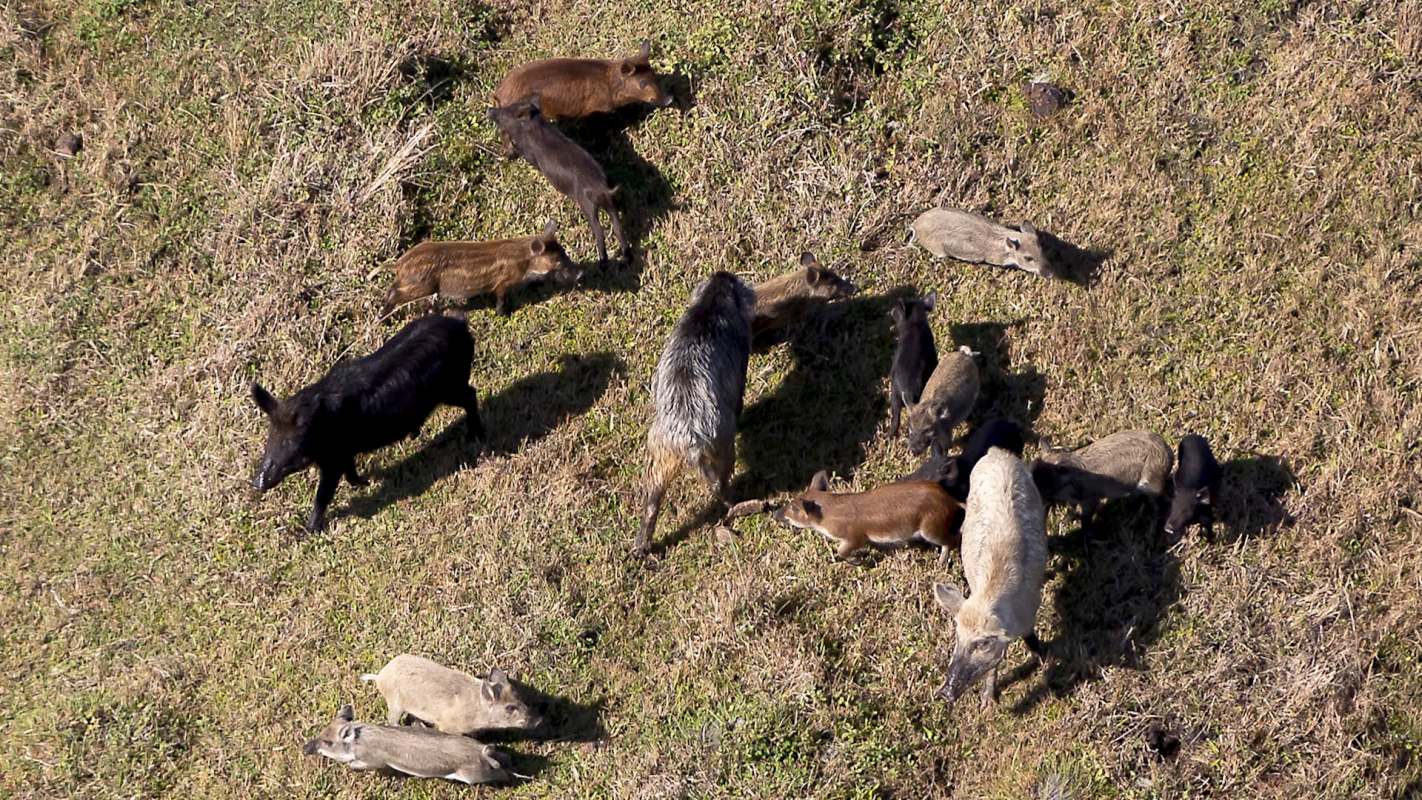
In parts of Harris County, Texas, feral hogs are showing up more often in subdivisions, tearing up yards, ruining expensive landscaping, and creating a problem that is increasingly hard for both homeowners and officials to handle safely.
What's happening?
Citing estimates from the Texas A&M Natural Resources Institute and the Texas Parks & Wildlife Department, A-Z Animals reported that Texas had roughly 3 million feral hogs in early 2026.
A key factor, experts say, is that new development is spreading into spaces the hogs already use for travel.
"Once a hog knows a neighborhood, they visit the same greenbelts and back fences repeatedly," an anonymous Harris County representative told the outlet.
In subdivisions, the control methods commonly used in rural areas are often much harder to apply safely, and trapping efforts can sometimes make the problem worse.
"If a trap catches one hog and the rest get spooked, you've basically trained the remaining group to avoid anything that looks new or harmful," a county representative explained. "They learn to recognize these traps."
TCD Picks » Quince Spotlight
💡These best-sellers from Quince deliver affordable, sustainable luxury for all




Why does it matter?
For homeowners, the damage can get expensive quickly.
Feral hogs root through lawns, rip up mulch beds, puncture irrigation lines, destabilize drainage features, and break weaker fences or gates as groups move across a property.
There are also health concerns tied to the animals' presence.
The Department of Agriculture's Animal and Plant Health Inspection Service has warned that feral hogs can spread many diseases and parasites affecting both people and pets through carcasses or contaminated environments.
"Dogs are especially curious about feral hogs, and they can get into a lot of trouble if they investigate," the Harris County representative told A-Z Animals.
What can I do?
For people living in affected areas, the best response starts with coordination rather than individual action. Homeowners can document when hogs appear, where they enter a property, and which parts of a yard are repeatedly disturbed. That information can help professionals identify movement patterns.
Residents can also limit access to food by securing trash and avoiding leaving pet food outside.
Even so, attempts to handle the problem alone can create greater risks in subdivisions, where city discharge rules, HOA restrictions, and close proximity to neighbors limit what is practical and safe.
Texas law has allowed feral hog removal on private land without a hunting license under a rule that took effect on September 1, 2019, provided the landowner consents, but suburban areas still come with additional local restrictions.
Officials recommend working with neighbors, HOAs, and animal control professionals instead of relying on one-off trapping efforts or unsafe removal methods.
"Keeping feral hog solutions as a solo project will never work," the Harris County representative said. "In the suburbs, you need a coordinated plan with your neighbors, with anyone else dealing with them … because it isn't just you fighting with these animals."

Get TCD's free newsletters for easy tips, smart advice, and a chance to earn $5,000 toward home upgrades. To see more stories like this one, change your Google preferences here.







