


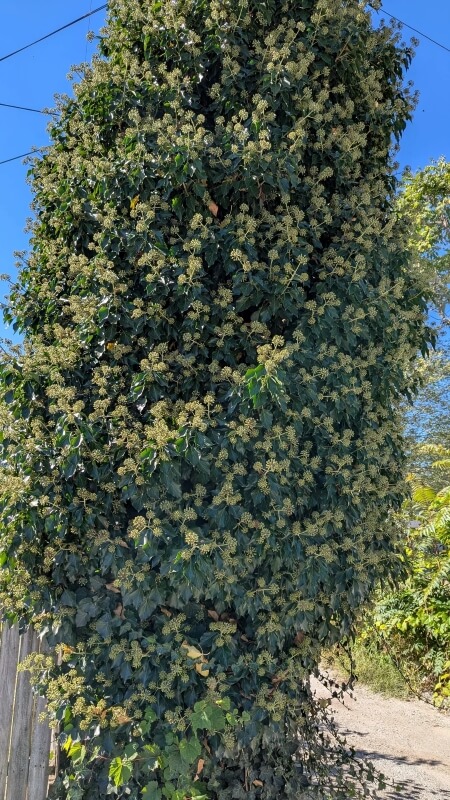
After coming across a telephone pole completely engulfed by a mysterious plant, a concerned Michigander asked r/whatsthisplant for answers.
Commenters quickly deduced that it was none other than the invasive English ivy. One noted that "it loves the Michigan climate to the point it's basically budget Kudzu."
Kudzu, otherwise known as 'the vine that ate the South,' is notorious for being nearly impossible to remove, engulfing houses and overtaking ecosystems.
The commenter's comparison is apt. Like kudzu, English ivy is an invasive plant. Native to Europe, it was introduced to the U.S. for its evergreen foliage and easy growth, according to the California Department of Fish and Wildlife.
However, its rapid growth rate spells bad news for native plants. English ivy is known to outgrow smaller natives, blocking out sunlight and eventually killing them. It can also climb trees, shading out whole forests and preventing new plants from sprouting. This has a ripple effect throughout the entire ecosystem, as animals that depend on these plants are forced to look elsewhere.
While it's notoriously difficult to remove, professionals are developing solutions. The Chattanooga Audubon Society recently employed a goat herd to eat the English ivy that took over a Tennessee nature refuge.
TCD Picks » Quince Spotlight
💡These best-sellers from Quince deliver affordable, sustainable luxury for all




If you're struggling with this plant in your yard and don't have access to goats, you've got other options. Some professionals suggest mowing it low and pulling the roots out afterward, or using systemic herbicide.
Regardless of your chosen method, it's important to remove invasive plants as quickly as possible. They often spread beyond your yard's boundaries, becoming an issue for the whole neighborhood. As the OP commented, "We do have to fight it …"
Once you've removed English ivy, consider replacing it with native plants. A native plant lawn can support pollinators and local wildlife. They also require little maintenance beyond the initial planting phase, cutting down on your water bill and any other typical lawn care expenses.
|
Do you think the government should ban gas-powered lawn tools? Click your choice to see results and speak your mind. |
 No way 🙅
Join our free newsletter for good news and useful tips, and don't miss this cool list of easy ways to help yourself while helping the planet.







