


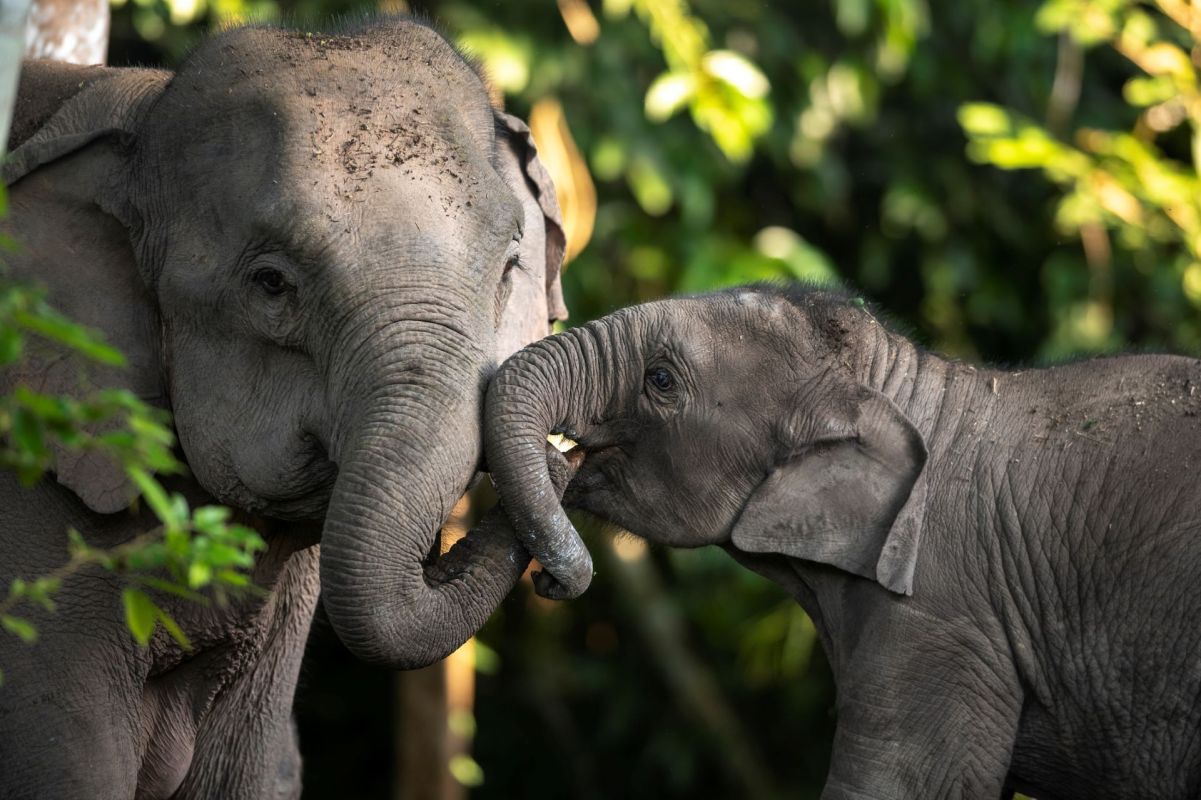
A six-year study suggests that the success of conservation efforts to revive the Asian elephant population in Central India may be intersecting with human-caused habitat loss to increase risks to safety and livelihoods, according to Mongabay.
What's happening?
The landlocked Indian state of Chhattisgarh has become a haven for around 250 to 300 elephants who have migrated there from the nearby states of Odisha and Jharkhand since 2000.
While seeing an endangered species population seemingly thrive in an expanded territory may generally be viewed as positive, it has also proven hazardous and even lethal for some locals.
Despite a low elephant population overall — Chhattisgarh is home to only 1 percent of India's elephants — 15 percent of the country's elephant-related human deaths occurred there during the same period evaluated by a study from the Wildlife Institute of India and Chhattisgarh Forest Department. The co-authors published their paper in the journal Oryx in January 2025.
According to Mongabay, the Ministry of Environment, Forest, and Climate Change has linked 303 such human fatalities to elephant interactions between 2019 and 2024. The Forest and Climate Change Department has also reported that 80 elephants died in the six years leading up to 2024.
Environmental changes can be a big trigger for adjustments in elephant behavior. For example, in Africa, elephants have migrated from Zimbabwe to Botswana in search of water following prolonged droughts. In Chhattisgarh, habitat loss, largely due to human activities, has impacted the animals' migration patterns.
TCD Picks » Quince Spotlight
💡These best-sellers from Quince deliver affordable, sustainable luxury for all




Crowded out by burgeoning communities in neighboring states, more elephants are resettling in "areas they once inhabited before going locally extinct in the 1920s," Lakshminarayanan Natarajan, lead author of the study, said, per Mongabay. But many forests there have since been fragmented — broken up into smaller parcels, disconnected from one another, by human settlements, mining development, and farms.
How is habitat loss posing a danger to humans and elephants?
As elephants resettle their historical ranges, the herbivores have been navigating these fragmented forests, helping themselves to fields of rice, pulses, maize, wheat, and sugarcane along the way. This has brought the wild animals into greater proximity with people, threatening both farming economies and the safety of humans and elephants.
While navigating newer areas, "unpredictability is high and elephants are stressed, which can trigger erratic behavior and heighten conflict risk," Natarajan explained.
To protect themselves and their livelihoods, some locals have used electrocution and even poison, which obviously poses risks to concerted conservation efforts.
|
Do you worry about the quality of the air inside your home?
Click your choice to see results and speak your mind. |
 Yes — often 😬
 What can be done about human-elephant conflict?
To help balance the protection of people and elephants, volunteer groups like Hathimitra Dal — which translates to "Friends of Elephants" — are taking local action.
According to Mongabay, their methods include tracking elephant movements with GPS, using real-time social media alerts to warn locals, issuing warnings of nearby elephant sightings on loudspeakers, and documenting related crop damage. Anyone can volunteer or donate to support their efforts, which aim to protect both people and elephant populations.
The co-authors of the Chhattisgarh study have called for investment in community-based programs just like this. They have also advocated for land planning that enables larger, contiguous forests to thrive for uninterrupted animal roaming as well as the use of portable barriers to separate people and elephants.

Join our free newsletter for good news and useful tips, and don't miss this cool list of easy ways to help yourself while helping the planet.







