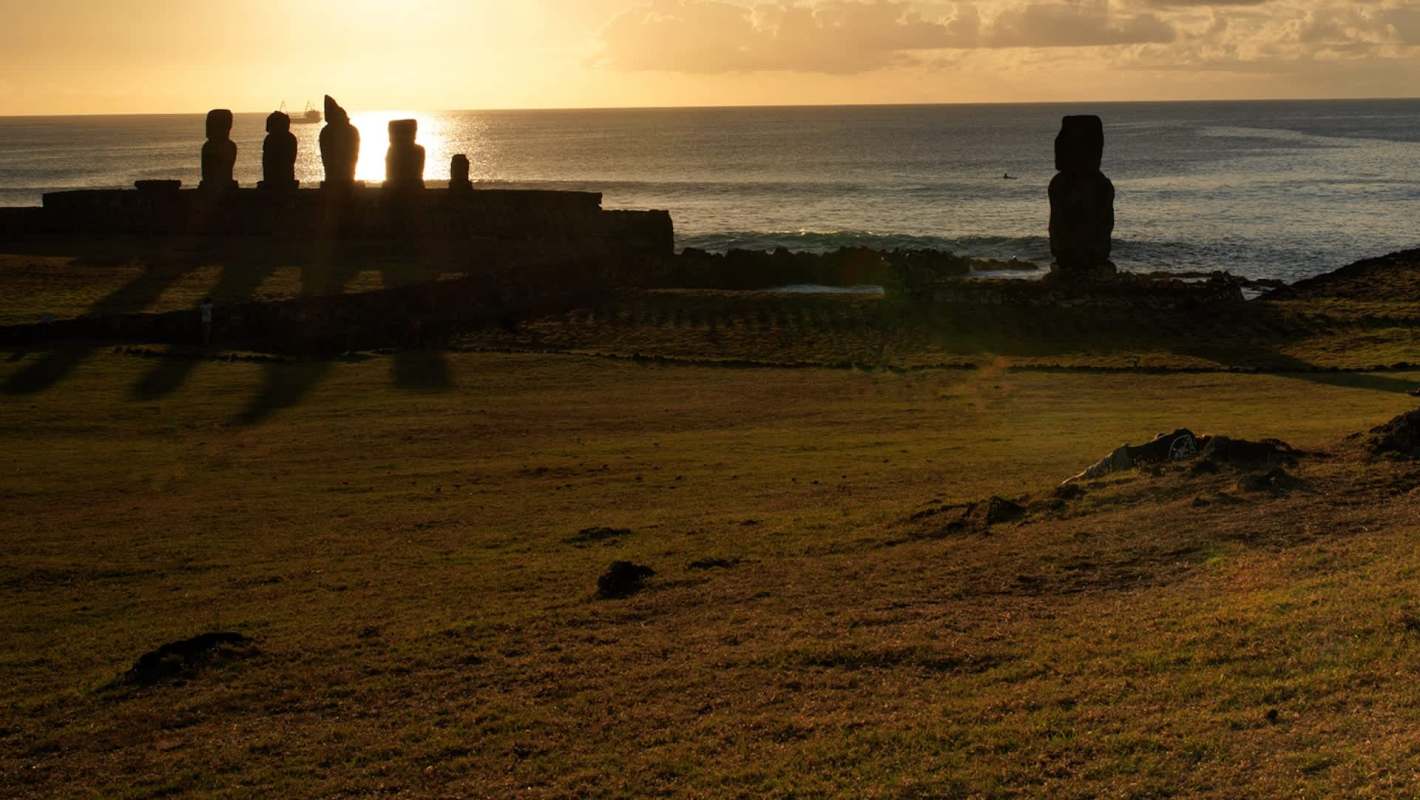
Rising sea levels pose a serious threat to the famed moʻai statues of Easter Island, Smithsonian magazine reports.
What's happening?
Easter Island — a Chilean territory at the eastern edge of Polynesia, known as Rapa Nui to residents — is known for its iconic volcanic rock statues, or moʻai.
In 2023, a previously unknown statue was unearthed from a dried-up lakebed. The discovery intrigued and alarmed experts in equal measure.
University of Arizona archeologist Terry Hunt has studied moʻai for two decades. After that discovery, Hunt acknowledged in an interview with Good Morning America that climate-related landscape changes created an "unusual opportunity" for researchers.
A new study, published in the September-October edition of the peer-reviewed Journal of Cultural Heritage, indicated that ongoing changes to the climate and rising sea levels could "endanger" the statues, in part because of increased flooding.
University of Hawai'i earth scientist Noah Paoa was the study's lead author. He said the findings were "unsurprising … from a scientific perspective," according to Smithsonian magazine.
TCD Picks » Quince Spotlight
💡These best-sellers from Quince deliver affordable, sustainable luxury for all




"We know that sea level rise poses a direct threat to coastlines globally. The critical question was not if the site would be impacted but how soon and how severely," Paoa conceded.
Why are this study's findings important?
Easter Island's moʻai are featured on UNESCO's World Heritage List, and the organization noted that they were carved between the 10th and 16th centuries.
The moʻai of Rapa Nui have stood for nearly a millennium, and they hold immense cultural significance locally and globally.
The remote Easter Island has grappled with dangers posed by rising sea levels. The island is uniquely situated, for example, and microplastic debris from other regions have infiltrated the area.
|
Do you think we still have a lot to learn from ancient cultures? Click your choice to see results and speak your mind. |
 Definitely 👍
 As the study observed, the cultural and ancestral significance of the moʻai cannot be understated. Moreover, Easter Island's economy relies on tourism related to the sites.
Flooding is one form of extreme weather, and the Easter Island findings are unfortunately a grim reminder of how indiscriminate and brutal it can be.
As an island, Rapa Nui has always experienced flooding, drought, and erosion.
But as temperatures and sea levels rise, these events intensify. Intense weather still occurs, but when it does, it's more destructive and expensive, and it can threaten sites of global importance.
What's being done about it?
Paoa expressed hope that the findings would prompt inquiry and action to mitigate the threat to Easter Island's moʻai.
"Sea level rise is real," Paoa warned. "It's not a distant threat. … It's best to look ahead and be proactive."

Join our free newsletter for good news and useful tips, and don't miss this cool list of easy ways to help yourself while helping the planet.