


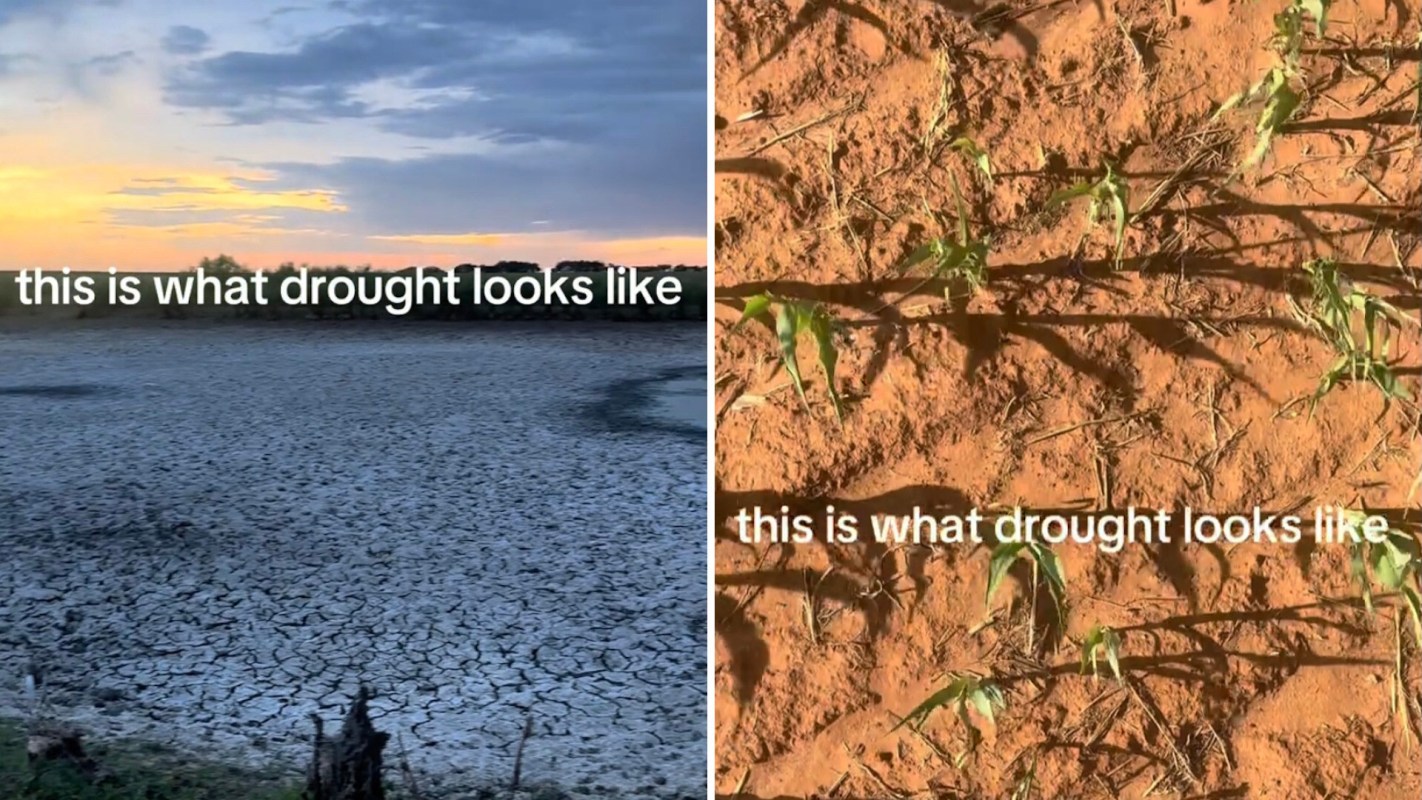
Three words were enough to capture the situation on one Oklahoma farm: "Pray for Rain."
In a short social media clip, Oklahoma farmer Kelsey (@kelseykayebates) showed what drought looks like when it stops feeling like an abstract weather story and starts threatening a family's season, income, and peace of mind.
Here's what to know
In a TikTok post, the farmer paired footage of dry ground with the plain appeal for some much-needed water.
@kelseykayebates Pray for Rain. #americanagriculture #farm #farmlife #drought #Oklahoma ♬ original sound - 𝓡𝓸𝓷 𝓦𝓮𝓪𝓼𝓵𝓮𝔂 - Alexander Hamilton
The footage showed barren ground and a dried-up waterway, accompanied by on-screen text proclaiming "this is what drought looks like." The video kicks up a notch when it shows a previous video from the same area that opens with full grass and leaves.
The clip conveyed that hope for relief was about all that remained.
The comments reflected that strain.
TCD Picks » Quince Spotlight
💡These best-sellers from Quince deliver affordable, sustainable luxury for all




A user exclaimed: "Every DAY! Praying for the heat to break and the rain to come!"
"Been outside for a few weeks doing the rain dance, grass dying already hay season over damn I hate this drought," another wrote.
A different commenter highlighted how sharply conditions can vary from place to place. Weird as it may seem, some folks are suffering from the exact opposite problem.
"You can have some of the rain we've received in Indiana," they wrote. "Way too much."
More background
Drought can affect nearly every part of farm life. When rain doesn't come, grass can die off, hay production can fall apart, and crops may fail to grow as expected. That can leave farmers facing higher feed costs, lower yields, and difficult decisions about how to manage land and livestock.
When farms are hit hard, the economic consequences can spread far beyond a single property. Some areas are desperate for rain while others are inundated with too much of it. That kind of instability can make planning much more difficult for farmers, ranchers, and communities that depend on predictable seasons.
"It is desperately needed in so many places, and a break from this heat!!" one commenter wrote. "Praying!!"
What can be done?
Drought preparation often begins with practical steps that can reduce risk, even if they cannot fully prevent the damage.
Water conservation, drought-tolerant planting choices, soil-building practices, and careful planning around feed and irrigation can all help make dry stretches more manageable.
On a larger scale, solutions depend on stronger planning for heat, water scarcity, and extreme weather. That includes investments in resilient agriculture, improved forecasting tools, and community-level efforts to protect both workers and food production from worsening conditions.

Get TCD's free newsletters for easy tips, smart advice, and a chance to earn $5,000 toward home upgrades. To see more stories like this one, change your Google preferences here.







