


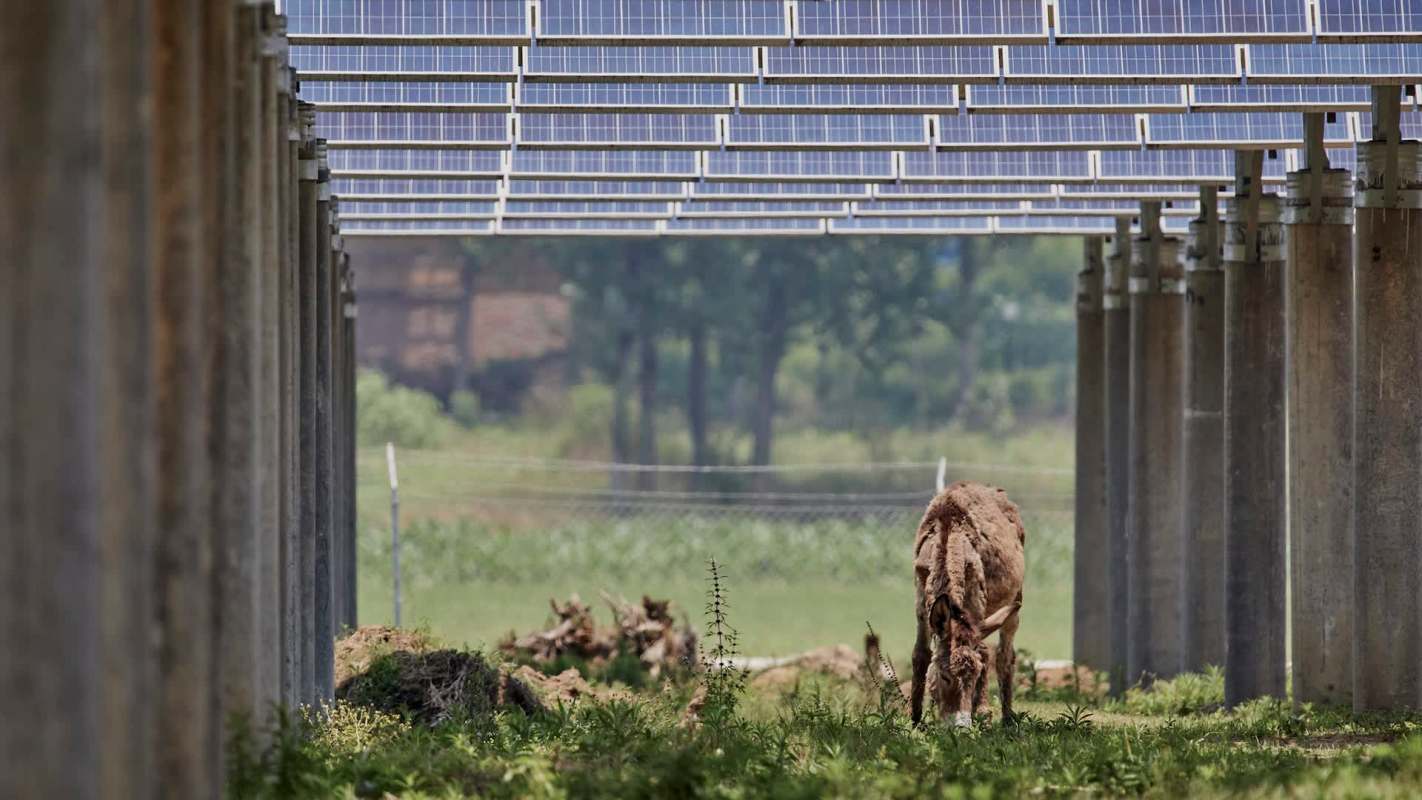
At Volkswagen's Chattanooga factory, an unexpected helper is playing a role in the clean energy transition: a rescued donkey named Burrito.
According to The Pulse, the 66-acre site includes a 9.5-megawatt solar installation made up of 33,600 panels, helping power production at the automaker's manufacturing facility. At peak output, the array provides about 12.5% of the plant's electricity, supporting assembly of the ID.4 electric SUV.
But the solar site relies on more than panels, inverters, and cabling. It also depends on a living system designed to manage the land beneath it. That's where Burrito comes in.
The donkey patrols the property and watches over a flock of 50 sheep grazing under the panels. The arrangement is part of a broader effort by Volkswagen and solar company Silicon Ranch to turn a typical industrial solar field into what the industry often describes as an agrivoltaic or regenerative energy site — one that generates electricity while improving the way the land is cared for.
The idea began with a practical challenge. Large solar farms require constant vegetation control to prevent grass and brush from blocking sunlight, increasing fire risk, or causing maintenance problems. At Chattanooga, conventional mowing had clear drawbacks. Heavy machinery could damage sensitive infrastructure, including inverters and sensitive cabling. Fuel-powered equipment also brought pollution and the risk of hydraulic fluid leaks into the local water table.
Instead of relying on tractors and mowers, operators brought in sheep to handle the work naturally. The animals keep plant growth in check beneath the panels without compacting the soil the way heavy equipment can. Their grazing helps reduce erosion and lower fire risk, while their movement and manure support healthier soil. In short, the sheep solve the vegetation problem in a way that is gentler on the land and more consistent with the project's clean energy goals.
TCD Picks » Quince Spotlight
💡These best-sellers from Quince deliver affordable, sustainable luxury for all




But introducing sheep created a new problem: predators. With coyotes and bobcats in the area, the flock needed protection. Burrito, a stray donkey rescued before arriving at the site, became the solution. Donkeys are known for being highly alert around herd animals and often respond aggressively to canine threats. On the solar farm, that instinct made Burrito a natural guardian.
Workers say he treats the property as his own territory, memorizing the layout of the panel rows and steel posts while regularly checking the perimeter. Before the sheep enter a section to graze, Burrito will inspect the area first. If something unfamiliar appears, he reacts quickly, helping keep the flock safe.
Burrito is more than a charming mascot — he is an essential part of the system.
Together, Burrito and the sheep solve two maintenance challenges at once: The sheep manage the vegetation, and the donkey protects them so the process can continue without constant human oversight. It is a low-tech answer supporting high-tech infrastructure, and it's a reminder that older farming practices can work alongside modern renewable energy.
For consumers, projects like this could help make solar operations more efficient and environmentally friendly. Better land stewardship can help protect local ecosystems. Pairing solar generation with natural grazing can also reduce pollution from fuel-powered mowing equipment and improve biodiversity on land that might otherwise be treated as purely industrial.
The results in Tennessee are already shaping bigger plans. According to The Pulse, the regenerative model used at Volkswagen's solar site is now helping inform management across roughly 15,000 acres of solar land in the United States. That means Burrito's daily rounds are part of something much larger than one unusual rescue story.
He may be guarding sheep at a solar field today, but Burrito is also helping show how clean energy infrastructure can be smarter, more self-sustaining, and more connected to the natural world.
At one Tennessee factory, a once-homeless donkey has quietly become, as The Pulse described, one of the site's key workers — and a memorable symbol of how the clean energy future may rely on some very old instincts.

Get TCD's free newsletters for easy tips, smart advice, and a chance to earn $5,000 toward home upgrades. To see more stories like this one, change your Google preferences here.







