


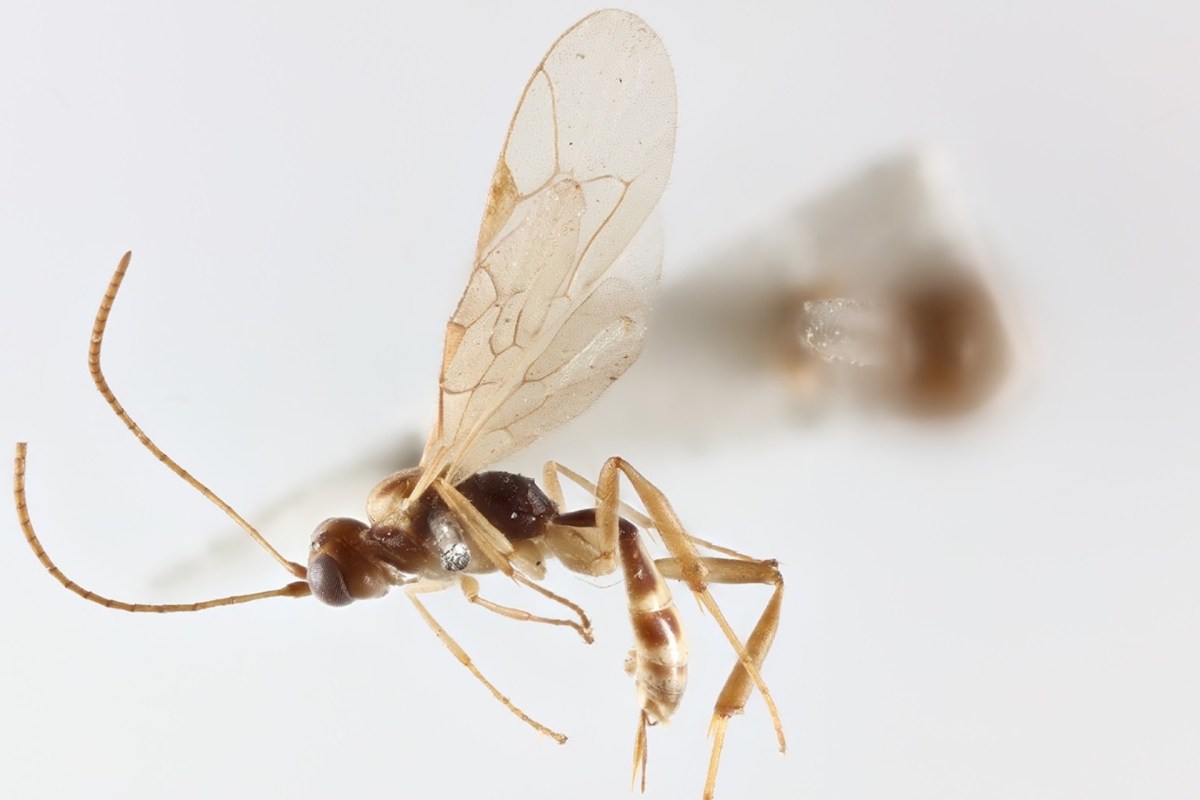
A tiny insect sitting unnoticed in a museum drawer for decades has turned out to be a major scientific surprise: an entirely new genus of parasitic wasp named after Sir David Attenborough for his 100th birthday, according to the Guardian.
Scientists at London's Natural History Museum described the newly identified wasp, Attenboroughnculus tau, after determining it was too distinct to fit into any known genus.
The discovery highlights how historic museum collections can continue reshaping what scientists know about life on Earth, while underscoring why protecting biodiversity begins with identifying what is already there.
According to the museum team, the wasp measures just 3.5 millimeters long. Its species name, tau, points to a prominent T-shaped marking on its abdomen.
The specimen was originally collected in 1983 in Chile's Valdivia province, then remained unclassified in the museum's collections until volunteer Augustijn De Ketelaere spotted unusual traits while examining ichneumonid material, according to the Guardian.
Dr. Gavin Broad, principal curator for insects at the Natural History Museum, led the study of the insect and said it differed too much from related wasps to be placed in an established genus.
TCD Picks » Quince Spotlight
💡These best-sellers from Quince deliver affordable, sustainable luxury for all




Currently, almost nothing is known about the species' life cycle beyond the fact that it deposits eggs inside another animal.
"I am sure it will still be found in Chile, where there are some weird and wonderful species, but trying to find particular wasps is the proverbial needle in a haystack," Broad said.
He noted that one relatively close Australian relative attacks spider egg sacs, though the Chilean species' behavior remains unknown.
That uncertainty is part of what makes the finding so important.
Museum collections are more than static archives — they serve as working libraries of Earth's biodiversity, and hidden within them may be species that could inform conservation decisions for years to come.
For communities working to protect ecosystems under pressure, stronger species records can help scientists better understand which habitats are most important to preserve and what forms of life may disappear before they are ever documented.
The discovery also points to a hopeful reality: New scientific insights do not always require entirely new field expeditions.
Sometimes they come from taking a second look at material already held in public institutions, often with the help of volunteers. That makes taxonomy — the science of naming and classifying life — an especially powerful collaborative tool for conservation as researchers race to identify species before habitat loss and environmental change make the work even more difficult.
Co-author Jennifer Pullar emphasized the broader implications of the discovery as well.
"We hope to inspire global scientists to take another look in their collections to see if there is something small that could contribute to our collective understanding and therefore the future of our natural world," she said.
As for the new genus' namesake, Sir David Attenborough, the broadcaster has described the Natural History Museum as one of his favorite buildings, making the honor feel especially fitting.
"When I was far too young, I learnt about taxonomy from David Attenborough's 'Life on Earth' series and resolved to be a taxonomist," Broad said. "Amazingly, I ended up a taxonomist, so I have Sir David to thank for that."

Get TCD's free newsletters for easy tips, smart advice, and a chance to earn $5,000 toward home upgrades. To see more stories like this one, change your Google preferences here.







