


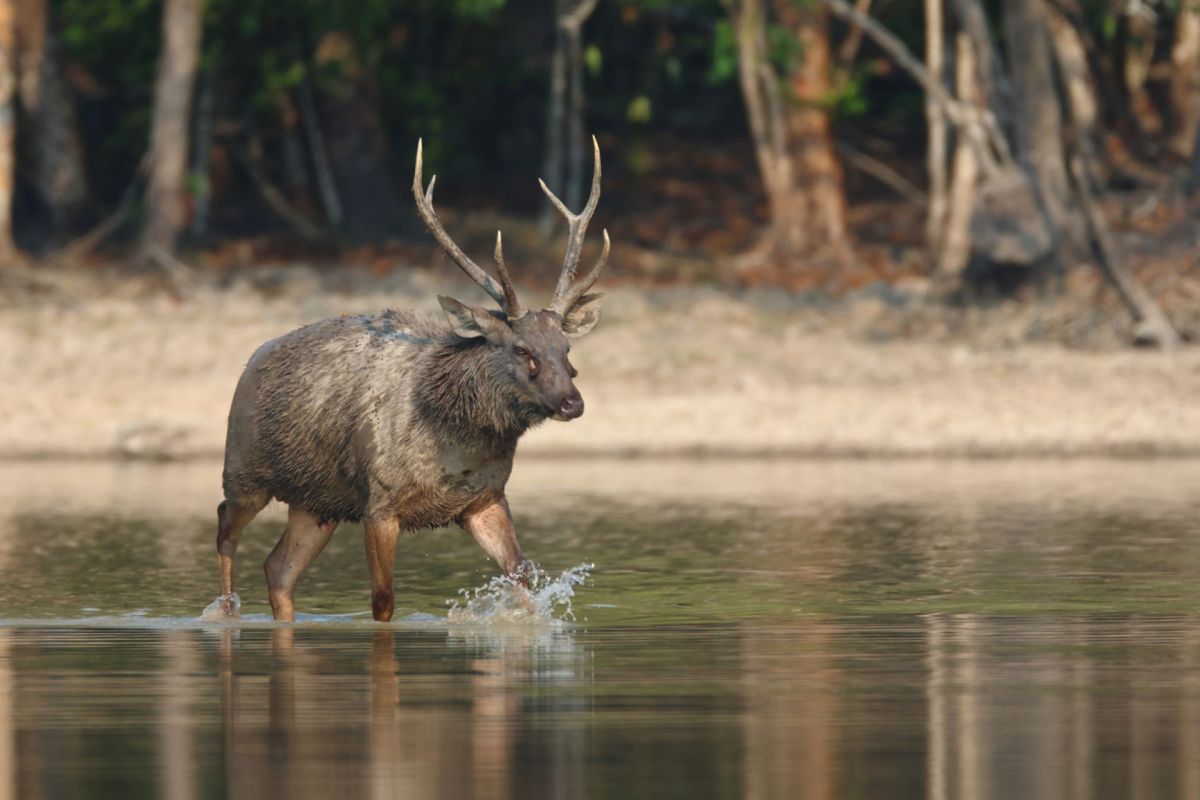
There's so much plastic pollution in the environment that animals have long been turning up dead from ingesting the waste.
A particularly disturbing case happened in Thailand's Khun Sathan National Park in 2019, Reuters reported.
What happened?
A necropsy of a 10-year-old deer showed it died from intestinal obstruction "after consuming trash over time," Reuters reported. The animal had plastic bags, used coffee and noodle packets, rubber gloves, and even handkerchiefs, underwear, and a plastic rope in its stomach.
"The place we found the deer is a protected forest, but it is close to human communities as well as roads where passersby sometimes litter," Kriangsak Thanompan, a director of a protected area in the park, told Reuters.
In 2018, Thailand's Department of National Parks, Wildlife and Plant Conservation launched a campaign (later leading to a ban) against the use of single-use plastic and foam in all of the country's national parks, but it did not stop animals from dying due to plastic waste.
A baby dugong died in early 2019 after eating plastic, and a pilot whale with 17 pounds of plastic in its stomach washed ashore in 2018, NPR reported.
Reuters reported that Thailand produces about 2.2 million tons of plastic waste per year, including 75 billion pieces of plastic bags.
Why is this concerning?
Southeast Asia has been a dumping ground for wealthier nations' plastic waste, Earth.org has reported, and the country produces 428 kilotons of its own mismanaged plastic waste per year, according to the World Bank.
Phys.org reported that plastic is threatening Thai wildlife and river and marine ecology.
Per Reuters, the deer that died had about seven kilograms (about 15 pounds) of plastic and other trash in its stomach — 3.5% of its body weight. Elephants, the national animal, have also died after ingesting such waste.
TCD Picks » Quince Spotlight
💡These best-sellers from Quince deliver affordable, sustainable luxury for all




Enric Sala, an explorer-in-residence and marine ecologist with National Geographic, told NPR in 2018 that a million seabirds and 100,000 marine mammals are killed every year by plastic pollution.
"The problem is that most of these animals die with nobody knowing," Sala said.
These incidents are happening all over the world, too, like with a sperm whale that washed ashore in Hawai'i, its stomach full of plastic waste, and a bear in Colorado who had to be euthanized after ingesting plastic.
What's being done?
Thailand in 2018 moved to ban imports of plastic waste by 2020, but the process was beset by delays and loopholes. It banned major supermarkets and department stores from giving out single-use plastic bags in 2020, per Phys.org.
Phys.org reported that plastic bags, food containers, cups, straws, and cutlery were no longer allowed in national parks as of 2022. That was when a ban on the plastics and foam containers took effect, reported the Tourism Authority of Thailand. People who violate the law can be fined up to 100,000 baht (close to $3,000).

Join our free newsletter for cool news and cool tips that make it easy to help yourself while helping the planet.
Cool Picks






