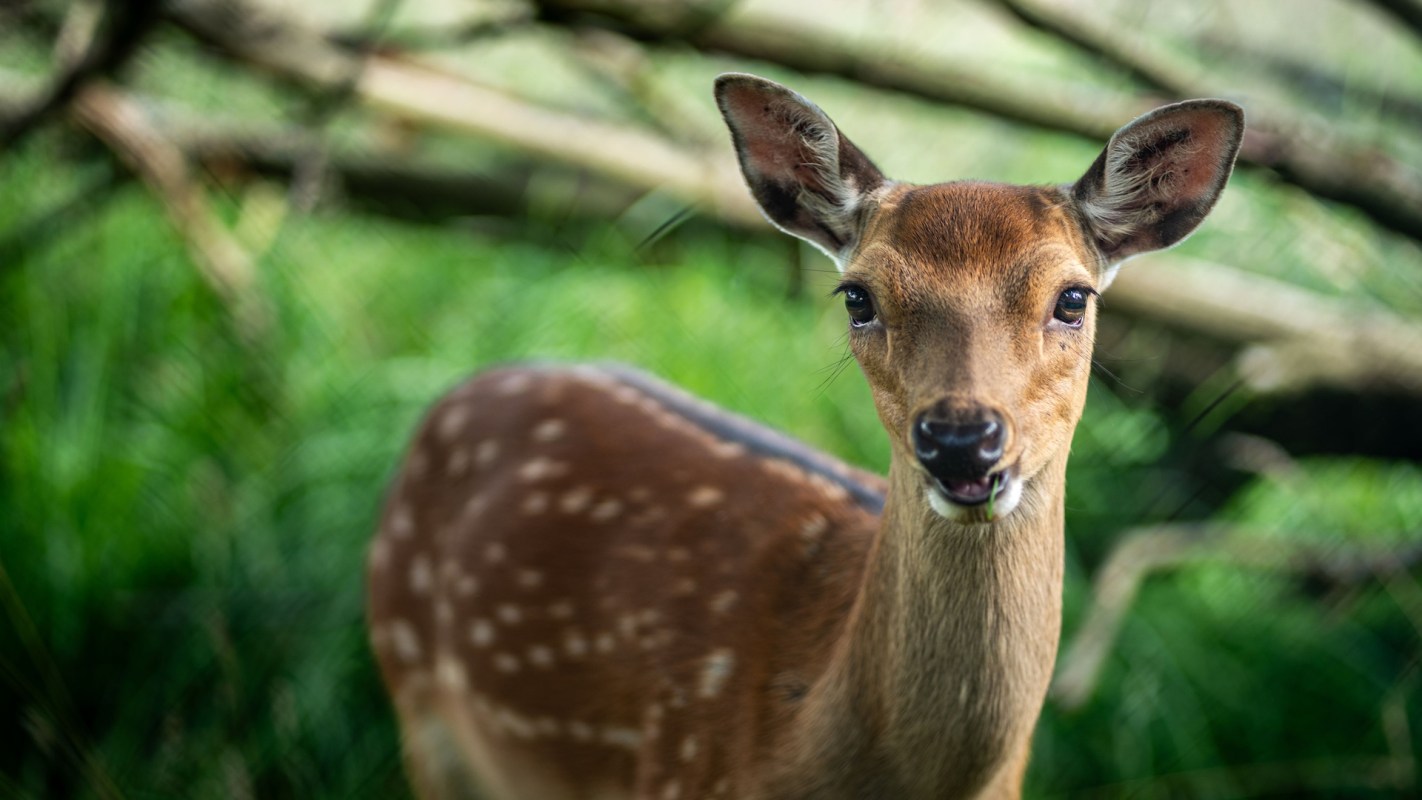
A young deer on Washington's Whidbey Island became the focus of a neighborhood rescue effort after residents noticed a piece of PVC pipe around one of its legs.
A local social media plea brought attention to the deer's condition, which led to TV news coverage.
What happened?
Television news station KING 5 reported that local resident Robert Ramsey noticed the pipe on a deer born in the neighborhood. He hoped it might slip off on its own, but he continued to monitor the deer, and the animal's condition appeared to worsen as the deer grew.
He told KING 5 he contacted several wildlife agencies and veterinarians to seek help.
Neighbor Lori Matteson said that residents first noticed the problem in the fall and that she suspects the deer may have stepped into construction debris, though no one knows exactly how it happened.
"The poor guy is SUFFERING daily," Ramsey wrote in a social media post asking whether anyone knew a veterinarian who could tranquilize the deer long enough to remove the plastic.
Enjoy your best summer vacation yet with 15% off your next stay With Hilton, you can find a hotel that matches your mood — whether you’re recharging at the beach, exploring natural beauty, or traveling with your crew. Enjoy vibrant summers in Hawaii, weekend trips in major cities, and even extended itineraries at adventurous sites like Moab’s desert canyons. Plus, save up to 15% during Hilton’s summer sale until June 1st. |

After the story aired, a spokesperson for the Washington Department of Fish and Wildlife said the agency could not confirm any recent reports related to the deer and noted that adult deer do not adapt well to captivity and can experience severe stress if captured, making it an unfortunately unlikely candidate for assistance.
Why does it matter?
Human activity can create dangerous conditions for wildlife even when no harm is intended. Expanding development, discarded materials, and construction debris can all become traps for animals moving through the same areas they have long inhabited.
As neighborhoods spread into wildlife habitat, these encounters can become more common. Residents may want to help, but approaching or trying to restrain an injured wild animal can be dangerous for both people and the animal. Wildlife agencies, meanwhile, have to balance public safety, disease concerns, and the risks that come with capture.
What are people saying?
Ramsey summed up the urgency of the situation to KING 5 bluntly: "This thing is hobbling around, and the foot is infected. I'm not going to wrestle a deer. So, what do I do now?"
TCD Picks » Quince Spotlight
💡These best-sellers from Quince deliver affordable, sustainable luxury for all




Matteson expressed a similar concern, saying, "It had a real bad limp. It's getting worse because it's swollen. It's growing." She added, "This guy needs help. I'd hate for it to die a slow, painful death."
WDFW provided an update to explain that they prioritize reports based on urgency, public safety, and conservation needs.
"The public should call 911 for immediate assistance in an emergency, especially on or near a roadway," the organization said. "Adult deer do not adapt well to captivity, which can cause extreme stress, so they are not rehabilitation candidates. Transporting and housing deer could also lead to chronic wasting disease concerns."

Get TCD's free newsletters for easy tips, smart advice, and a chance to earn $5,000 toward home upgrades. To see more stories like this one, change your Google preferences here.
Cool Picks