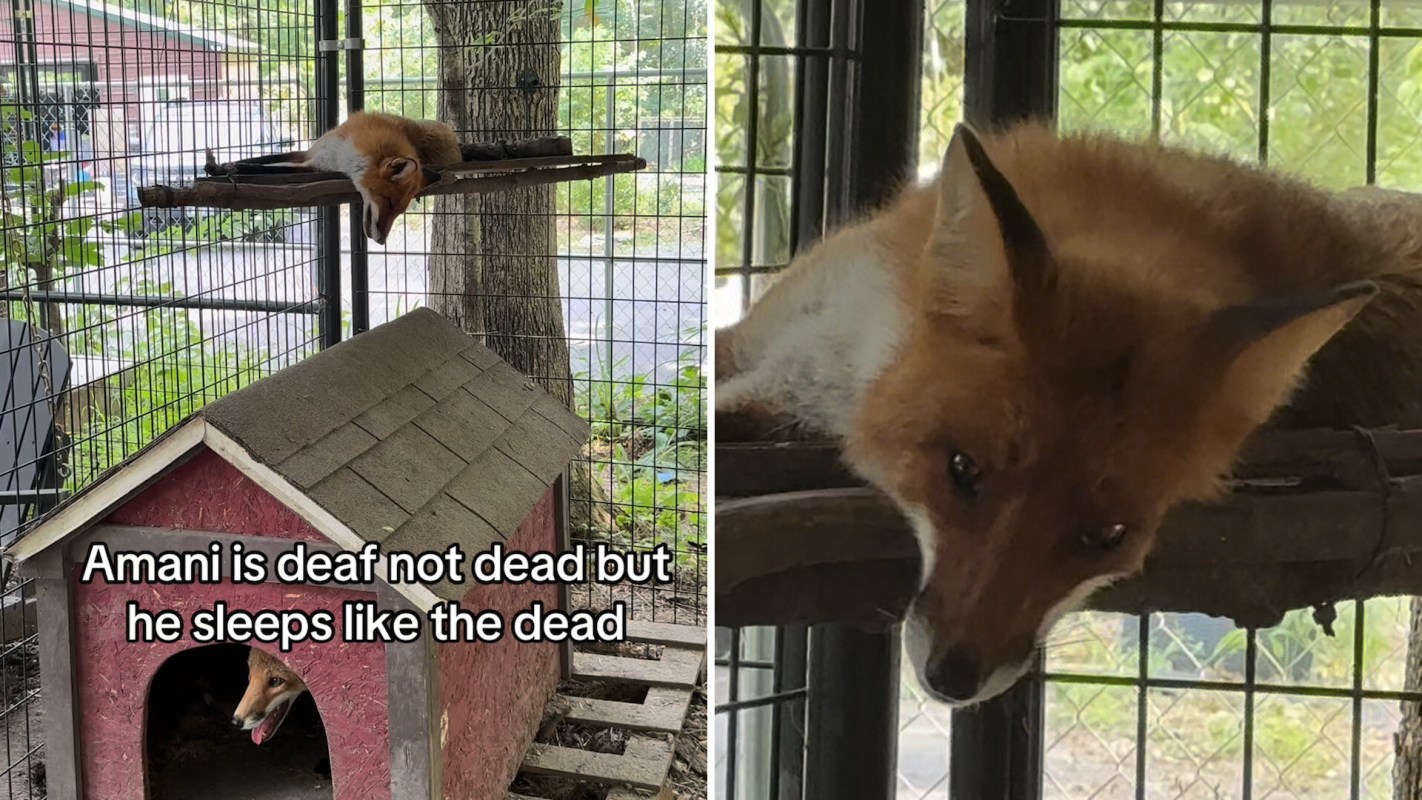
A rescued deaf fox named Amani has gone viral after the adorable animal was filmed sleeping so soundly he briefly appeared to be dead.
What's happening?
At FoxTales Wildlife Rehab (@foxtales_wildliferehab), Amani was filmed taking a quick snooze.
In the clip, he is stretched out and so deeply asleep that the pose could look worrisome to anyone who does not know his habits.
@foxtales_wildliferehab Amani is our DEAF ambassador fox. Watch to the end to see him wake up. I promise he just loves to sleep like this, and he can't hear a thing so he sleeps like the dead! #deaf #deafdog #foxes #wildliferescue #wildliferehab ♬ original sound - FoxTales Wildlife Rehab
The rehab center explained that his deafness may be part of why he sleeps so soundly, because the noise around him does not interrupt his slumber. By the end of the clip, he opens his little eyes, showing the world that he was just getting some well-earned rest.
FoxTales wrote in the caption of the video, "I promise he just loves to sleep like this, and he can't hear a thing so he sleeps like the dead!"
Why does it matter?
Wildlife rehab is not just about dramatic rescues; it is also about patience, daily care, and adapting to each animal's specific needs. Stories like Amani's highlight that not every rescued animal can return to the wild, even when it is otherwise healthy and thriving.
TCD Picks » Quince Spotlight
💡These best-sellers from Quince deliver affordable, sustainable luxury for all




Some need lifelong care because a disability could leave them vulnerable to predators, vehicles, or starvation.
That makes education ambassadors especially important. Animals like Amani can help rehab centers show the public what rescue work actually looks like while also building empathy for wild animals living with permanent limitations.
What can I do?
If Amani's story inspires you, one of the most useful things you can do is simply learn how local wildlife rehab works in your area.
Many centers rely on public awareness, donations, volunteers, and responsible community behavior to keep operating. People can also keep emergency contacts for local wildlife rehabilitators handy, especially during seasons when young or injured animals are more likely to be found.

Get TCD's free newsletters for easy tips, smart advice, and a chance to earn $5,000 toward home upgrades. To see more stories like this one, change your Google preferences here.