


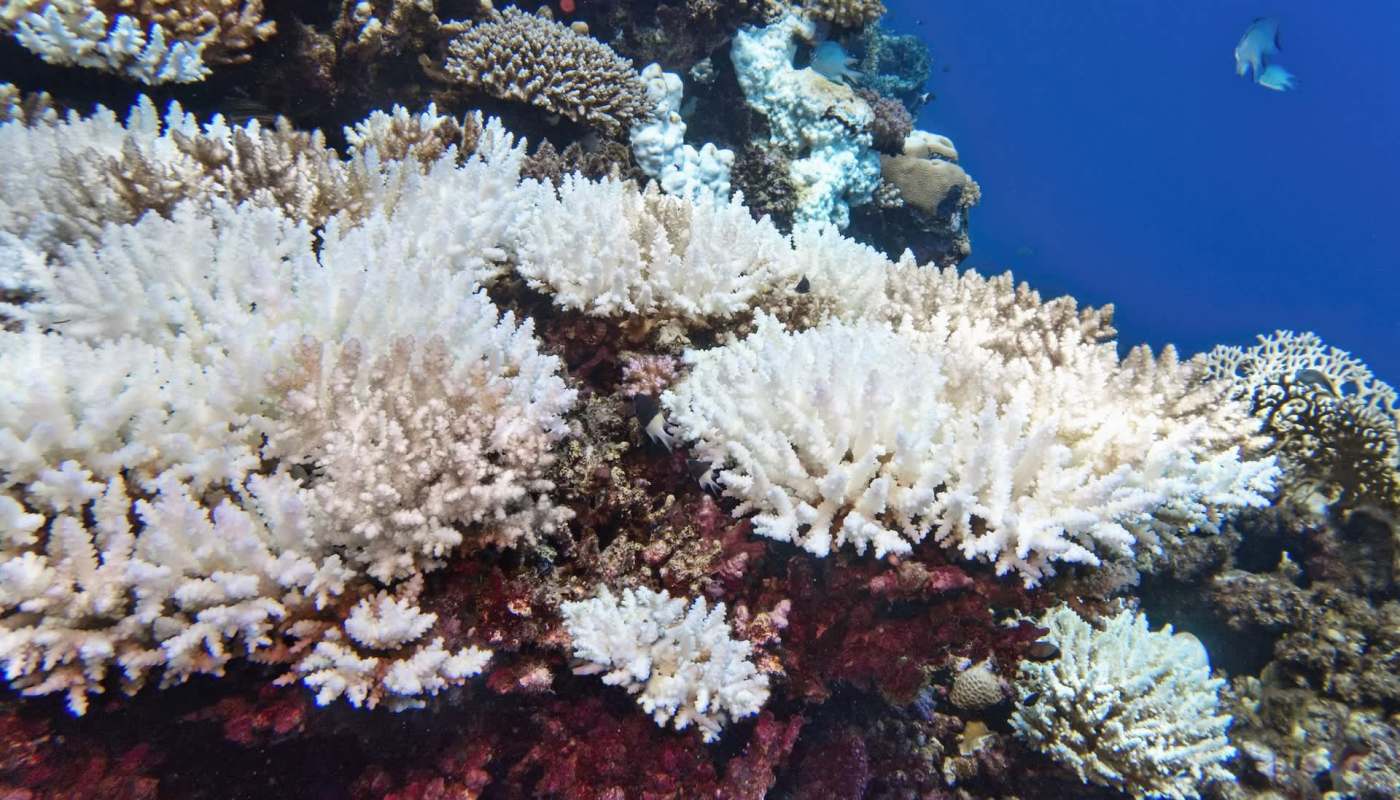
Coral reefs cover less than 1% of the ocean floor but support about 25% of all marine species. Despite their importance, a study published in Nature Communications found that warming water temperatures are causing coral bleaching events that damage ecosystems.
Scientists found that the last event, the Third Bleaching Event, caused the most damage. To make matters worse, the fourth event is currently happening.
"[The Third Bleaching Event was] by far the most severe and widespread coral bleaching event on record," said Sean Connolly, a senior scientist at the Panama-based Smithsonian Tropical Research Institute, in a statement cited by Barron's.
What's happening?
The study was led by the U.S. National Oceanic and Atmospheric Administration's Coral Reef Watch. The research team looked at 15,066 reef surveys conducted worldwide between June 2014 and May 2017.
The team found that 80% of surveyed reefs experienced moderate or greater loss of color and nutrients. More than 10% of corals were affected, and 35% were dying or already dead.
The researchers used satellite heat-stress data to see how far the impact has gone globally. They predicted that 51% of the world's coral reefs suffered moderate or worse bleaching. 15% were dying or already dead during the Third Global Bleaching Event.
Perk up the winter blues with natural, hemp-derived gummies Camino's hemp-derived gummies naturally support balance and recovery without disrupting your routine, so you can enjoy reliable, consistent dosing without guesswork or habit-forming ingredients. Flavors like sparkling pear for social events and tropical-burst for recovery deliver a sophisticated, elevated taste experience — and orchard peach for balance offers everyday support for managing stress while staying clear-headed and elevated.
Learn more → |

The tech the researchers used to predict this also found that 65.8% of reef-containing satellite pixels reached heat levels high enough to trigger moderate bleaching. During the previous global bleaching event, that number was just 32.7%. The heat stress between 2014 and 2017 was worse than all previous events, according to the study.
Why is coral bleaching concerning?
Coral bleaching happens when corals become stressed due to pollution, warming temperatures, or unpredictable weather. It's a concern for environmental and marine ecosystem health as well as human communities and local economies.
Coral reefs provide food, jobs, and coastal protection from erosion and storms for over half a billion people, according to the NOAA. Coral reefs in Florida alone bring in $1.1 billion a year and 71,000 jobs.
Repeated overheating and environmental pressure make it harder for recovery to happen in between the bleaching events. And according to NASA, extreme heat events are becoming more frequent and lasting longer as global temperatures rise, increasing the likelihood of these events to begin with.
TCD Picks » Upway Spotlight
💡Upway makes it easy to find discounts of up to 60% on premium e-bike brands





What's being done about heat stress?
To better capture extreme heat stress during the ongoing Fourth Global Coral Bleaching Event, Coral Reef Watch expanded its Bleaching Alert Levels.
According to aerial footage from Australia, scientists described recent bleaching on the Great Barrier Reef as the most severe on record. Keeping a closer eye on heat stress while acting on reducing the heat stress is necessary to prevent total destruction.
Individuals can also support reef resilience by choosing reef-safe sunscreen and by taking local conservation action to protect coastal waters.
|
What's the most you'd pay per month to put solar panels on your roof if there was no down payment?
Click your choice to see results and speak your mind. |
 $200 or more 💰
Get TCD's free newsletters for easy tips to save more, waste less, and make smarter choices — and earn up to $5,000 toward clean upgrades in TCD's exclusive Rewards Club.
Cool Picks






