



A Redditor in Seattle got an unexpected holiday-season guest, and it wasn't a relative.
The homeowner shared a photo to r/SeattleWA showing a striking bird of prey perched on a fence post in their yard.
"I didn't know we had birds here like this!" they wrote. "Can you tell me what kind it is? It looks like this one is having a very abundant holiday in my yard."
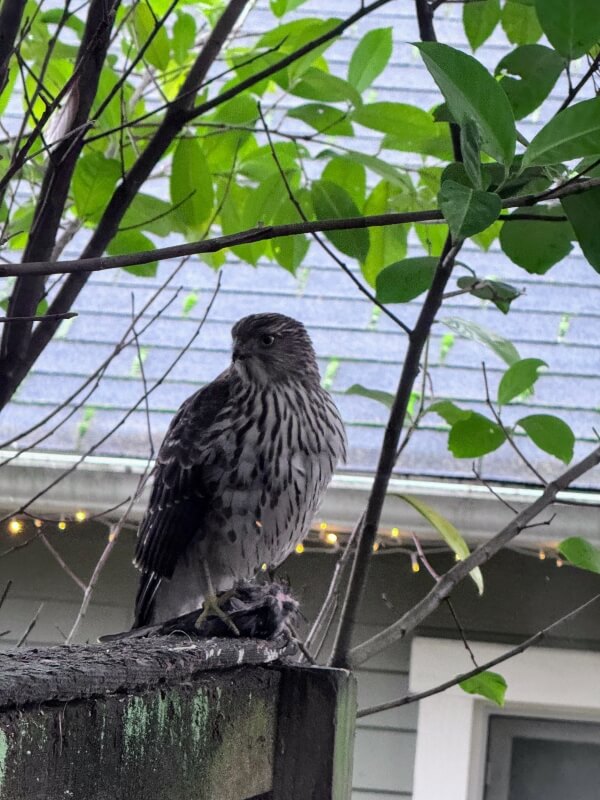
The image shows a Cooper's hawk with distinctive brown-and-white streaked feathers, with its talons gripping what appears to be freshly caught prey.
Spotting a Cooper's hawk in a residential area is a sign of a healthy local ecosystem. These birds need an active food chain to thrive, which means the yard likely supports smaller birds, rodents, and the native plants that feed and shelter them.
Homeowners looking to attract wildlife like this can start by replacing portions of their traditional grass lawn with native plants suited to their region. These low-maintenance alternatives require less watering and mowing than typical turf grass, saving both money and weekend hours.
Clover, buffalo grass, and xeriscaping are other options that cut down on upkeep and support local wildlife.
Even a partial lawn swap can make a difference. Native plantings provide food and shelter for insects, which feed songbirds, which in turn attract predators like the Cooper's hawk.
Commenters were quick to identify the bird and share their own experiences.
"Coopers hawk I believe," one commenter wrote. "They will sit pretty low in trees sometimes and are not too bothered by humans. Pretty birds."
TCD Picks » Quince Spotlight
💡These best-sellers from Quince deliver affordable, sustainable luxury for all




|
If you were to switch from a grass lawn to a more natural option, which of these factors would be your primary motivation?
Click your choice to see results and speak your mind. |
 Making it look better 🌱
 Another shared stories from their own yard, writing, "They nest in our yard in Spokane every year. So fun to watch! They eat voles and other birds but leave the squirrels and rabbits alone."
A third chimed in, saying, "I have birds of prey in my wooded area near my house … they are hunters!"

Get TCD's free newsletters for easy tips to save more, waste less, and make smarter choices — and earn up to $5,000 toward clean upgrades in TCD's exclusive Rewards Club.
Cool Picks




